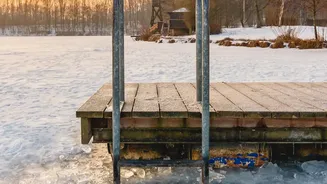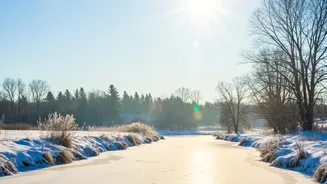


A frozen lake can seem like a simple sheet of glass, a quiet, stark canvas for winter. But look closer, and you’ll find a world of intricate patterns and ethereal beauty, each telling a story written by the laws of physics and chemistry.
The Art of a Freeze
The transformation
from liquid to solid is anything but simple. As air temperatures drop, the surface water of a lake cools. This cooler, denser water sinks, pushing warmer water up in a cycle that continues until the entire lake reaches about 4°C. At this point, a strange property of water takes over: as it cools further toward 0°C, it becomes less dense and floats on top. This is why lakes freeze from the top down. The initial ice sheet, called primary ice, can be remarkably clear if it forms on a calm night. However, wind, snow, and temperature fluctuations introduce complexities, leading to a variety of ice types. So-called 'white ice' is weaker than clear 'black ice' because it's filled with air bubbles or formed from refrozen snow, making it more opaque.
Cracks, Booms, and Ridges
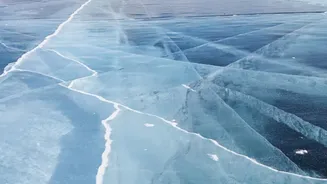
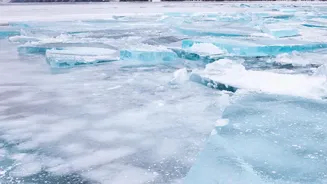
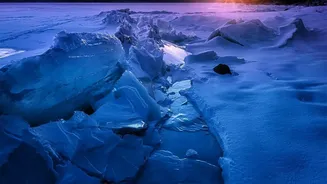
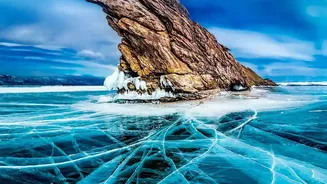
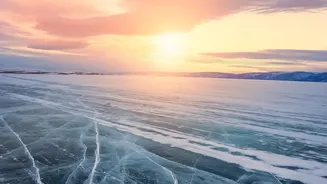
One of the most dramatic features of a frozen lake is its network of cracks, often accompanied by eerie booms and groans. These sounds and patterns are the result of thermal stress. As air temperatures change, the ice sheet expands and contracts. When temperatures plummet, the ice shrinks, creating tension that can cause it to crack suddenly. Conversely, warming temperatures cause the ice to expand. This pressure can create long 'pressure ridges', where one sheet of ice is forced over or under another, creating jagged walls of broken ice. These sounds are more pronounced on clear, snowless days when the ice acts like a giant membrane, allowing the vibrations to travel for miles.
Ghostly Bubbles Trapped in Time
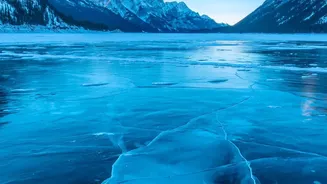
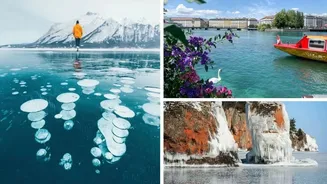
Perhaps the most mesmerising patterns are the columns of white orbs that appear suspended in the ice. These aren't air bubbles, but frozen pockets of methane gas. At the bottom of the lake, bacteria decompose organic matter like dead leaves and plants, releasing methane. In warmer months, this gas simply bubbles to the surface and escapes. But in winter, as the lake freezes, the rising bubbles get trapped. As the ice thickens layer by layer, new bubbles freeze beneath the previous ones, creating stunning vertical stacks. This phenomenon is particularly famous at Abraham Lake in Alberta, Canada, where the visual spectacle draws photographers and scientists alike. While beautiful, these bubbles highlight a climate concern, as methane is a potent greenhouse gas released when the ice thaws.
Delicate Frost Flowers
Under very specific, cold, and calm conditions, a rare and beautiful phenomenon can occur: the growth of frost flowers. These are not frozen flowers, but delicate, intricate clusters of ice crystals that grow on the surface of new, thin ice. They form when the air is much colder than the ice surface, causing water vapour escaping from the ice to sublimate—turning directly from gas to solid. The vapour crystallises around tiny imperfections on the surface, growing into structures that resemble petals. While they can form on frozen lakes, frost flowers on sea ice are particularly interesting to scientists. They become extremely salty and can host microorganisms, creating tiny, temporary ecosystems in some of the coldest places on Earth.
The Science of Icy Light
The way a frozen lake plays with light is a key part of its allure. The clarity of the ice is a major factor. The clearest ice, often called 'black ice' for the dark water visible below, forms slowly under calm conditions, allowing large, pure crystals to grow with few trapped gas bubbles to scatter light. In fact, this type of pure ice can be even more transparent than the lake's water. White ice, full of bubbles and smaller crystals, scatters light in all directions, creating its opaque appearance. Snow cover also dramatically reduces how much light penetrates the ice, which can impact underwater plant and animal life by limiting photosynthesis. The shimmering, reflective quality of an ice surface depends on its smoothness; a perfectly flat sheet will offer a clear reflection, but roughness from wind or forming frost will diffuse the light.