





Why the Resume Is Losing Its Edge
The traditional resume is a summary of claims. It lists skills, experiences, and qualifications. For years, this was the best tool available. However, with the rise of AI, anyone can generate a flawless, keyword-optimised resume in minutes. This makes
it incredibly difficult for hiring managers to distinguish between candidates who have genuine ability and those who simply look good on paper. When every applicant is 'results-driven' and a 'strong communicator', the words start to lose their meaning. Recruiters are aware of this saturation; they know that resumes increasingly look the same, forcing them to find a more reliable way to verify skills.
AI as the Great Differentiator
Artificial intelligence isn't just making resumes more uniform; it's also changing the nature of entry-level work itself. Many routine tasks that were once the domain of junior employees can now be automated or augmented by AI. This means employers are now hiring for skills that AI can't easily replicate: critical thinking, creativity, problem-solving, and adaptability. A resume can claim these skills, but a portfolio can prove them. It provides concrete evidence of how a candidate approaches messy problems, refines their work, and achieves a final outcome. This shift from 'claims' to 'delivery' is the new reality in hiring.
Show, Don’t Just Tell
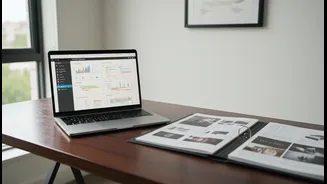
A portfolio is a demonstration, not a declaration. Instead of saying you're a great writer, a portfolio shows your published articles. Instead of listing 'Python' as a skill, it links to a GitHub repository with a project you built. This 'proof-of-work' is becoming the most valuable currency for job seekers. For creative roles like design, this has long been standard practice. Now, it's becoming essential across fields like marketing, data analytics, and even project management. Hiring managers want to see case studies with measurable results, campaign breakdowns, or prototypes you helped develop. This tangible evidence drastically reduces hiring risk for companies.
What Makes a Strong Portfolio Today?
A modern portfolio is not a scrapbook of everything you've ever done. It's a curated collection of your best and most relevant work. Recruiters advise focusing on three to five strong projects that showcase your end-to-end thinking. For each project, explain the problem you were trying to solve, the process you followed, the challenges you faced, and the final impact. Including metrics, stakeholder feedback, or before-and-after comparisons makes your contributions tangible. In technical fields, showing how you’ve used modern tools like retrieval-augmented generation (RAG) or worked on deploying a model can put you ahead of the competition. The goal is to narrate your problem-solving journey, not just display a polished final product.
Building Your First Career Portfolio
For students and recent graduates, the idea of building a portfolio can seem daunting, but you don't need years of professional experience to start. Academic projects, volunteer work, personal passion projects, and freelance gigs are all valuable additions. The key is to document your work as you go. Take screenshots, save drafts, and write brief summaries of your projects. You can host your portfolio on a personal website or use platforms like GitHub, Behance, or Fueler, depending on your field. Remember, the portfolio works in tandem with your resume; while the resume helps you get found by recruiters and applicant tracking systems, the portfolio is what convinces the human on the other side.