

Tree Pose, or Vrksasana, is a cornerstone of yoga, celebrated for building balance and focus. But this classic pose is more than a static hold. Changing your arm position can transform the experience, offering new challenges and benefits.
Establishing Your Roots
Before exploring
the branches, ensure your foundation is solid. Start in Mountain Pose (Tadasana), standing tall with your weight evenly distributed. Shift your weight onto one foot, grounding it firmly. Bend your other knee and place the sole of your foot on the inner ankle, calf, or thigh of your standing leg—always avoiding the knee joint. Press the foot and leg into each other to create stability. Engage your core, lengthen your spine, and fix your gaze on a non-moving point (your drishti) to help maintain balance. Only once you feel steady here should you begin to explore different arm expressions.
Anjali Mudra (Prayer Hands) at Heart Center
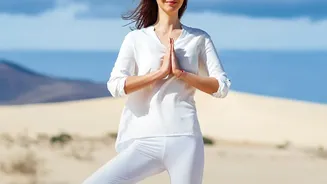
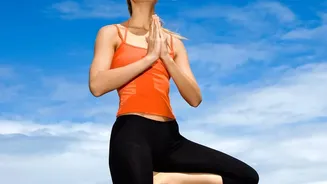
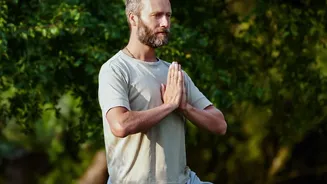
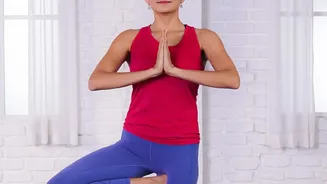
This is the most classic and grounding arm variation for Tree Pose. Bringing your palms together in a prayer position at your heart (Anjali Mudra) helps to center your body's weight and provides physical feedback that aids stability. This hand gesture, found across many traditions, represents peace and the unification of the body's right and left sides, which can enhance concentration. It encourages a sense of inner calm and focus, making it an excellent starting point and a wonderful way to return to your center during practice.
Arms Extended Overhead
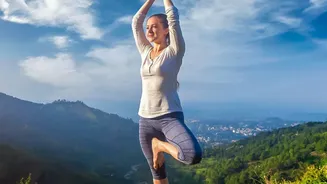
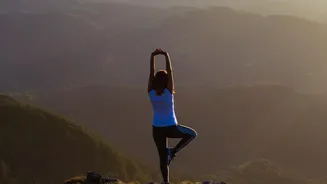
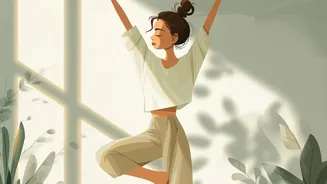
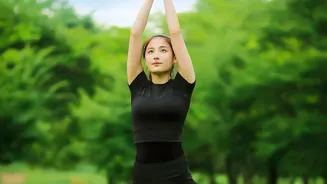
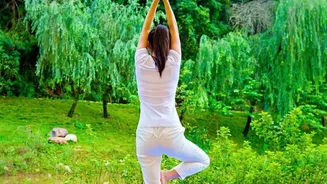
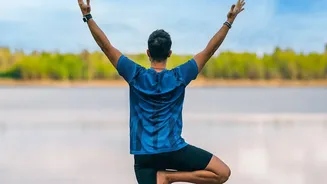
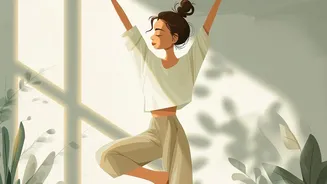
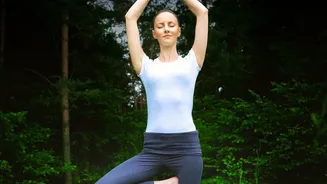
To embody the full expression of a tree reaching for the sun, extend your arms straight up towards the ceiling. You can keep them shoulder-width apart or bring the palms to touch. This variation elevates the pose, both physically and energetically. Lifting the arms raises your center of gravity, which adds a significant challenge to your balance. It also provides a wonderful stretch for the shoulders and side body, promoting better posture by encouraging you to lengthen your spine even more. For those with high blood pressure, it's often advised to keep hands at the heart instead.
Arms Out to the Sides (Branches)
For a more playful and expansive variation, extend your arms out to the sides, parallel to the floor, like the branches of a tree. You can keep the arms straight or add a gentle bend to the elbows. This position broadens the chest and shoulders. It can also be a useful tool for finding balance, as you can make small adjustments with your arms to maintain stability, similar to how a tightrope walker uses a pole. To increase the challenge, you can introduce gentle movement, swaying your 'branches' as if in a soft breeze.
Gyan Mudra (Wisdom Seal)
For a more meditative and subtle experience, you can incorporate Gyan Mudra. Rest your wrists gently on your bent knee or hold your arms out to the sides, bringing the tip of your index finger to touch the tip of your thumb on each hand, with the other three fingers extended. In yogic philosophy, Gyan Mudra is known as the seal of knowledge or wisdom. It is believed to calm the mind, improve concentration, and redirect the body's energy inward. This variation shifts the focus from a purely physical balance challenge to one of mental stillness and introspection.
Reverse Prayer (Paschima Namaskarasana)
This is a more advanced variation that offers a deep opening for the shoulders and chest. Bring your arms behind your back and press your palms together with the fingers pointing upward along your spine. If this isn't accessible, you can hold opposite elbows or clasp your hands together instead. This variation challenges your balance significantly because the arms cannot be used to counterbalance your movements. It's a powerful way to improve posture and release tension in the upper back and shoulders while holding the steady foundation of Tree Pose.