



Beyond the Visible Rainbow
We experience the world through a narrow band of visible light, the colours of the rainbow. But the electromagnetic spectrum is far wider, and infrared is a type of light with a longer wavelength than red light. While we can't see it, we can feel it as
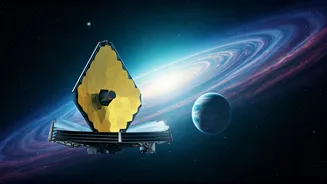
heat. Every object with a temperature above absolute zero emits infrared radiation, from stars and planets to the cosmic dust between them. For decades, astronomers knew a hidden universe was waiting in this invisible realm. Ground-based telescopes are hindered because Earth's atmosphere, particularly water vapour, absorbs most infrared light from space. To truly see this hidden cosmos, we had to go above the atmosphere, which is precisely what the James Webb Space Telescope was built to do.
Piercing the Cosmic Veil
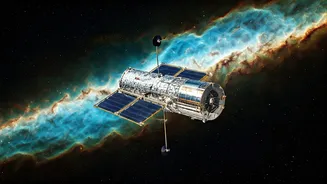
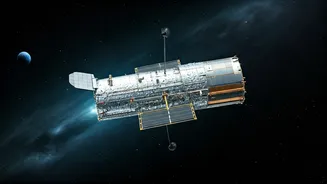
One of infrared's greatest powers is its ability to pass through the dense clouds of cosmic gas and dust that are opaque in visible light. Think of these clouds like thick smoke. A regular telescope like the Hubble, which primarily sees in visible light, can only see the surface of the smoke. Webb's infrared eyes, however, can peer right through it. This capability is a game-changer for understanding how stars are born. Stellar nurseries, like the iconic Pillars of Creation in the Eagle Nebula, appear as dark, looming structures to Hubble. But when Webb views the same object in infrared, the pillars become semi-transparent, revealing thousands of newly formed, glittering stars that were previously hidden within and behind the dust. This isn't just a prettier picture; it's a direct look into the process of star formation that was previously impossible to witness in such detail.
A Telescope That Is Also a Time Machine
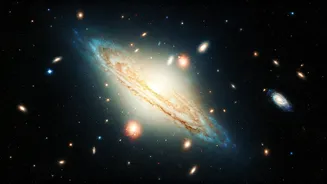
Webb’s second superpower is its ability to look back in time. Because the universe is expanding, light from the most distant objects gets stretched as it travels across billions of years. This phenomenon, known as 'redshift', shifts the light from the first stars and galaxies out of the visible spectrum and deep into the infrared. Hubble could see back to about 400 million years after the Big Bang, glimpsing early galaxies as faint red dots. Webb, optimised for infrared, can push that boundary even further, detecting light from as early as 100-200 million years after the Big Bang. It allows astronomers to study the dawn of the cosmos, witnessing how the very first galaxies assembled themselves. In this sense, Webb is not just a telescope but a true time machine, capturing the faint, ancient light that tells the story of our cosmic origins.
The Technology Behind the Wonder
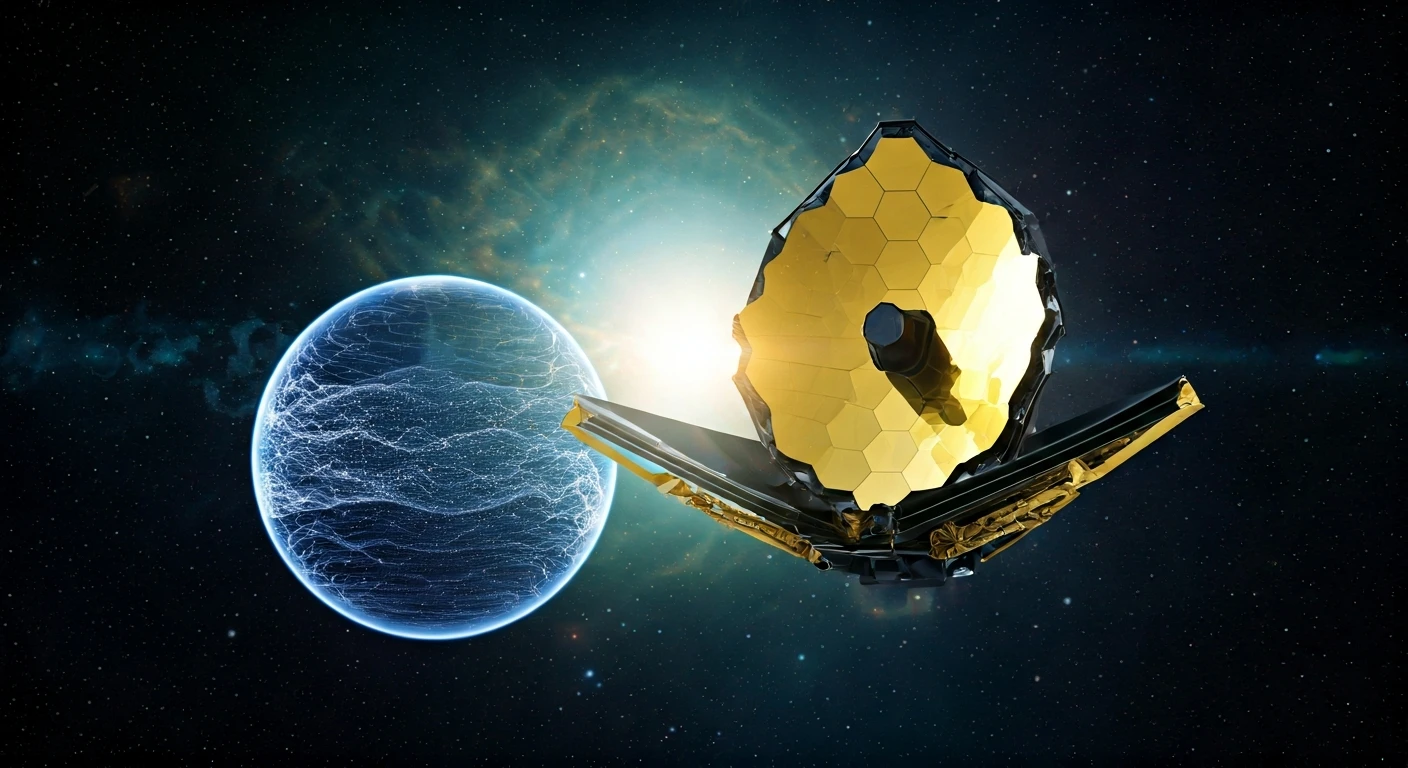
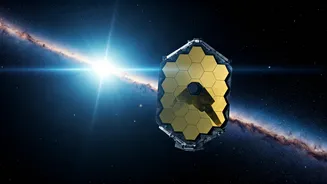
Capturing this invisible light requires extraordinary technology. Webb’s massive 6.5-meter primary mirror, over six times larger in area than Hubble's, collects the faint infrared photons. This light is then channelled into four state-of-the-art instruments. The Near-Infrared Camera (NIRCam) is the workhorse imager, responsible for many of the stunning, high-resolution pictures of distant galaxies. The Mid-Infrared Instrument (MIRI) detects longer infrared wavelengths, perfect for studying cooler objects like the dusty disks where planets form and for getting an even clearer view through dense dust clouds. The other two instruments, NIRSpec and FGS/NIRISS, are spectrographs. They split light into its component wavelengths, creating a sort of chemical fingerprint that can tell scientists about an object's temperature, composition, and motion. Together, these tools translate invisible data into the revolutionary insights and breathtaking images that are redefining astronomy.