

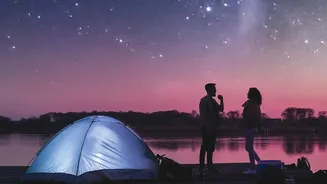

Far from the glow of city lights, India's remote corners hold some of the most spectacular night skies in the world. This guide will take you to the best destinations for an unforgettable cosmic show and teach you how to capture it with your camera.
Hanle, Ladakh: India's Dark Sky Sanctuary
Topping
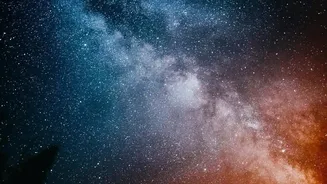
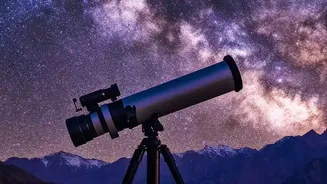
any list of Indian stargazing sites is Hanle in Ladakh, home to India's first official Dark Sky Reserve. Located at a breathtaking altitude of 4,500 metres within the Changthang Wildlife Sanctuary, this remote village offers exceptionally clear and dark skies, which is why the Indian Astronomical Observatory is situated here. The high altitude means you are above much of the atmosphere, resulting in incredibly sharp views of the cosmos. On a clear, moonless night, the Milky Way is not just visible; it's a brilliant, textured band stretching across the sky. The reserve was established to protect these pristine skies from light pollution, promoting astro-tourism and creating a haven for both scientists and amateur astronomers.
Spiti Valley, Himachal Pradesh: A High-Altitude Desert
Like Ladakh, Spiti Valley is a high-altitude cold desert that promises some of the best stargazing conditions in Asia. Villages like Kaza, Kibber, and Langza sit at elevations where the air is thin, dry, and free from the haze and pollution of lower regions. This results in a Bortle Class 2 sky, a measure of darkness where the Milky Way can be so bright it casts a faint shadow. The stark, mountainous landscape provides a dramatic foreground for astrophotography, especially with landmarks like the iconic Buddha statue in Langza or the ancient Key Monastery. The summer months, when the region is accessible and the monsoon has not yet arrived, offer countless clear nights.
Rann of Kutch, Gujarat: A Universe Over Salt
The vast, flat expanse of the Great Rann of Kutch offers a stargazing experience unlike any other. This enormous salt desert provides an unobstructed 360-degree horizon, making you feel like you're standing at the centre of a celestial dome. Far from major cities, its skies are incredibly dark. During the cool, dry winter months, coinciding with the Rann Utsav festival, the conditions are perfect. On a moonless night, the sheer number of visible stars is staggering, and the white salt flats can faintly reflect the light of the Milky Way, creating an ethereal and unforgettable scene for photographers and observers alike.
Coorg, Karnataka: Stargazing In The South
You don't have to travel to the Himalayas for a great night sky. The hills of Coorg (Kodagu) in Karnataka offer the best stargazing opportunities in South India. Nestled in the Western Ghats, the coffee plantations and misty landscapes are located far from significant light pollution. The region, with altitudes between 900 and 1,800 metres, provides dark skies, especially in areas around Madikeri and Kakkabe. The best time to visit is from October to May, after the monsoon clouds have cleared. It’s an accessible destination for those looking to combine a relaxing holiday with a celestial spectacle.
Your Guide to Night_Sky Photography
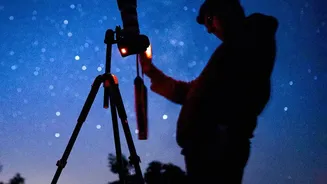
Seeing the stars is one thing; capturing them is another. Night_sky photography is accessible even for beginners with basic equipment. The goal is to let as much light as possible hit your camera's sensor without the stars starting to blur from the Earth's rotation. This requires full manual control over your camera's settings. A camera that can shoot in manual mode, a wide_angle lens with a 'fast' aperture (like f/2.8 or lower), and a sturdy tripod are the essential pieces of gear. A remote shutter release or using your camera's self_timer will prevent shake when you take a picture.
Essential Camera Settings
Start by setting your camera to Manual (M) mode. Set your aperture to its widest setting (the lowest f_number, such as f/1.8 or f/2.8) to gather maximum light. Push your ISO up to between 1600 and 6400, depending on your camera's capabilities and the darkness of the sky. For shutter speed, a good starting point is between 15 and 25 seconds. Any longer, and you'll start to see star trails. Finally, switch your lens to manual focus and set it to infinity. To get sharp focus, use your camera's live view, digitally zoom in on the brightest star you can find, and manually adjust the focus ring until the star is a sharp point of light.