




A Visitor From Between the Stars
On July 1, 2025, a robotic telescope in Chile, part of the Asteroid Terrestrial-impact Last Alert System (ATLAS), spotted a faint speck of light moving against the backdrop of distant stars. At first, it looked like any other newly discovered comet. But
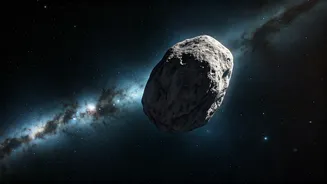
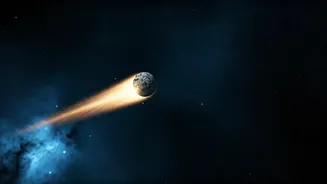
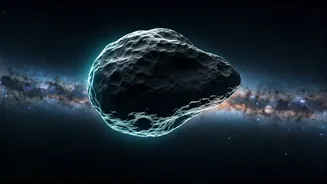
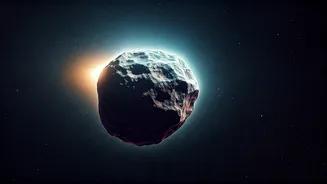
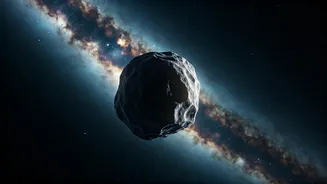
as astronomers calculated its path, they realised it was special. This object was moving too fast—at a blistering pace of over 220,000 kilometres per hour—to be captured by our Sun's gravity. Its trajectory was a hyperbola, a telltale sign that it wasn’t from around here. It was an interstellar object, a traveller from the vast expanse between the stars, now officially designated 3I/ATLAS. This makes it only the third such visitor ever confirmed, following the bizarre, cigar-shaped 'Oumuamua in 2017 and the more conventional comet 2I/Borisov in 2019.
What Makes This Messenger Different?
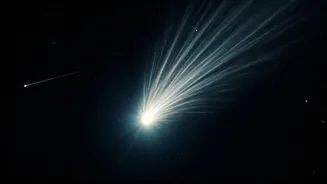
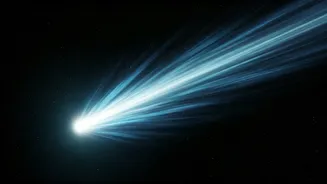
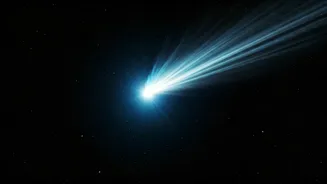
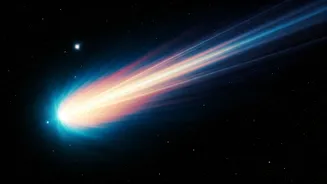
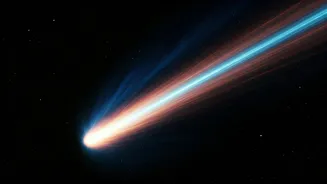
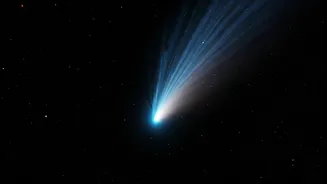
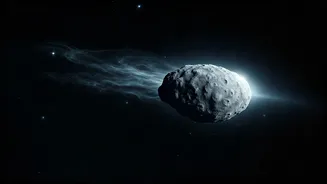
While every interstellar object is a scientific treasure, 3I/ATLAS offers a unique opportunity. Its two predecessors were wildly different. 'Oumuamua was a small, rocky, and oddly shaped object that showed no visible tail, perplexing scientists. 2I/Borisov looked and acted much more like the comets from our own solar system, with a clear coma (a cloud of gas and dust) and tail. 3I/ATLAS appears to be a comet, complete with a fuzzy coma, but with its own distinct personality. Early analysis suggests its composition may offer new clues about the chemical makeup of its home star system. One study even suggests it might be ancient, originating from the galaxy's older "thick disk" population of stars, potentially making it older than our own Sun. It's like receiving a postcard from a part of the galaxy we know very little about.
A Global Effort to Say Hello
The discovery of 3I/ATLAS triggered a worldwide astronomical campaign. Observatories on the ground and in space, including the Hubble and James Webb Space Telescopes, have been pointed at the visitor to gather as much data as possible before it disappears back into the void. This is a race against time. The object made its closest approach to the Sun on October 29, 2025, passing just inside the orbit of Mars. It posed no threat to Earth, coming no closer than about 270 million kilometres. But the brief window of observation is critical. By studying the light reflected off the object and the gases boiling from its surface as it neared the Sun, scientists can decipher its chemical fingerprint. This data provides a direct sample of the building blocks of planets and comets from another part of the galaxy—an unprecedented chance to compare our cosmic ingredients to those of our neighbours.
The Dawn of Interstellar Astronomy
For decades, interstellar objects were purely theoretical. Scientists knew they must exist, created when planets and smaller bodies are ejected from their home systems, but finding one was a huge challenge. The fact that we have now found three in less than a decade shows how much our sky-surveying technology has improved. Projects like ATLAS, which are designed to scan the entire sky repeatedly, are perfect for catching these fast-moving, temporary visitors. And with even more powerful observatories like the Vera C. Rubin Observatory coming online, we are entering a new era. Instead of being once-in-a-lifetime events, discoveries of interstellar objects may soon become a regular occurrence, perhaps several times a year. Each new visitor will add another piece to the grand puzzle of how planetary systems, including our own, form and evolve across the galaxy.