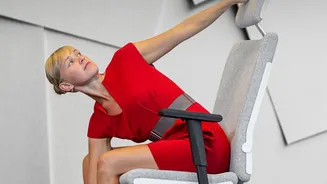





That stiff, locked-up feeling after a long day at your desk is all too common. It can drain your energy for evening activities. But what if a five-minute break could change how you feel post-work? Enter the humble foam roller.
The Daily Desk Dilemma
Our bodies are not designed
for the marathon sitting sessions that define the modern workday. Hours spent hunched over a keyboard cause predictable patterns of physical stress. The muscles in your hips and chest tighten, while the muscles in your upper back become rounded and weak. This adaptation to a sedentary posture can lead to a cascade of issues, including neck tension, lower back aches, and a general feeling of being 'locked up'. This physical strain doesn't just stay at the office; it follows you home, zapping the energy you might have for exercise, hobbies, or playing with your kids. The good news is that you don’t need a complete lifestyle overhaul to fight back. A simple, low-cost tool can act as a powerful reset button for your body.
What Is Foam Rolling?
A foam roller is a cylinder, typically made of dense foam, used for a form of self-massage known as self-myofascial release. The fascia is the web of connective tissue that surrounds your muscles. When we stay in one position for too long, this tissue can become tight and restricted, leading to stiffness and knots. By applying pressure to these areas with a foam roller, you can help release tension, increase blood flow, and improve flexibility. The benefits are primarily neurological; the sustained pressure signals your nervous system to relax the muscle's tension, much like a deep-tissue massage. This process helps restore range of motion, allowing you to move more freely and with less discomfort after your workday is done.
The Five-Minute Workday Reset
The biggest barrier to workday wellness is often time. The beauty of foam rolling is that it delivers significant benefits in short, targeted bursts. You don't need to change into gym clothes or even break a sweat. A five-minute session is enough to target the key areas most affected by sitting. Find a small, private space like an empty conference room or a quiet corner in your office. The goal is consistency, not intensity. A few minutes each day can be more effective than a long, infrequent session. Think of it as postural hygiene, similar to brushing your teeth. It’s a small, daily habit that prevents bigger problems down the line.
Essential Moves for Office Workers
Focus your short sessions on the areas that take the most strain from sitting. Keep movements slow and controlled, breathing deeply to help your muscles relax. Spend about 30 to 60 seconds on each area.n n1. Thoracic Spine (Upper Back): This is the most crucial move for counteracting a slouched posture. Lie on the floor with the foam roller placed horizontally across your upper back, just below your shoulder blades. Bend your knees with your feet flat on the floor and support your head with your hands. Gently lift your hips off the floor and slowly roll up and down between your mid-back and the top of your shoulders. Avoid rolling onto your neck or lower back.n n2. Glutes (Buttocks): Sitting all day can make your glutes tight and sore. Sit on the foam roller and cross one ankle over the opposite knee in a figure-four position. Gently lean toward the side of the crossed leg, rolling over the muscular area of your buttock. This targets the piriformis muscle, which can contribute to sciatic-like pain when tight.n n3. Hip Flexors: These muscles at the front of your hips become short and tight from prolonged sitting. Lie face down and place the foam roller under the front of one hip. Support your upper body with your forearms. Slowly roll up and down the short distance between your hip bone and the top of your thigh.
Making It a Lasting Habit
To get the most out of your new routine, you need to make it stick. Keep your foam roller visible at your desk or in your office as a physical reminder. Set a daily alarm or a recurring calendar event for your five minute rolling break. You could tie it to an existing habit, like right after you get back from lunch. Listen to your body; some discomfort is normal when you hit a tight spot, but you should never feel sharp or radiating pain. If you do, stop immediately. Start with a softer foam roller if you're a beginner, as a very firm roller can be too intense at first.