






From Ocean Farms to Your Food
At its core, algae-based packaging is a bioplastic derived from seaweed and other microalgae. Unlike traditional plastics made from finite fossil fuels, algae is a rapidly renewable resource. It grows quickly in both fresh and saltwater, often in vertical
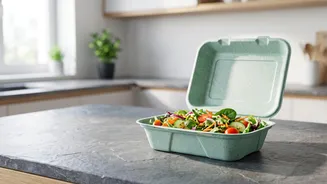
farms, meaning it doesn't compete for agricultural land needed for food crops. The process involves harvesting the algae and extracting its natural polymers, such as alginate or carrageenan. These substances are then processed and transformed into a variety of packaging formats, from flexible films and coatings to sturdy, molded containers that look and feel surprisingly like their plastic counterparts.
The Environmental Edge Over Plastic
The primary appeal of algae packaging is its environmental credentials. First, algae cultivation is a carbon-negative process; it absorbs CO2 from the atmosphere as it grows, helping to combat climate change. Its biggest advantage, however, is its end-of-life. While a plastic container can linger in a landfill or ocean for centuries, most algae-based packaging is designed to be highly biodegradable and compostable. Many forms can break down in a home compost bin in a matter of weeks, returning nutrients to the soil. Some innovative companies have even developed edible formats, such as water pods used at marathons or sauce sachets that dissolve in hot water, eliminating waste entirely.
The Innovators Leading the Charge
This isn't just a laboratory concept; several companies are already bringing algae packaging to market. London-based Notpla has gained significant attention for its seaweed-based products, including takeaway boxes with a natural, greaseproof seaweed coating and their signature edible liquid pods. In the United States, companies like Sway are developing home-compostable flexible films from seaweed to replace plastic pouch and wrapper packaging. Other key players like Loliware specialize in items like seaweed-based straws that don't get soggy like paper versions. These startups are increasingly partnering with major food service and retail brands to pilot and scale their solutions, making the vision of plastic-free takeaways a tangible reality.
The Hurdles to Mass Adoption
Despite its immense potential, algae packaging faces significant challenges before it can truly replace single-use plastic on a global scale. The biggest obstacle is cost. Currently, producing bioplastics from algae is more expensive than manufacturing conventional plastics, which have had decades to optimize their production infrastructure. Scaling up the cultivation and processing of algae to meet global demand requires massive investment and technological advancement. Furthermore, performance is a key factor. While great for many uses, some early forms of algae packaging may not yet match the durability, shelf-life, or barrier properties of plastic for all types of food. Finally, consumer awareness and proper disposal infrastructure are crucial; for compostable packaging to work, it must end up in a compost environment and not in a landfill.