







The Great Monsoon Retreat
The primary reason for October's dual personality is the withdrawal of the Southwest Monsoon. This four-month-long season, which brings the bulk of India's annual rainfall, doesn't just switch off like a light. Instead, it performs a gradual, six-week-long
retreat across the subcontinent. The process typically starts in early September from the northwestern state of Rajasthan and moves southeast. By the beginning of October, the monsoon has usually withdrawn from most of North India, including Punjab, Haryana, and Delhi. This retreat is driven by a fundamental shift in atmospheric pressure as the landmass of northern India begins to cool down faster than the surrounding seas. This change causes the moisture-laden southwesterly winds to weaken and reverse direction, setting the stage for dramatically different weather patterns to emerge across the country.
Autumn Arrives in the North
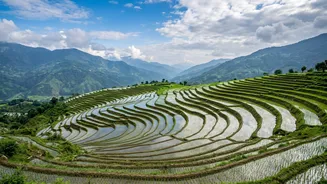
As the monsoon clouds dissipate over North India, they leave behind clear blue skies and a significant drop in humidity. This part of the country, including the plains and the Himalayan foothills, enters a pleasant, pre-winter phase often described as autumn. Days are comfortably warm with ample sunshine, while nights become cool and pleasant. With average temperatures hovering between 20°C and 30°C, it's an ideal time for outdoor activities and marks the beginning of the peak tourist season for destinations like Rajasthan and the Golden Triangle (Delhi, Agra, Jaipur). The land, still nourished by the monsoon rains, is lush and green, creating a picturesque landscape under the mild October sun.
The South's Second Rainy Season
While the north enjoys dry weather, the story is entirely different in the southern peninsula. The retreating Southwest Monsoon picks up moisture as it crosses the Bay of Bengal, re-emerging as the Northeast Monsoon. This system is the primary source of rainfall for several southern states. From October to December, states like Tamil Nadu, along with parts of Andhra Pradesh and Kerala, receive significant precipitation. In fact, Tamil Nadu can receive nearly half of its total annual rainfall during this period. So, while Delhi residents are putting away their umbrellas, Chennai is preparing for its main rainy season, often accompanied by the potential for tropical cyclones forming in the Bay of Bengal.
The Curious Case of 'October Heat'
Adding another layer to this complex month is the phenomenon known as 'October Heat'. This term describes a period of uncomfortably hot and humid weather experienced in some parts of India, particularly the northern and central plains, immediately after the monsoon's withdrawal. The reason for this is twofold: the clear, cloudless skies allow for intense solar radiation, causing daytime temperatures to rise sharply. At the same time, the ground and lower atmosphere still hold a great deal of residual moisture from the preceding rainy season. This combination of high heat and high humidity creates an oppressive, sultry condition that feels much hotter, serving as one final, sweaty farewell from summer before the cool, dry winter air truly takes hold.