



Your Smartphone, The Smart Telescope
The phrase 'Artificial Intelligence' might conjure images of complex robotics, but in the world of stargazing, it's all about making the experience simpler and more accessible. These new astronomy apps use AI and your phone's built-in sensors in several
clever ways. The most common feature is an augmented reality (AR) view. You simply point your phone at the sky, and the app overlays the names of stars, constellations, and planets on your screen in real time. There's no need to struggle with confusing paper star charts. AI algorithms also help by providing personalized recommendations for what to observe based on your location, the time of night, and local weather forecasts. Some apps can even send you push notifications for celestial events like meteor showers or when the International Space Station is about to pass overhead, ensuring you never miss a moment.
Top Apps to Guide Your Gaze
With many options available, here are a few highly-regarded apps that bring the power of AI to your fingertips: Stellarium Mobile: A favourite among amateur astronomers, this app offers a massive database of stars, planets, and galaxies. Its Plus version can even control telescopes and provides advanced observation tools, predicting the best times to view an object from your specific location. Star Walk 2: Known for its beautiful graphics and user-friendly interface, Star Walk 2 is perfect for beginners. Its real-time sky map and 'Time Machine' feature, which lets you see the sky at different points in time, make learning about the cosmos engaging and fun. * SkyView: This app excels in its augmented reality functionality. Just point it at a celestial body to get detailed information about it. It’s an intuitive tool for quickly identifying what you're seeing above you. These apps work without an internet connection, though the available data may be slightly reduced. Most are available on both iOS and Android platforms.
A Spectacular Summer Sky Over India
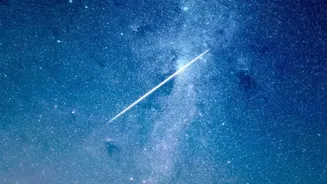
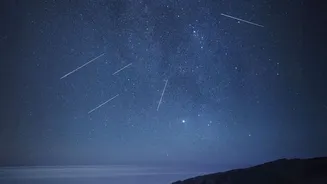
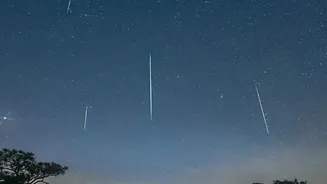
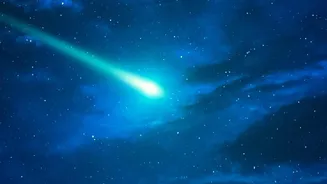
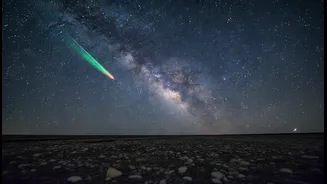
This summer offers some fantastic reasons to look up, and these apps can help you find the action. The highlight is the annual Perseid meteor shower, one of the best of the year. It will be active from mid-July to late August, with its peak expected on the night of August 12-13, 2026. Conditions this year are predicted to be nearly perfect, as the peak coincides with a new moon, meaning darker skies and a better show. Under ideal conditions, away from city lights, you could see up to 50 to 100 meteors per hour. The best viewing time will be in the pre-dawn hours, between 2:00 AM and 4:30 AM. Beyond the Perseids, a stunning six-planet alignment is expected in the pre-dawn hours of August 12, featuring Jupiter, Mercury, Mars, Uranus, Saturn, and Neptune. Throughout late July and August, Venus will be a brilliant object in the evening sky, while Saturn will be perfectly visible for most of the night.
Tips for Urban Stargazers
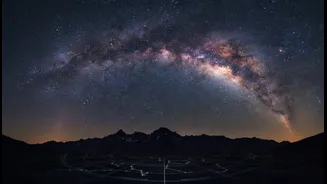
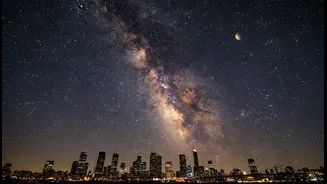
Living in a city doesn't mean you have to miss out. While light pollution is a challenge, a little planning can make a big difference. Find the darkest spot you can, like a park, a rooftop, or a balcony with an unobstructed view. Give your eyes at least 20 to 30 minutes to adapt to the darkness; this will help you see fainter stars. It’s also crucial to avoid looking at your bright phone screen. Most stargazing apps come with a 'red light mode' which helps preserve your night vision. Even with city lights, bright planets and major meteor showers like the Perseids are still visible. The key is patience and knowing exactly where to look—something your new AI-powered guide is perfect for.