







The Search for a Simpler Transaction
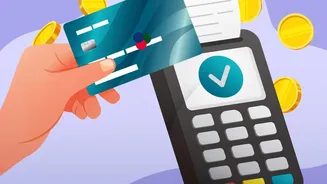
For many small business owners, the decision to go cashless is rooted in a desire for efficiency and security. Handling physical money comes with a surprising number of operational headaches. Employees spend time counting cash, preparing bank deposits,
and managing the register, all of which are hours that could be spent on customer service. Going digital automates much of this, streamlining end-of-day accounting and reducing human error. Security is another major factor. A register full of cash can make a small shop a target for theft, both from external robberies and internal employee misconduct. By eliminating cash, business owners reduce these risks, creating a safer environment for their staff and securing their revenue. The result is often faster checkout lines and a smoother customer experience, which can be a significant competitive advantage, especially for businesses like cafes and fast-casual restaurants.
The Flip Side: Processing Fees and Tech Reliance
While going cashless solves some problems, it introduces others, most notably the cost of electronic transactions. Businesses don't get to keep the full amount of a credit or debit card sale; they pay processing fees on every single swipe, tap, or dip. These fees, which typically range from 1.5% to 3.5% of the transaction, are paid to card networks and payment processors. While it may sound small, this percentage can eat into the thin profit margins many small shops operate on. Beyond fees, a cashless model makes a business completely dependent on technology. A power outage, internet disruption, or a point-of-sale system crash can bring sales to a grinding halt. Cash, by contrast, always works.
The High Cost of Financial Exclusion
Perhaps the most significant consequence of the cashless trend is its effect on financial inclusion. Not everyone has a bank account or credit card. According to the Federal Reserve, about 6% of U.S. adults were "unbanked" in 2025, meaning they don't have a checking or savings account. These rates are significantly higher for low-income households, younger adults, and certain racial and ethnic minorities. For these individuals, cash is not a choice but a necessity. When a business refuses to accept cash, it effectively denies service to the unbanked and underbanked members of its community. This has sparked a considerable backlash, with critics arguing that cashless policies are discriminatory and deepen economic inequality. These individuals often rely on non-bank services like check-cashing, which come with their own high fees, making financial stability even harder to achieve.
A Growing Legal Pushback
In response to concerns about financial exclusion, a number of cities and states have taken action. While federal law does not require private businesses to accept cash, state and local governments are free to enact their own rules. Massachusetts has had a law on the books since 1978 requiring retailers to accept cash. In recent years, it has been joined by states like New Jersey, Colorado, and Rhode Island, as well as major cities including Philadelphia, San Francisco, and New York City. These laws, which can carry hefty fines for non-compliance, are forcing some businesses that had gone cashless to reverse course. The legal landscape remains a patchwork, but the growing number of bans signals a powerful counter-movement to the cashless trend, forcing a public debate over whether the convenience for some is worth the exclusion of others.