






Bad weather, a busy schedule, or just not feeling a trip to the gym? You can still get your steps in. An effective, gentle walking workout is entirely possible right in your living room, with no special equipment needed.
Why Walk Indoors?
Walking inside your home is one
of the most accessible forms of exercise. It's free, convenient, and completely weatherproof, meaning rain or extreme heat won't derail your routine. Because it’s a low-impact activity, it’s also gentle on your joints, making it a great option for beginners, older adults, or anyone recovering from an injury. Marching in place elevates your heart rate, improves circulation, and helps you burn calories, all of which contribute to better cardiovascular health and weight management. Even short bursts of walking can break up long periods of sitting and boost your energy levels.
The Foundation: Marching in Place
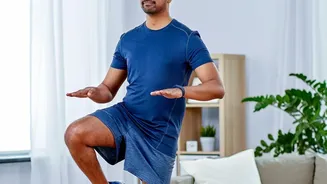
The core of any indoor walking workout is marching in place. To do it correctly, stand tall with your feet about hip-width apart. Engage your core by gently pulling your belly button toward your spine. Begin lifting one knee toward your waist, then the other, alternating legs at a steady pace. Swing your arms naturally as you would during a regular walk, with your opposite arm moving forward with the opposite leg. Land softly on the balls of your feet to minimize impact. If you feel unsteady, stand near a wall or the back of a sturdy chair for support.
Add Variety with Simple Moves
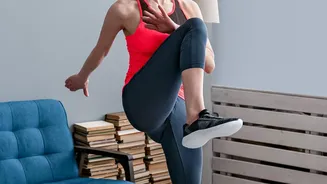
Once you're comfortable with marching, you can add variations to work different muscles and increase the intensity. These moves keep the workout engaging and challenge your body in new ways. • Side Steps: From a standing position, step your right foot out to the side, then bring your left foot to meet it. Then, step your left foot out and bring your right to meet it. This lateral movement is great for your inner and outer thighs. • High Knees: This is an intensified version of marching. As you march, focus on driving your knees up as high as you comfortably can, aiming for hip height. This move engages your core and hip flexors more deeply. • Butt Kicks: While marching, bend your knee to kick your heel back toward your glute. Alternate legs. This variation targets your hamstrings. • Tap Backs: Stand tall and simply tap one foot back behind you, keeping your chest lifted. Alternate feet. This is another low-impact way to vary the movement.
Engage Your Upper Body
Incorporating arm movements turns your indoor walk into a full_body workout, helping to increase your heart rate and calorie burn. While performing any of the leg movements, try adding these arm variations: • Arm Swings: Bend your elbows at a 90_degree angle and swing your arms forward and back with purpose, as if you're power walking. • Arm Raises: As you step to the side, raise both arms straight out in front of you or overhead. Lower them as you bring your feet together. This modification increases the cardiovascular challenge. • Bicep Curls & Punches: Make fists and perform bicep curls or gentle forward punches as you march. This adds a light strength_training component to your cardio session.
Putting It All Together: A 15_Minute Routine
You can create a simple and effective workout by combining these moves into a circuit. Try this 15_minute plan, performing each exercise for the specified time before moving directly to the next. For a longer workout, simply repeat the circuit. • Minutes 0_3: Warm_up with a slow and steady march in place. • Minutes 3_5: Increase your pace to a brisk march. • Minutes 5_7: Perform side steps, alternating directions. • Minutes 7_9: Switch to high knees, lifting them as high as is comfortable. • Minutes 9_11: Do butt kicks, focusing on your hamstrings. • Minutes 11_13: Return to a brisk march while adding arm punches or overhead raises. • Minutes 13_15: Cool down by slowing your march back to a gentle pace and finishing with a few simple stretches for your legs.