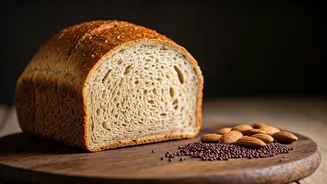









Why Bake With Emmer Wheat?
Emmer wheat, known locally in India as khapli wheat, is one of the oldest cultivated grains in the world. For sourdough bakers, it represents a delightful new frontier of flavour and texture. Unlike modern high-gluten wheat, emmer has a softer gluten structure,
which results in a wonderfully tender crumb. Its flavour profile is distinct: nutty, slightly sweet, and earthy, adding a new dimension to the familiar sourdough tang. Furthermore, many people find ancient grains like emmer easier to digest. It’s a fantastic way to add variety, nutrition, and a touch of history to your baking routine, connecting you to a long tradition of bread-making.
Tips for Taming Emmer Dough
Working with emmer is different from using strong bread flour, but it's not difficult once you know its quirks. Creative bakers who have mastered it share a few key tips. First, emmer absorbs water differently and can become very sticky, so start with a lower hydration (around 70-75%) than you might be used to. Second, its fermentation is fast. Keep a close eye on your dough during bulk fermentation, as it can over-proof quickly. Many bakers recommend a shorter bulk rise at a slightly cooler temperature. Finally, the gluten is more delicate. Instead of aggressive kneading, opt for gentle stretch-and-folds to build strength without tearing the dough. Embrace the stickiness—a wet scraper and floured hands are your best friends here.
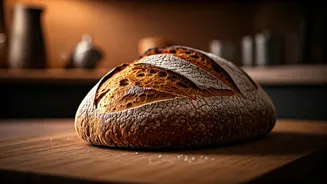
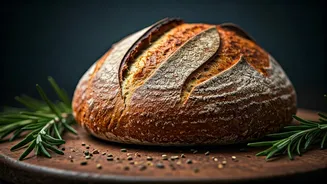
Recipe: Rustic Emmer-Spelt Sourdough Loaf
This recipe, a favourite among home bakers, blends emmer with spelt for a bit more structure, creating a beautiful, open-crumb loaf. **Ingredients:** - 250g emmer (khapli) flour - 250g spelt flour - 375g water - 100g active sourdough starter - 10g salt **Method:** 1. In a large bowl, mix the flours and water until no dry bits remain. Let it autolyse (rest) for 1 hour. 2. Add the active starter and salt. Use wet hands to squish and mix everything together thoroughly. 3. Perform 3-4 sets of stretch-and-folds every 30 minutes over the next 2 hours. 4. Let the dough bulk ferment until it's airy and has risen by about 50%. This may take 3-4 hours, depending on your room temperature. 5. Gently shape the dough into a boule or bâtard, place it in a floured banneton, and cold-proof in the refrigerator for 12-18 hours. 6. Preheat your oven and Dutch oven to 230°C (450°F). Bake the loaf covered for 25 minutes, then uncovered for another 20-25 minutes until deep brown. Let it cool completely before slicing.
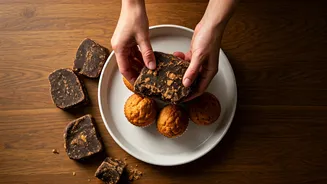
Recipe: Soft Emmer and Jaggery Rolls
For a softer, slightly sweet treat, these enriched rolls are perfect. The jaggery complements emmer's natural sweetness beautifully. **Ingredients:** - 400g emmer flour - 100g all-purpose flour (maida) - 100g active sourdough starter - 250g milk - 50g melted butter or ghee - 50g powdered jaggery - 8g salt - 1 egg (for egg wash, optional) **Method:** 1. Combine all ingredients (except the egg wash) in a bowl and mix to form a shaggy dough. Let it rest for 30 minutes. 2. Gently knead on a lightly floured surface for 5-7 minutes until the dough is smooth. 3. Place in a greased bowl, cover, and let it bulk ferment until doubled, about 4-6 hours. 4. Divide the dough into 8-10 equal pieces and shape them into tight balls. Arrange them in a greased baking pan. 5. Let them proof for another 1-2 hours until puffy. Brush with egg wash if desired. 6. Bake in a preheated 190°C (375°F) oven for 20-25 minutes until golden brown. Serve warm.