






The Rise of 'Snackable' Content
The most profound change in India's viewing habits is the explosion of short-form video. Platforms like Instagram Reels and YouTube Shorts have become the nation's new prime time, with recent studies showing they have overtaken traditional television
in daily viewership. A 2025 study highlighted that 97% of Indian consumers watch short videos daily. This format’s success is built on immediacy and accessibility. The content is designed to be consumed in bite-sized chunks, perfectly fitting into the fragmented moments of a busy day—the commute, a quick break, or even while waiting for a meal. This has democratized content creation, where virality is no longer the exclusive domain of polished studios. This constant stream of quick, engaging content has rewired our attention spans and created a powerful feedback loop of instant gratification.
The Binge-Watching Revolution
On the other end of the spectrum is the deep, immersive world of Over-the-Top (OTT) streaming. Services like Netflix, Prime Video, and JioCinema have cemented their place in Indian households, transforming how we consume long-form stories. India's OTT audience grew to nearly 665 million in 2026, with paid subscriptions also rising significantly. This boom is driven by a convergence of factors: affordable data, widespread smartphone penetration, and the rollout of 5G, which eliminates buffering and enables high-definition streaming on the go. The market, valued at over USD 6.9 billion in 2026, is projected to grow at a staggering rate, fueled by a diverse content library that increasingly caters to regional languages and tastes. Unlike the fixed schedule of television, streaming offers complete control, allowing viewers to binge-watch entire seasons at their own pace.
Two Screens, One Couch
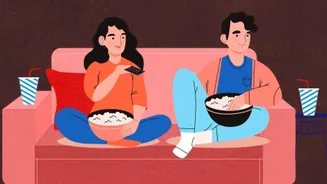
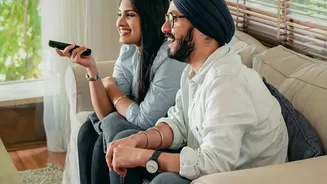
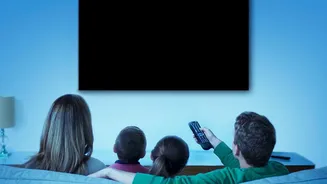
The new Indian viewing routine isn't a simple switch from one format to another; it's a hybrid model where both short and long-form content coexist. This is best exemplified by the phenomenon of 'dual-screening'. Picture watching a cricket match on your connected TV while simultaneously scrolling through expert commentary, memes, and player stats on your smartphone. Research shows that a majority of Indian viewers—up to 78% during live sports—now engage with a second screen while watching TV. This split attention has become the norm. The big screen is for the main event, the shared family experience, while the small screen offers a personalized, interactive layer. Viewers might look up an actor from the movie they're streaming or shop for a product seen in an ad, creating a dynamic interplay between the two formats.
Why This Shift is Happening Now
This transformation is no accident. It's the result of a perfect storm of technological and economic trends. The digital revolution, accelerated by telecom players like Jio, crashed data prices and put a smartphone in nearly every hand. India’s active internet user base has now crossed 950 million. Furthermore, the rollout of 5G and fixed wireless access (FWA) devices is bringing high-speed internet to smaller towns and rural areas, unlocking new audiences for streaming platforms. This infrastructural backbone, combined with a young demographic hungry for personalized and on-demand content, has created the ideal environment for both short video apps and OTT giants to flourish. Digital media has now officially overtaken television as the largest segment of India's media and entertainment sector, which reached ₹2.78 trillion in 2025.