
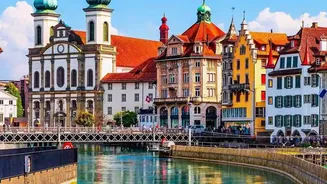
1. Chapel Bridge, Lucerne
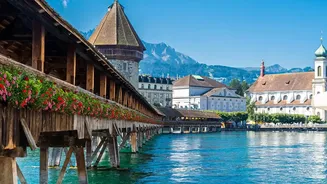
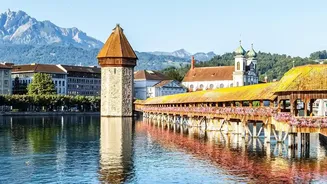
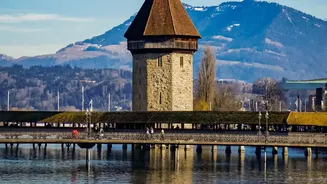
The Kapellbrücke, Europe's oldest covered wooden bridge, is the undeniable centrepiece of Lucerne. Its beauty, history, and central location make it a magnet for visitors from the moment they step off the train or lake boats. The bridge is a natural pedestrian
artery connecting the old town to the new, meaning it's constantly filled with a slow-moving procession of people snapping photos of the bridge, the adjacent Water Tower, and the swans on the Reuss River. Between 10 a.m. and 4 p.m. in the summer, crossing can feel more like shuffling in a queue than a peaceful stroll. The best strategy is simple: timing. The bridge is free and open 24/7. Visiting before 9 a.m. or after sunset offers a completely different, much calmer experience where you can actually appreciate the 17th-century paintings inside without being jostled.
2. Zermatt and the Matterhorn
The iconic pyramid of the Matterhorn draws millions of visitors a year to the car-free village of Zermatt. With a permanent population of around 6,000, the town's infrastructure is regularly strained, especially during peak ski season and the summer hiking months. The main street, Bahnhofstrasse, can feel overwhelmingly crowded, and the queues for the cable cars up to key viewing points like Gornergrat or Glacier Paradise start building early. The sheer volume of day-trippers has led to public debate among locals about how to manage the influx. To escape the worst of it, stay overnight. This allows you to catch the first lifts in the morning, which is when the Matterhorn is often clearest and the trails are quietest. Alternatively, explore some of the less-trafficked hiking trails that offer stunning views without the bottleneck of the main gondola stations.
3. Jungfraujoch – Top of Europe
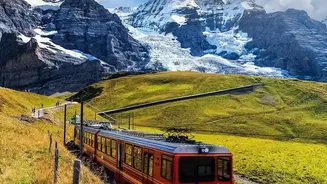
Reaching the highest railway station in Europe at 3,454 metres is a bucket-list item for many, and it shows. The journey itself, whether by the traditional cogwheel train or the faster Eiger Express gondola, is a marvel of engineering, but it serves over a million visitors annually. At the top, the Sphinx Observatory terrace and the Ice Palace can become extremely congested, particularly between mid-morning and early afternoon when tour groups arrive in waves. The key to a better experience is booking the first train of the day. This 'Good Morning Ticket' strategy not only often comes with a discount but gets you to the summit before the masses, granting you a precious hour or two of relative calm to enjoy the staggering view of the Aletsch Glacier. Seat reservations are now mandatory during the high season, so advance planning is no longer just a suggestion but a necessity.
4. Interlaken
Interlaken's name reveals its geography: it lies between two stunning lakes, Thun and Brienz. Its location also makes it the primary gateway to the entire Jungfrau Region, funneling nearly every visitor heading to Grindelwald, Lauterbrunnen, and beyond through its transport hubs. While the surrounding nature is spectacular, the town itself can feel like a bustling, transient hub rather than a tranquil alpine retreat, especially during the peak summer months of July and August. Local guides note that overtourism has become a genuine issue, with activities booking out far in advance. Many seasoned travelers recommend using Interlaken as a transport connection but staying in one of the smaller, quieter villages on the lakeshores, like Brienz, or higher up in the mountains. This allows you to enjoy the region's beauty while dipping into the main town only when necessary.
5. Rhine Falls
As Europe's most powerful waterfall by volume, the Rhine Falls near Schaffhausen is a major natural attraction. The experience is shaped by two things: water flow and visitor flow. The falls are at their most dramatic in May and June, when Alpine snowmelt is at its peak. However, the largest crowds arrive later, in July and August. This creates a 'sweet spot' for visiting in late spring or early summer, when you get the impressive water volume with fewer people. The main pressure points are the viewing platforms at Schloss Laufen and the queues for the boat trips to the central rock. To avoid the worst of the congestion, arrive before 10 a.m. when the coach tours from Zurich begin to pull in, or visit on a weekday.