


More Than Just Sweetness
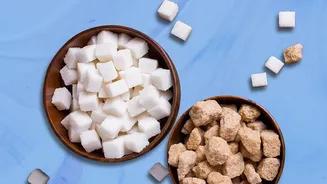
Before comparing honey and sugar, it's crucial to understand the role sugar plays in baking beyond just making things sweet. Granulated sugar, or sucrose, is a workhorse. Its crystals help create air pockets when creamed with fat, leading to a lighter
texture. It's also hygroscopic, meaning it attracts and holds onto water, which keeps baked goods moist and tender long after they've cooled. By interfering with gluten development, sugar ensures cakes and muffins have a soft crumb instead of a tough, bread-like structure. It also contributes to that beautiful golden-brown color through caramelization and the Maillard reaction, and it can help stabilize egg foams in recipes like meringues.
Understanding Honey's Composition
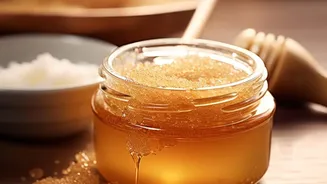
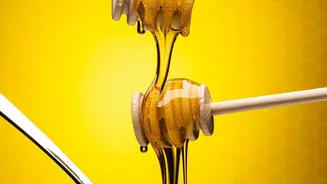
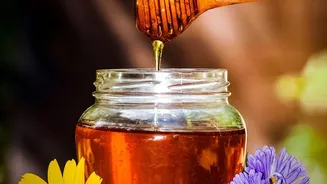
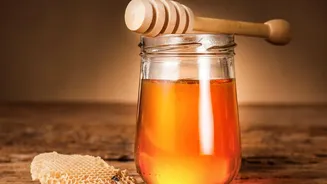
Honey is fundamentally different. While table sugar is pure sucrose (a molecule of 50% glucose and 50% fructose bonded together), honey is a mix of separate glucose and fructose molecules. Typically, honey contains more fructose, which is why it tastes sweeter than sugar, allowing you to use less for the same level of sweetness. It also contains about 17-20% water, making it a liquid ingredient. Furthermore, honey is naturally acidic, with a pH that can affect leavening agents like baking soda. Unlike refined sugar, which offers 'empty calories', raw honey contains trace amounts of vitamins, minerals, enzymes, and antioxidants, though these are in very small quantities.
The Nutritional Scorecard
Many people reach for honey believing it's the healthier choice. The reality is more nuanced. Per tablespoon, honey has more calories than sugar (about 64 vs. 49), mainly because it's denser. However, since it's sweeter, you might use less, potentially evening out the calorie count. Honey does have a slightly lower glycemic index (GI) than sugar, meaning it raises blood sugar a bit more slowly, but the difference is moderate. Both will cause a spike in blood sugar. While honey contains trace nutrients like potassium, B vitamins, and antioxidants not found in white sugar, the amounts are generally too small to offer significant health benefits in the quantities typically consumed.
Performance in the Oven
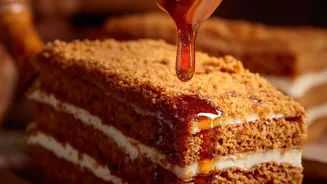
In baking, honey's properties create a different result. Its higher fructose content causes it to brown much faster than sugar. This means you often need to lower your oven temperature by about 25°F to prevent the outside from burning before the inside is cooked. As a liquid that is highly hygroscopic, honey creates baked goods that are denser and moister. This can be a huge advantage for cakes and quick breads, helping them stay fresh longer. However, for recipes where a crisp texture is desired, like shortbread or certain cookies, sugar is often the better choice. Honey's natural acidity will also react with baking soda, providing leavening.
A Practical Substitution Guide
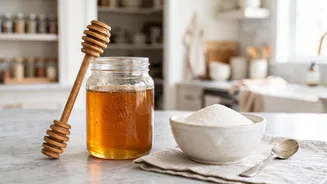
If you want to swap honey for sugar, you can't just do a one-for-one exchange. Following a few key rules will set you up for success. First, use less honey. A good rule of thumb is to use about 3/4 cup of honey for every 1 cup of sugar. Second, reduce the other liquids in the recipe by about 1/4 cup for every cup of honey used to account for its water content. If a recipe has no other liquids, you can add a tablespoon or two of extra flour. Third, lower the oven temperature by 25°F (about 15°C) to prevent premature browning. Finally, if the recipe doesn't already call for baking soda, add about 1/4 teaspoon for every cup of honey to neutralize its acidity and ensure a proper rise.