





What is a Caretaker Government?
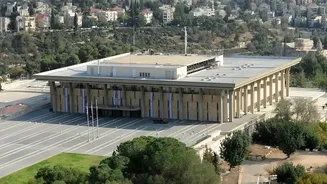
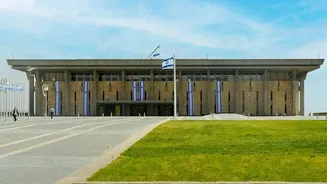
In Israel's parliamentary system, it's rare for a single party to win an outright majority of the 120 seats in the Knesset, the nation's parliament. This means governments are almost always coalitions of multiple parties. A 'caretaker' or 'transitional'
government is a temporary administration that runs the country after an election, or if a government loses a confidence vote, until a new, stable coalition is successfully formed and sworn in. The purpose is to ensure the continuous function of the state and prevent a power vacuum. While the term 'caretaker' isn't explicitly in Israeli law, the principles governing it are established in the country's Basic Laws and have been further defined by Supreme Court rulings over the years.
The Current Political Deadlock
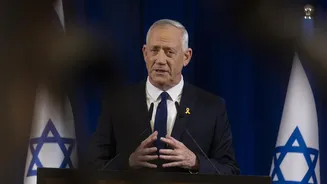
Following the October 27, 2026 election, neither Prime Minister Benjamin Netanyahu's Likud-led bloc nor the opposition group of parties secured a clear 61-seat majority. Israel's President Isaac Herzog tasked Gadi Eisenkot, a former military chief and leader of the Yashar party, with the challenge of forming a new government. Eisenkot has 28 days, with a possible 14-day extension, to build a coalition. However, the negotiations are complex, with deep ideological divides between potential partners, including disagreements over the inclusion of Arab-led parties and military draft exemptions for ultra-Orthodox students. As these high-stakes talks continue, Netanyahu and his ministers from the previous government remain in charge in a caretaker capacity.
The Limits of Power
A caretaker government legally possesses all the powers of a regular government. However, there's a crucial catch: it is expected to operate with 'restraint'. Because it no longer has a clear mandate from the Knesset, it's supposed to avoid making major, long-term, or controversial decisions unless there is a 'vital public need'. This generally means no major new legislation, no permanent appointments to senior public posts like the attorney general or police chief, and no significant changes to the national budget. While the prime minister can still dismiss ministers, court precedent has heavily restricted making new appointments. This principle of restraint is a constitutional convention designed to prevent an outgoing government from tying the hands of its successor.
What Netanyahu Can Still Do
Despite the limitations, a caretaker prime minister is far from powerless. The most significant authority lies in foreign affairs and national security. The Supreme Court has historically given caretaker governments broad discretion in these areas, viewing security as a vital and continuous need. This means Netanyahu's government can continue to manage ongoing military conflicts, conduct diplomacy, and respond to immediate security threats. While a decision to launch a major new war would require cabinet approval and face intense scrutiny, it remains a legal possibility. This authority keeps Netanyahu at the center of Israel's most critical decisions, even without a majority in parliament.
Coalition Politics and a Race for Control
While Eisenkot attempts to form a government, his allies in the Knesset are not sitting idle. They have been working to gain control over the parliamentary agenda by trying to replace the Knesset Speaker, a position held by a member of Netanyahu's Likud party. Installing their own speaker would allow the anti-Netanyahu bloc to control which legislation comes to a vote, potentially even advancing bills to reverse controversial judicial overhaul laws passed by the previous government. This creates a parallel power struggle: Netanyahu controls the executive branch in a caretaker role, while his opponents try to seize control of the legislative branch to limit his influence and advance their own agenda before a new government is even formed.