



The Challenge: Living Off the Land
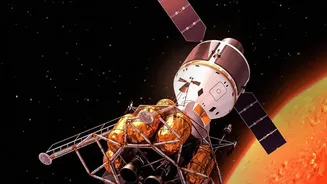
Establishing a permanent human presence on Mars presents immense logistical challenges, chief among them being the supply of breathable air and rocket propellant for the return journey. The Martian atmosphere is over 95% carbon dioxide and extremely thin,
making it unbreathable. Transporting the sheer volume of oxygen needed for life support and as a rocket oxidizer from Earth would be prohibitively expensive and impractical. For every seven tons of rocket fuel, a Mars ascent vehicle would require about 25 tons of oxygen. This reality has forced scientists to embrace In-Situ Resource Utilization (ISRU), a principle focused on using local Martian resources to create essential supplies. The ability to generate oxygen on-site is not just a convenience; it is the cornerstone technology for making human exploration of Mars sustainable.
MOXIE: A Toaster-Sized Oxygen Factory
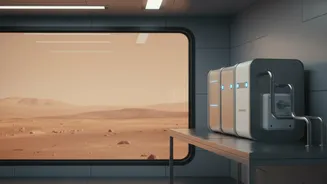
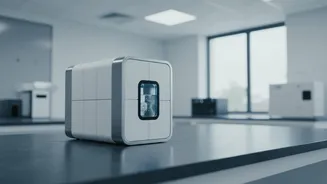
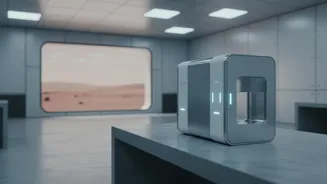
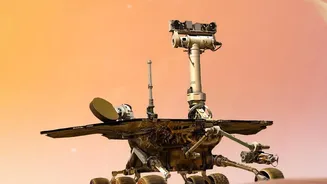
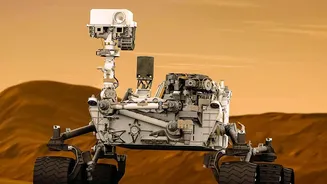
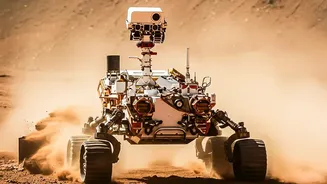
Enter the Mars Oxygen In-Situ Resource Utilization Experiment, or MOXIE. This remarkable device, roughly the size of a toaster, was sent to Mars aboard the Perseverance rover. Developed through a collaboration between MIT and NASA, MOXIE’s mission was to prove that oxygen could be reliably produced from the Martian atmosphere using a process called solid oxide electrolysis. The instrument works by drawing in the CO2-rich Martian air, heating it to approximately 800 degrees Celsius, and then electrochemically splitting the carbon dioxide molecules into oxygen ions and carbon monoxide. The oxygen ions are then recombined to form pure, breathable oxygen. It was the first-ever attempt to produce a critical resource from the atmosphere of another planet.
A Resounding Success on the Red Planet
Over the course of its mission, which concluded in 2023, MOXIE proved to be an overwhelming success. In its first run in April 2021, it produced about 5 grams of oxygen, enough for an astronaut to breathe for 10 minutes. Across 16 operational runs under various Martian conditions—including different seasons and times of day—MOXIE consistently met and eventually doubled its production targets. At its peak, it generated 12 grams of oxygen per hour at over 98% purity. In total, the experiment produced 122 grams of oxygen, proving that the technology is robust and can function reliably in the harsh Martian environment. This successful demonstration has been hailed as a critical first step toward making human missions to Mars a reality.
From Grams to Tons: The Scaling-Up Hurdle
While MOXIE's success is a landmark achievement, the path to supporting a human crew requires a monumental leap in scale. The 12 grams per hour produced by the demonstration unit is a tiny fraction of what is needed. Scientists estimate that a full-scale system capable of producing enough oxygen for a Mars ascent vehicle would need to generate two to three kilograms per hour, continuously. Such a system would be roughly 200 times larger than MOXIE and would require between 25 to 30 kilowatts of continuous power—a significant energy demand that would likely necessitate a dedicated power plant, possibly a small nuclear reactor. The next-generation system must also include capabilities to liquefy and store the oxygen, adding another layer of engineering complexity. These challenges are now the central focus for engineers planning the next phase.
The Future: 'Big MOXIE' and Beyond
The focus has now shifted from proving the concept to designing what some team members call "Big MOXIE." Instead of simply building a MOXIE 2.0, NASA and its partners are designing a full-scale, autonomous system that integrates oxygen production, liquefaction, and storage. This future oxygen factory would be a critical piece of infrastructure sent to Mars ahead of any human crew, working for over a year to fill a propellant tank with the roughly 30 tons of oxygen needed for the trip home. The data and operational experience from the original MOXIE are now invaluable, informing designs for a more efficient and robust system. While significant engineering challenges remain, MOXIE has successfully paved the way, shifting the conversation from 'if' we can make oxygen on Mars to 'how' we will scale it up to support the first human explorers.