




First, Let's Clear the Air: Is UPI Still Free for You?
Yes, for the vast majority of users and transactions, UPI remains completely free. The National Payments Corporation of India (NPCI) has been clear that customers will not be charged any fee for making UPI payments. This means your everyday person-to-person
(P2P) transfers to friends and family, and most of your payments to merchants (P2M), will not attract any new charges. The system that has revolutionised digital payments in India is not changing for the average user. So, you can continue to pay your local grocer or split a dinner bill without a second thought.
What is This New Fee and Who Pays It?
The new charge is called a Merchant Discount Rate (MDR), which is a fee paid by merchants to payment service providers for processing digital transactions. Effective from October 15, 2026, a 0.4% MDR will apply to specific merchant transactions over ₹2,000. It is crucial to understand that this is a charge on the business receiving the money, not on the customer sending it. The government has explicitly advised banks to ensure that merchants do not pass this cost on to consumers. This MDR is designed to help sustain the payment ecosystem by covering operational costs for banks and payment platforms.
Which Transactions Are Actually Affected?
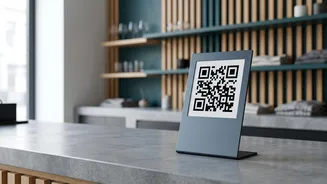
The fee specifically targets certain person-to-merchant (P2M) payments above the ₹2,000 threshold. However, there are significant exemptions. The fee does not apply to regular bank account-to-bank account UPI transfers. It was initially aimed at transactions made via Prepaid Payment Instruments (PPIs) like digital wallets. The latest guidelines have broadened this to a general MDR on large merchant transactions, with key exemptions. Small vendors who receive up to ₹1 lakh per month via UPI QR codes are exempt from this charge, which covers the vast majority of small businesses in the country. In fact, official estimates suggest that about 96% of all merchant transactions will remain unaffected.
How 'Large Purchases' Will Be Handled
For a standard qualifying merchant transaction of ₹10,000, the merchant would incur an MDR of ₹40. The fee is capped at ₹300 per transaction, meaning for any payment of ₹75,000 or more, the charge will not exceed this amount. Certain essential categories have even lower, fixed fees. For instance, payments for fuel, railways, telecom, and insurance above ₹2,000 will attract a flat fee of just ₹5 for the merchant. Capital market transactions, like for mutual funds, have a rate of 0.02%, also capped at ₹300.
Could This Cost Be Passed On to You Indirectly?
This is the key question for consumers making large purchases. While the rules prohibit merchants from directly charging customers the MDR, the economic reality is more complex. Businesses facing a new operational cost may, over time, factor it into their overall pricing strategy. This is a common practice with credit card MDRs, where the cost is often absorbed into the shelf price of goods and services. For high-value items like electronics, furniture, or holiday packages, a merchant might be less willing to absorb the fee. While they can't add a 'UPI surcharge', a marginal price adjustment across products is a possibility. However, given that the UPI MDR is significantly lower than typical credit card fees, many businesses may simply accept it as a cost of doing digital business.