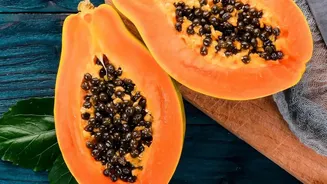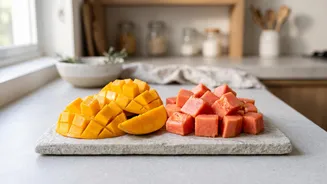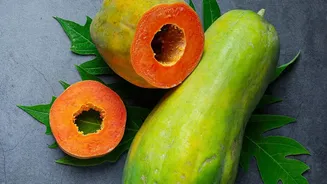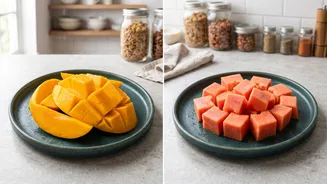




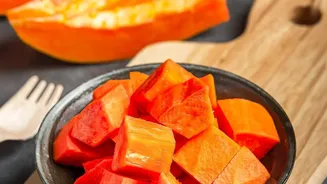
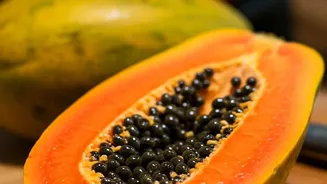
In the kingdom of tropical fruits, mango and papaya are both royalty. They're delicious, beloved across India, and packed with nutrients. But when it comes to vitamins, does the 'King of Fruits' reign supreme, or does papaya pack a bigger punch?
The Vitamin C Showdown
When it
comes to boosting your immune system, Vitamin C is a crucial nutrient, and both fruits are excellent sources. However, in a direct comparison, papaya is the clear winner. A 100-gram serving of papaya contains approximately 60-61 mg of Vitamin C. In contrast, the same amount of mango offers around 36 mg. While mango still provides a significant portion of your daily needs, papaya delivers substantially more of this powerful antioxidant, which is essential for skin health, wound healing, and protecting your cells from damage.
The Race for Vitamin A
Vitamin A is vital for healthy vision, immune function, and skin integrity. Both mangoes and papayas get their vibrant orange hues from beta-carotene, a compound your body converts into Vitamin A. In this category, mango takes a decisive lead. Mango contains significantly more Vitamin A than papaya, with some data suggesting it has more than double the amount. A single cup of mango can provide a large percentage of your daily Vitamin A requirement, making it a superior choice for supporting eye health and immune defense.
Folate and Other B Vitamins
Beyond the headline vitamins, others play important supporting roles. Folate (a B vitamin) is crucial for cell growth and metabolism, making it particularly important during pregnancy. Here again, mango has a slight edge over papaya. A one-cup serving of mango contains about 71 mcg of folate compared to papaya's 54 mcg. Mangoes also provide about 8% of your daily Vitamin B6 needs in a 3/4 cup serving, which contributes to cognitive function and immunity.
Beyond Vitamins: Fiber and Enzymes
While vitamins are key, other compounds contribute to the fruits' health profiles. Both fruits have similar amounts of dietary fiber, at around 1.6-1.7 grams per 100g, which aids in digestion and helps you feel full. However, papaya has a unique advantage: an enzyme called papain. Papain helps break down proteins, which can aid digestion, especially after a protein-heavy meal. Mango, on the other hand, contains amylase compounds that help break down carbohydrates and a unique antioxidant called mangiferin, which has been studied for its anti-inflammatory properties.
Sugar, Calories, and Glycemic Index
For those monitoring their sugar intake or weight, the differences are notable. Papaya is the leaner option, with fewer calories and significantly less sugar than mango. A 100-gram serving of papaya has about 43 calories and 7.8 grams of sugar, while the same amount of mango contains 60 calories and 13.7 grams of sugar. This also affects their glycemic index (GI), which measures how quickly a food raises blood sugar. Mango generally has a lower GI (around 51) compared to papaya (around 56-59), meaning it may cause a slower rise in blood sugar despite being sweeter. This is likely due to its specific fiber and fructose content.