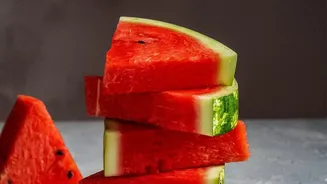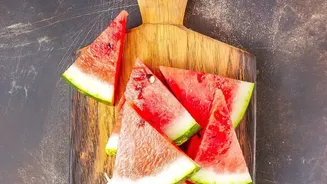







The sweet, juicy, red flesh of a watermelon is a hallmark of summer, but what about the rind that's always left behind? Instead of tossing it, you can turn this kitchen scrap into a delicious, nutritious, and sustainable ingredient.
Getting Started: Preparing the Rind
Before you begin cooking,
the rind needs a little prep. First, make sure you wash the outside of the watermelon thoroughly before cutting into it. Once you've enjoyed the pink fruit, separate the remaining rind. For most recipes, you'll want to use a vegetable peeler or a knife to remove the tough, dark green outer skin. You're left with the firm, white part of the rind, which has a crisp texture similar to a cucumber. This is your blank canvas. You can chop it, grate it, or slice it depending on the recipe. The rind is edible, lower in sugar, and higher in fibre than the fruit's flesh.
Classic Comfort: Watermelon Rind Sabzi
In many Indian households, turning vegetable scraps into a tasty dish is a time-honoured tradition. Watermelon rind, or 'tarbooz ka chhilka', fits right in. To make a simple sabzi, start by heating some oil in a pan and adding cumin seeds and a pinch of asafoetida (hing). Once the seeds sizzle, add chopped onions, ginger, and garlic, and sauté until translucent. Add the cubed watermelon rind along with spices like turmeric, red chilli powder, and coriander powder. Cover and cook for about 15-20 minutes, or until the rind becomes tender. The rind soaks up all the aromatic flavours, resulting in a comforting dish that pairs beautifully with hot chapatis or steamed rice.
Sweet & Sour: Quick Pickled Rind
Pickling is one of the most popular ways to use watermelon rind, creating a zesty condiment that can elevate sandwiches and salads. For a quick refrigerator pickle, you don't need any special canning equipment. Cut the prepared white rind into cubes or strips. In a saucepan, create a brine by boiling a mixture of vinegar (apple cider or white), water, sugar, and salt. You can also add pickling spices like cloves, cinnamon sticks, mustard seeds, or peppercorns for more complex flavour. Pour the hot brine over the rinds in a glass jar, let it cool, and then refrigerate for at least a day before enjoying. The result is a tangy, crunchy treat that can last for weeks in the fridge.
A Sweet Treat: Candied Rind (Tutti Frutti)
For those with a sweet tooth, watermelon rind can be transformed into a confection similar to the tutti frutti used in cakes, cookies, and ice cream. The process involves simmering the rind pieces in a sugar syrup until they become translucent and jewel-like. First, boil the rind pieces in water until they are tender, then drain them. In a separate pot, make a simple syrup of sugar and water, bringing it to a boil. Add the tender rind to the syrup and let it simmer until it looks glassy and clear. You can add a slice of lemon for flavour. Once done, you can drain the pieces and let them dry on a rack. Roll them in sugar for a classic candied finish.
Crispy and Creative: Stir-Fries and Fritters
The firm texture of watermelon rind makes it an excellent addition to stir-fries. Cut the rind into thin strips and toss it into a hot wok with your favourite vegetables, some soy sauce, garlic, and ginger. It cooks quickly, retaining a satisfying bite that works well with other ingredients. For an 'achaar'-style stir-fry, heat mustard oil and temper it with mustard seeds and nigella seeds (kalonji), then toss in the rind strips. Another creative use is to make pakoras or fritters. Grate the rind, mix it into a spiced gram flour (besan) batter, and fry spoonfuls in hot oil until golden and crispy. It’s a perfect tea-time snack that’s both delicious and resourceful.