
Beyond the Rainbow
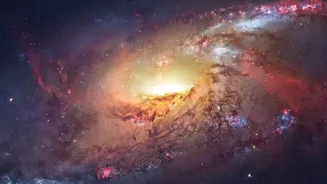
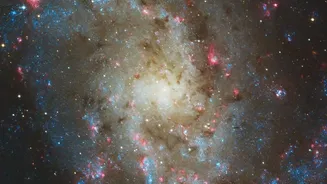
When we look at a photograph of a distant galaxy, we’re typically seeing it in visible light, the same kind of light our eyes detect. This provides a beautiful but fundamentally incomplete picture. It's like listening to a symphony but only hearing the violins.
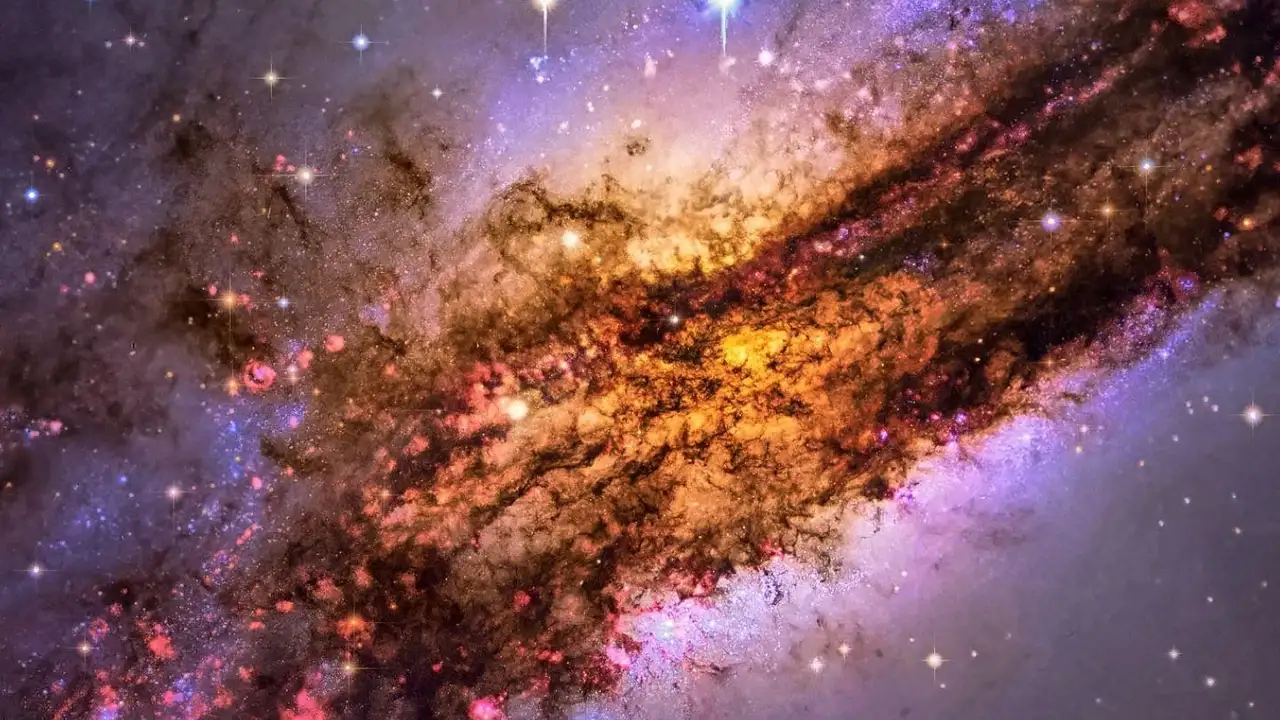
The universe, however, broadcasts its secrets across the entire electromagnetic spectrum, from long-wavelength radio waves to high-energy gamma rays. Objects and events that are invisible in one wavelength often shine brightly in another. Cooler, older stars and dense clouds of dust glow in infrared, while cataclysmic events like supernovae and the regions around black holes blaze in X-rays and gamma rays. Relying only on visible light means missing most of the story.
A Symphony of Wavelengths
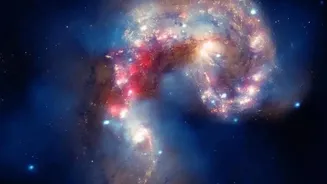
Multiwavelength astronomy is the practice of observing celestial objects using data from different parts of the electromagnetic spectrum to build a more complete understanding. Each wavelength provides unique information. Radio waves can pierce through thick cosmic dust that obscures visible light, mapping out cold gas clouds where stars are born. Infrared light is crucial for seeing through dust to observe newborn stars and the glowing, warm dust itself. Visible light, of course, shows us the stars themselves, while ultraviolet light highlights the hottest, most massive, and youngest stars. Finally, X-rays and gamma rays point scientists to the most energetic and violent phenomena in the universe, such as black holes consuming matter or the remnants of exploded stars.
Assembling the Cosmic Puzzle
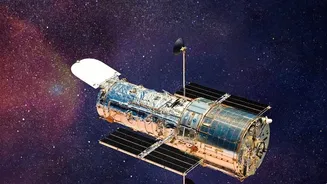
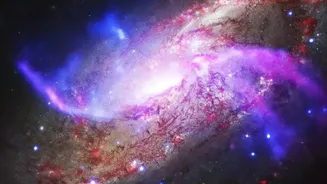
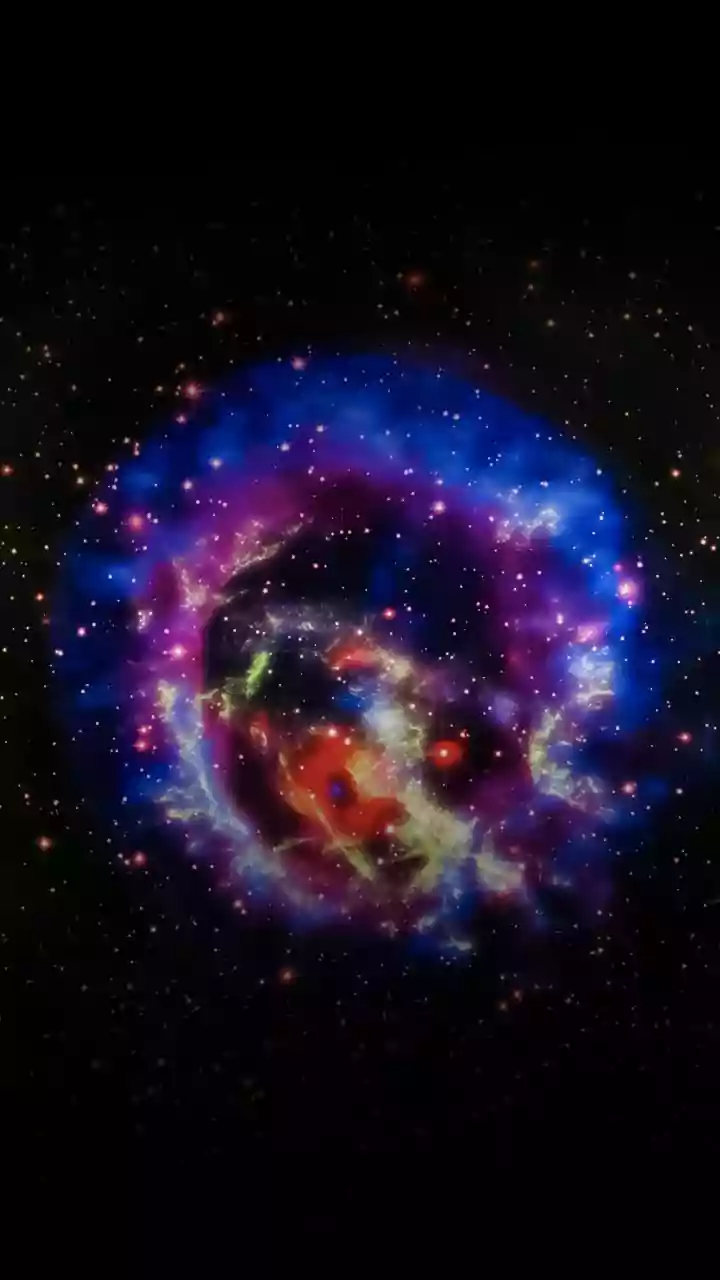
Creating a multiwavelength image is a meticulous process of data fusion. Astronomers use a variety of telescopes, both on the ground and in space, to capture these different types of light. Since our atmosphere blocks most high-energy radiation like X-rays and ultraviolet light, observatories like NASA's Chandra X-ray Observatory and the Hubble Space Telescope operate from orbit. Each telescope captures a separate black-and-white image corresponding to its specific wavelength filter. To create the final, stunning colour pictures, scientists assign visible colours (often red, green, and blue) to these different invisible wavelength images. Typically, longer wavelengths like infrared are assigned red, while shorter wavelengths like X-rays are assigned blue. These individual, color-coded images are then carefully layered and aligned to create a single, composite view that is far more informative than any of its parts.
Case Study: The Andromeda Galaxy
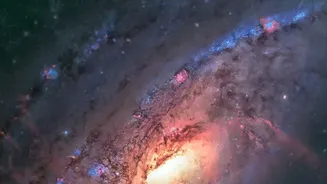
Our nearest major galactic neighbour, the Andromeda galaxy (M31), provides a perfect example of this technique's power. In visible light, Andromeda is a majestic spiral of starlight, but its view is partially blocked by dark lanes of dust. When viewed in infrared with telescopes like the Herschel Space Observatory, these dark lanes transform into bright, glowing rings of dust, revealing vast reservoirs of material for future star formation. An X-ray view from an observatory like XMM-Newton highlights the most violent and energetic parts of the galaxy, including a population of binary star systems and the potential remnants of past stellar explosions. By combining these views, astronomers get a comprehensive picture of Andromeda's life cycle—from the cold dust where stars form to the energetic endpoints of stellar evolution.
Unlocking the Universe's Secrets
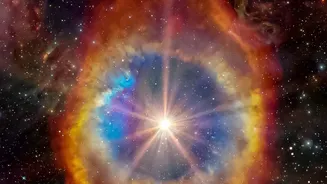
This holistic approach has revolutionised astronomy. By combining views, scientists can trace the flow of energy and matter through a galaxy. They can see how the violent radiation from young, massive stars carves out cavities in the gas clouds they were born from, and how the explosive deaths of stars enrich the galaxy with heavy elements needed for the next generation of stars and planets. This technique has been essential for understanding everything from the star formation process hidden within nebulae like the Pillars of Creation to mapping the supermassive black hole at the center of our own Milky Way galaxy, which is hidden from view in visible light by thick dust. It gives us a dynamic, living portrait of the cosmos that would otherwise remain invisible.