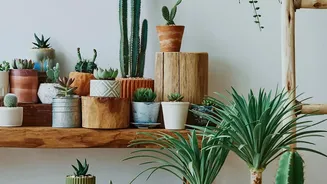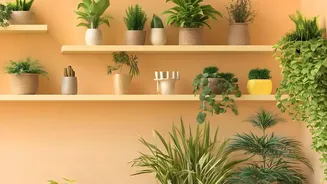

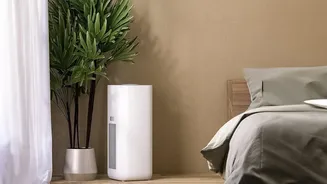

The Myth of the Air-Purifying Powerhouse
For decades, the belief that houseplants are nature's air filters has been a cornerstone of indoor gardening. This popular idea can be traced back to a landmark 1989 study by NASA. Researchers were looking for ways to clean the air in sealed environments
like space stations and found that, in a small, airtight chamber, common houseplants could indeed remove harmful volatile organic compounds (VOCs) like benzene and formaldehyde from the air. This finding was scientifically sound, but the context was key: the experiments were conducted in controlled, sealed environments that bear little resemblance to a typical home or office.
The Reality: Your Home Isn't a Spaceship
The problem arises when we try to apply the NASA study's findings directly to our living rooms. Subsequent research has put the air-purifying power of plants into a real-world perspective, and the results are sobering. A 2019 review of decades of studies concluded that, in a normal building with natural ventilation from windows, doors, and HVAC systems, plants have a negligible effect on air quality. The natural air exchange rate in a building is so high that it far outpaces a plant's ability to slowly filter pollutants. To replicate the effects seen in the lab, you would need an unfeasible number of plants—some estimates suggest between 10 and 1,000 plants per square metre of floor space to make a meaningful difference. In short, opening a window for a few minutes is thousands of times more effective at cleaning your indoor air than a few potted plants.
The Real, Proven Benefit: A Boost for Your Brain
While houseplants may not be the air-purifying heroes we once thought, research overwhelmingly shows they are fantastic for our mental and psychological well-being. This is where their true power lies. Studies have consistently demonstrated that the presence of plants can reduce stress, lower anxiety, improve your mood, and even sharpen your focus. A 2015 study published in the Journal of Physiological Anthropology found that actively interacting with plants—like repotting or watering them—lowered both physiological and psychological stress responses in participants, reducing blood pressure and heart rate. Simply being around greenery can make us feel calmer, more comfortable, and more connected to nature, which is especially important as we spend more of our lives indoors.
More Than Just Decoration
The psychological benefits are not just passive. The act of caring for a living thing provides a sense of purpose and fulfillment. Watching a plant thrive because of your care can be deeply rewarding. Research suggests this nurturing role can foster feelings of pride, satisfaction, and mental resilience. Studies have even shown that patients in hospital rooms with plants have better recovery outcomes, and students in classrooms with live plants are more attentive. The visual beauty of plants is also important; we are naturally drawn to lush, healthy foliage, which can improve our perception of our environment and boost job satisfaction in an office setting. So, while your snake plant isn't scrubbing the air clean, it is very likely making you a happier and less stressed person.