
Safety Through Redundancy
The core principle protecting every commercial flight is redundancy. Think of it as having a backup for your backup. No single system failure is ever allowed to be catastrophic. Commercial jets are designed with multiple, independent components for every critical
function. This includes flight controls, electrical systems, and hydraulics. For instance, aircraft often have three separate hydraulic systems. If one fails, the others can still operate the essential control surfaces needed to fly and land the plane safely. This layered approach ensures that even if a primary system encounters a problem, a secondary or even tertiary system is ready to take over, often automatically and without any noticeable interruption.
The Last Resort: The Ram Air Turbine
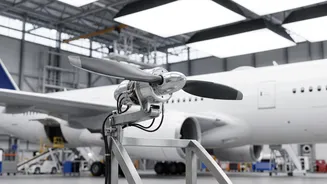
What if the unimaginable happens and the aircraft loses power from all its main engines and its auxiliary power unit (APU)? Even in this highly improbable scenario, there is another layer of protection: the Ram Air Turbine, or RAT. This small propeller is stowed in the wing or fuselage and can deploy automatically into the airstream. As the aircraft moves through the air, the wind spins the RAT's blades, which in turn drives a hydraulic pump or an electrical generator. This doesn't power the whole plane, but it provides enough crucial energy for the pilots to control the aircraft, use key navigation instruments, and communicate, allowing them to glide to a safe landing.
The Human Backup System: Crew Resource Management
Technology is only half the equation; the human element is just as critical. The concept of Crew Resource Management (CRM) transformed aviation safety by moving away from a rigid, authoritarian cockpit culture. CRM is a set of training procedures that emphasizes teamwork, clear communication, and workload management between pilots. It empowers the entire crew, including flight attendants and ground personnel, to work as a cohesive team to identify and mitigate errors. If one pilot makes a mistake or becomes incapacitated, CRM ensures the other pilot is prepared to take command, communicate effectively with air traffic control, and manage the situation using standardized procedures they have practiced repeatedly.
Training for the Unthinkable
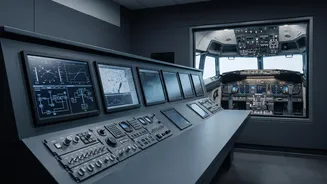
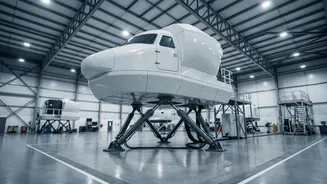
Pilots don't just learn how to fly in perfect conditions; a huge part of their training is dedicated to mastering emergencies. They spend countless hours in high-fidelity flight simulators, which can realistically replicate almost any conceivable failure, from engine fires and electrical shorts to hydraulic leaks and instrument malfunctions. This rigorous, scenario-based training builds muscle memory and ensures that a pilot's response to an emergency is calm, methodical, and immediate. They practice checklists and emergency drills until the actions become second nature. This ensures that even in a high-stress situation, the crew follows proven procedures designed to maintain control and ensure the safety of everyone on board.