






Claim: A Truly Global Spectacle
The official branding of the event as 'International' paints a picture of a massive global gathering. The evidence shows that there is genuine international participation, but the scale may be more modest than the grand title suggests. Organisers for
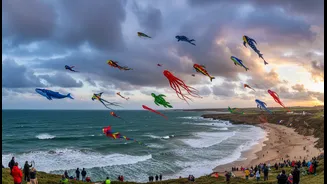
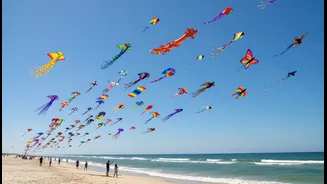
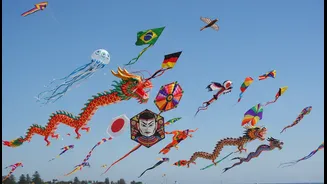
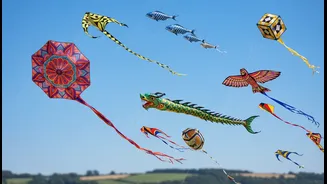
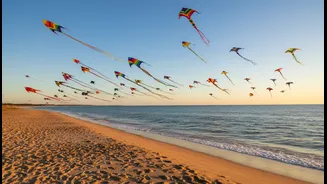
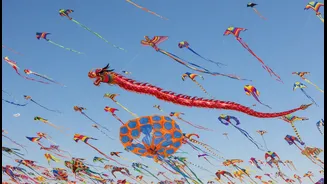
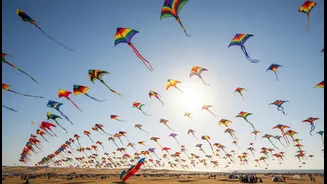
upcoming and recent festivals have announced the participation of teams from around eight to ten countries, including France, Thailand, Vietnam, and Malaysia, showcasing over 200 professional kites. This makes it a significant event for the region and a legitimate international meeting of kite flyers. However, the claim should be contextualised. Other, more established kite festivals in India, for instance, have reported attracting over a hundred flyers from up to 50 countries. So, while TNIKF is undoubtedly international, the evidence supports it being a growing, medium-sized global event rather than one of the world’s largest just yet. The ambition, as stated by its founder, is to grow to that level in the future.
Claim: A Major Boost for the Local Economy
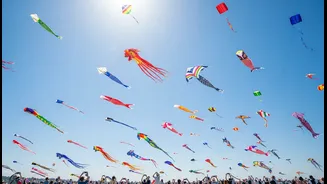
Festivals of this nature are often promoted as powerful engines for local economies. The claim is that by drawing thousands of visitors, TNIKF provides a significant boost to local hotels, restaurants, artisans, and transport providers. This is logically sound, and reports mention the festival drawing crowds of anywhere from 25,000 to over 50,000 people in past years. The event is intentionally held over a long weekend, including Independence Day, to maximise tourist footfall. However, the evidence supporting a specific, quantifiable economic impact is thin. While tourism generally contributes around 6% to Tamil Nadu's GSDP, there are no independent studies or specific data available that measure the direct revenue generated for the Mahabalipuram area by the festival itself. The economic benefit is largely anecdotal and based on expectations rather than hard figures. The potential is certainly there, but the claim of a 'major' boost is not yet strongly substantiated by public data.
Claim: A Harmless and Eco-Friendly Pastime
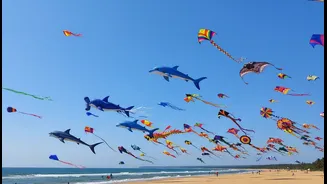
This is the most complex claim. Kite flying in India has a dark side: the use of 'manja', or glass-coated string, which is notorious for causing fatal injuries to birds and even humans. These synthetic strings are also non-biodegradable and contribute to pollution. Acknowledging this reality, the Tamil Nadu government has officially banned manjha. The evidence suggests the festival organisers are highly conscious of these issues. The kites used at TNIKF are large, professional-grade inflatables flown by experts, not the small paper kites used in traditional kite-fighting. Furthermore, recent festival themes have focused on environmental conservation, such as 'Save Marine Life'. So, while the festival itself appears to be a safe and regulated event, the broader activity of kite flying that it popularises carries significant, well-documented risks if done irresponsibly with banned materials. The festival promotes a safe version of the activity, but it cannot entirely detach from the wider, more problematic context of manja use in the public sphere.
Claim: An Unmatched Festival Experience
Promotional materials present the festival as a complete family carnival, going far beyond just flying kites. The evidence strongly supports this. The event is hosted on a large 14-acre site and includes a packed schedule of activities designed to keep attendees engaged for the entire day. In addition to the spectacular giant kites, past and planned events have featured live music concerts with popular DJs and bands, extensive food courts, shopping stalls, kite-making workshops, and dedicated play areas for children. The spectacle continues after sunset with displays of illuminated kites and fireworks. This multi-faceted approach, combining the visual appeal of the kites with a full-fledged carnival atmosphere, supports the claim that it is a comprehensive entertainment event. It is designed as a 'family-based tourism' experience to give people a full day of activities away from their screens. The evidence confirms that attendees are paying for much more than just a view of the sky.