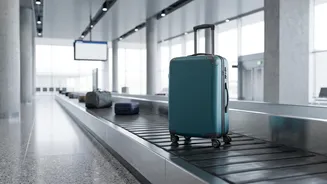







The 'One Bag' Rule Is Now Strictly Enforced
The most significant change for Indian domestic travellers is the strict enforcement of the 'one bag rule' for cabin luggage by the Bureau of Civil Aviation Security (BCAS). While the rule itself has existed for years, airlines and airport security are
now universally applying it at all Indian airports to reduce congestion and speed up security checks. Previously, many flyers could pass through with a small trolley bag plus a separate laptop bag or large handbag. That is no longer the case. Your primary cabin bag is all that is officially allowed through security screening, and any additional bags, like purses or laptop carriers, are expected to be consolidated into that single piece.
Cabin Bag: Weight and Size Limits
For most domestic airlines in India, including IndiGo, SpiceJet, and Akasa Air, the standard hand baggage allowance for economy class remains 7 kg. Air India is slightly more generous, often allowing 8 kg. The typical dimensions for a cabin bag are around 55cm x 35cm x 25cm, but this can vary slightly, with Air India sometimes specifying a narrower 20cm width. What's new is the rigor of enforcement. Gate agents are now more frequently weighing bags and using sizer bins to check dimensions, especially during peak travel times. An 8 kg bag that might have been overlooked before is now likely to be flagged.
Understanding the 'Personal Item' Exception
While the 'one bag' rule sounds absolute, there is an important exception: a 'personal item'. Most airlines permit one small personal item in addition to your 7 kg cabin bag, provided it can fit under the seat in front of you. This can be a ladies' handbag, a small laptop sleeve, or a slim backpack. However, the interpretation can be strict. A bulky backpack is unlikely to pass as a personal item. To stay safe, ensure your personal item is visibly smaller than your main cabin bag and adheres to any specified weight limits, which are often around 3 kg.
Checked Baggage: Know Your Fare
For checked luggage on domestic routes, the allowance is no longer one-size-fits-all. It largely depends on the airline and the type of fare you purchase. Most budget carriers like IndiGo and SpiceJet offer a standard 15 kg checked baggage allowance on their basic economy fares. However, Air India has moved to a fare-family model where the allowance changes based on the ticket purchased. Their cheapest 'Value' fares may offer only 15 kg, while 'Flex' fares can include up to 25 kg. It is crucial to check the baggage allowance included with your specific ticket at the time of booking, as some ultra-low-cost promotional fares may not include any free checked baggage at all.
The High Cost of Excess Baggage
Paying for excess baggage at the airport counter is one of the quickest ways to inflate your travel costs. Airlines charge significantly higher rates for extra weight at check-in compared to pre-booking online. For example, paying for an extra kilogram at the airport can be 2-3 times more expensive than adding it to your booking in advance. If you know you'll be travelling with more than your free allowance, always pre-purchase the additional weight on the airline's website. This can typically be done up to two hours before your flight's departure and will save you a considerable amount of money and stress at the airport.
Prohibited Items: What Not to Pack
Security regulations remain a critical part of packing. Certain items are strictly forbidden in cabin baggage, such as liquids in containers over 100ml, sharp objects like knives, and sporting goods like cricket bats. It's equally important to remember what cannot go into your checked luggage. Power banks and spare lithium batteries are a major fire hazard in the cargo hold and must always be carried in your hand baggage. Airlines will remove these items from checked bags if found during screening. E-cigarettes are also typically restricted to cabin baggage. Always double-check the specific list of restricted items for your airline before you pack.