

More Than Just a Fiery Finale
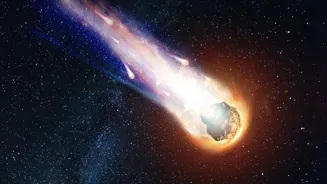
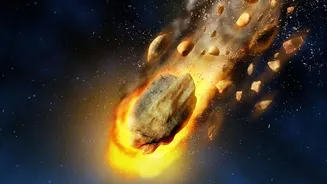
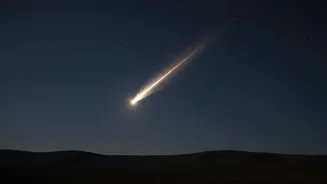
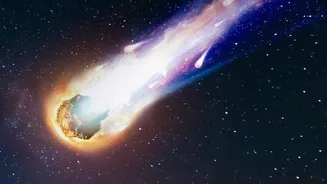
The brilliant flare of a meteor is actually the end of its journey. The most critical clues about its origin story come from what happened before it hit our atmosphere. Scientists aren't just looking at the light show; they are trying to reconstruct the object's
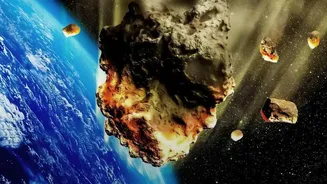
original path through the solar system. This pre-entry orbit holds the secrets to its birthplace. Most meteoroids that reach Earth are fragments of asteroids, but some originate from the Moon or even Mars. To tell the difference, scientists must first work backwards from the object's final moments.
Recreating the Final Moments
The first step is to precisely map the meteor's path through our atmosphere. Using data from photographic and video networks, radar, and other sensors, scientists can triangulate its position, speed, and direction as it descends. This creates a 3D model of its final, glowing flight. However, this is far from a straight line. The object's path is affected by friction and intense heat as it ploughs through the air at speeds up to 72 kilometres per second. This atmospheric drag significantly alters its course and causes it to slow down and often break apart.
Correcting for Earth's Influence
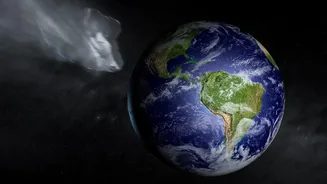
Once the atmospheric trajectory is mapped, the next challenge is to escape Earth's influence, mathematically speaking. Scientists must calculate how our planet's powerful gravity captured the meteoroid and pulled it from its original course. They also account for factors like upper-atmosphere winds, which can push smaller objects miles off course during their final, non-glowing descent known as 'dark flight'. By reversing these effects, they can determine the meteoroid’s velocity and angle just before it entered Earth's gravitational sphere of influence. This is a crucial step to seeing the path it was on before our planet interfered.
Navigating a Cosmic Billiards Table
With the Earth's effects removed, scientists can look at the bigger picture: the object's orbit around the Sun. This is not a simple A-to-B journey. The solar system is a dynamic environment, a sort of cosmic billiards table where the gravitational pull of massive planets like Jupiter can bend and alter the paths of smaller objects. Sophisticated computer models are used to integrate the trajectory backward in time, accounting for the gravitational fields of the Sun and all the planets. This process transforms the short, observed streak in our sky into a full-fledged orbit—an ellipse that carried the object through space for millions of years.
Matching the Orbital Fingerprint
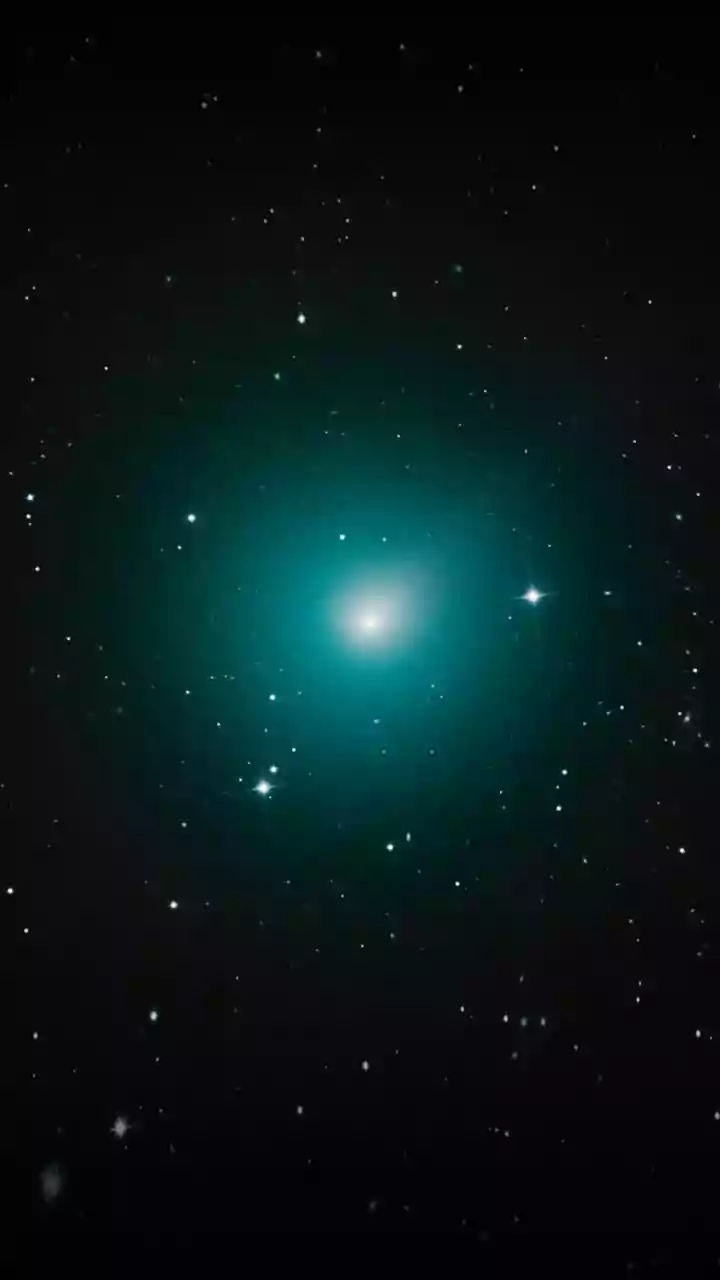
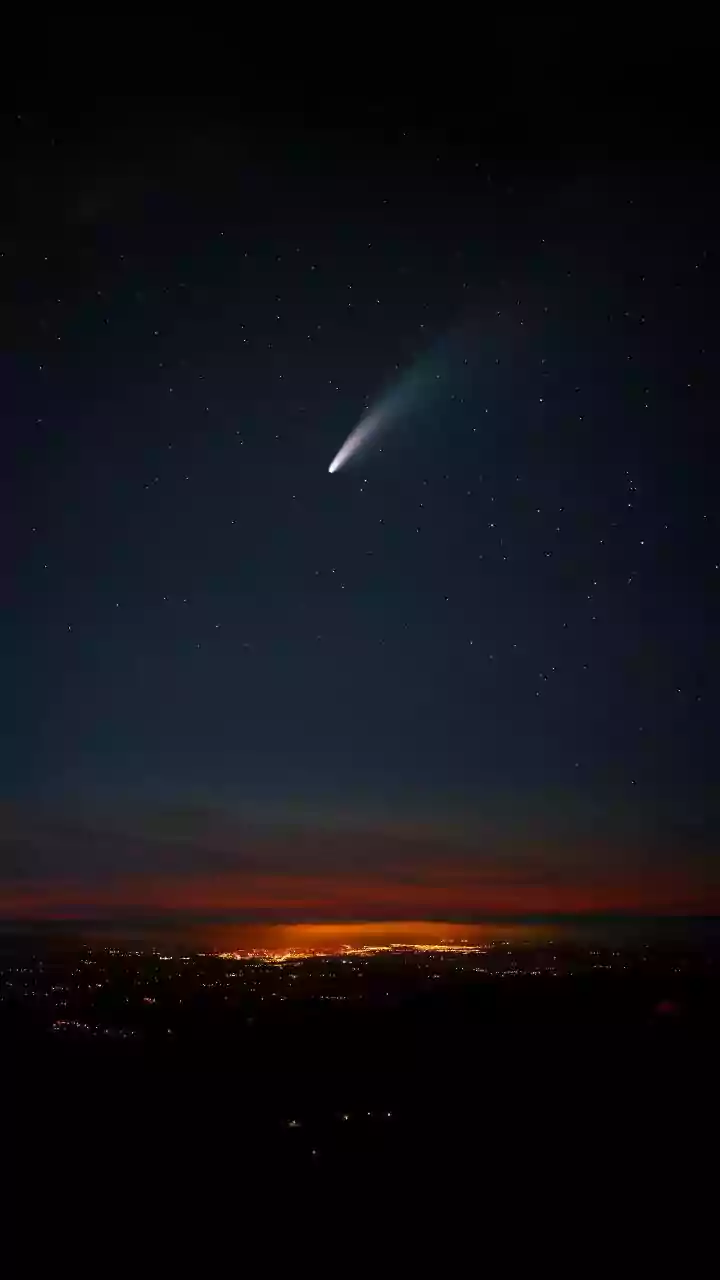
This calculated heliocentric orbit is the key piece of evidence. Scientists compare this orbital 'fingerprint' to the known locations of celestial bodies. Does the orbit trace back to the main Asteroid Belt between Mars and Jupiter, the source of most meteorites? Does it match the path of a specific comet, which would explain a meteor shower? Or does the composition of the meteorite, if found, match samples we have from the Moon or gases in the Martian atmosphere? In rare cases, an object's trajectory might be hyperbolic, meaning it's moving too fast to be gravitationally bound to our Sun—the telltale sign of an interstellar visitor.
Why Such Caution is Crucial
Scientists are cautious before claiming an origin because the stakes are high and the margins for error are slim. A tiny miscalculation in the initial observed velocity or angle can lead to a drastically different computed orbit. Announcing that a rock came from Mars or, even more extraordinarily, from another star system requires an incredibly high burden of proof. The process of discovery, observation, trajectory calculation, and compositional analysis must all align perfectly. This meticulous, step-by-step approach ensures that when an origin is announced, it is backed by a robust chain of evidence, turning a fleeting shooting star into a tangible piece of cosmic history.