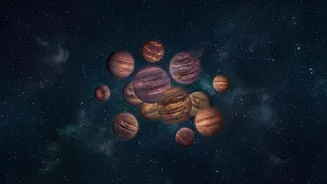




They are cosmic misfits, too big to be planets but too small to be stars. For decades, scientists have wondered why these 'failed stars', known as brown dwarfs, are so different from one another. Now, NASA has an answer.
The Universe's In-Betweeners
Imagine an object that forms from
a collapsing cloud of gas and dust, just like a star. It grows massive, becoming dozens of times heavier than Jupiter. But it never quite makes it. It fails to gather enough mass to ignite the nuclear fusion in its core that would make it shine like our sun. This is a brown dwarf. These celestial objects occupy a mysterious middle ground, straddling the line between the largest gas giant planets and the smallest stars. They are sometimes called 'failed stars' because they lack the engine for sustained starlight, instead glowing faintly from the heat left over from their formation before cooling over billions of years.
A Puzzling Cosmic Menagerie
For astronomers, the mystery wasn't just what brown dwarfs are, but why they are so unalike. Observations showed that even brown dwarfs with the same temperature could have vastly different appearances and atmospheric compositions. Some have thick, exotic clouds, while others have clearer, methane-rich skies. Their light signatures, or spectra, showed a surprising diversity that existing theoretical models couldn't fully explain. This suggested that a crucial piece of their life story was missing. Why would two objects of similar size and temperature look so different? The answer, it turns out, was hiding in a type of light our eyes can't see.
SPHEREx: An Infrared Eye on the Cosmos
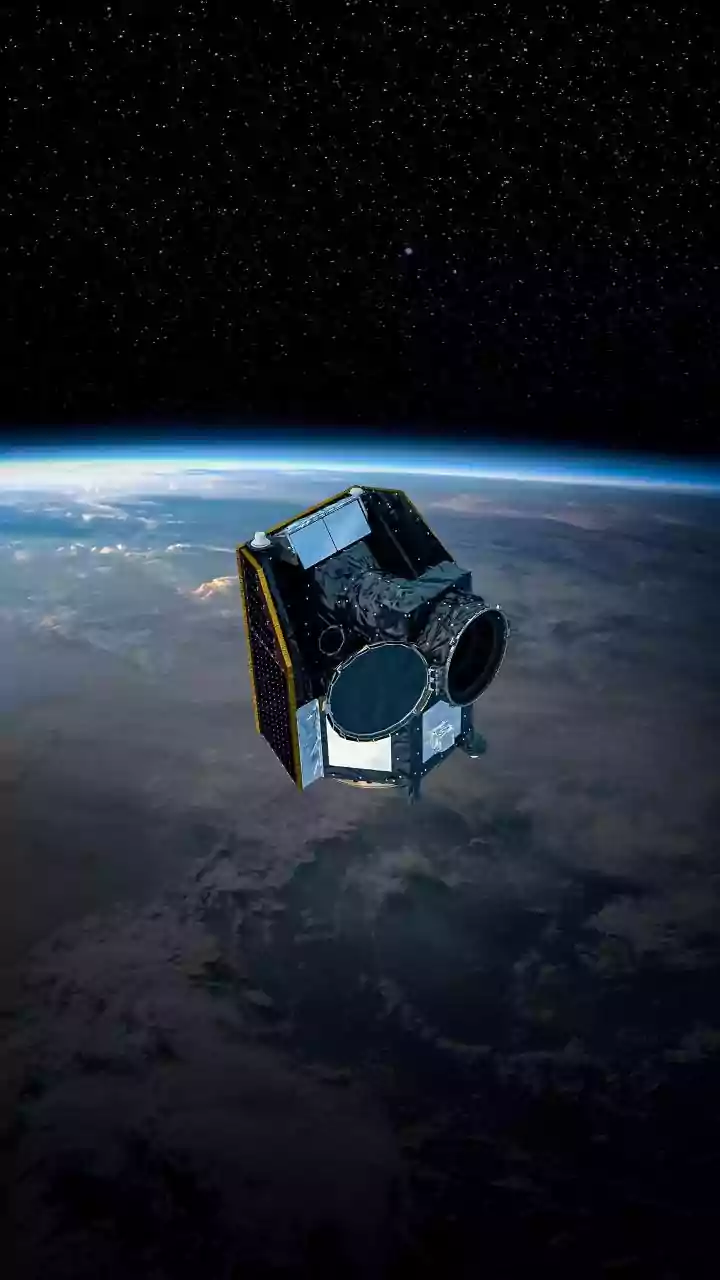
Enter NASA's SPHEREx space telescope. Launched in March 2025, its name stands for Spectro-Photometer for the History of the Universe, Epoch of Reionization, and Ices Explorer. While its primary mission is to map the entire sky to understand the origins of the universe, it has a powerful secondary capability. SPHEREx is designed to see the universe in infrared light, which is essentially heat radiation. This is perfect for studying cool, dim objects like brown dwarfs that don't emit much visible light. The telescope doesn't just take a picture; it measures the brightness of objects in 102 different infrared colours, creating a detailed spectrum for each one. This spectrum acts like a chemical fingerprint, revealing the molecules present in the object's atmosphere.
Atmosphere Is Everything
In a recent study published in The Astrophysical Journal, scientists used SPHEREx to analyse 37 nearby brown dwarfs across their full temperature range. The data revealed chemically rich atmospheres containing water, carbon dioxide, carbon monoxide, and methane. More importantly, the precise composition and cloudiness of these atmospheres varied significantly from one brown dwarf to the next. The study confirmed that 'no two brown dwarfs are alike'. The key takeaway is that their individuality is a direct result of their atmospheric properties. Factors like cloud composition and how chemicals are mixed vertically in the atmosphere appear to be the primary drivers of their differences, even more so than just temperature or age. Existing atmospheric models struggle to match the data precisely, highlighting how complex these worlds are.
Why These Failed Stars Matter
Studying these 'goth' celestial objects, as one scientist called them, is more than just a cosmic curiosity. Brown dwarfs are free‐floating and not obscured by the blinding light of a parent star, making their atmospheres easier to study than those of many exoplanets. They serve as a natural laboratory for understanding atmospheric physics under conditions different from those in our solar system. The insights gained from their cloudy, complex weather systems help scientists refine models used to understand the atmospheres of gas giant exoplanets orbiting other stars. By figuring out the puzzle of why these failed stars are so unique, we get closer to understanding the full spectrum of planetary and stellar formation across the galaxy.