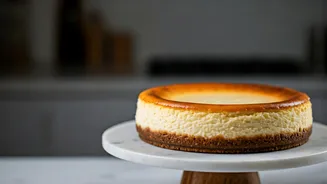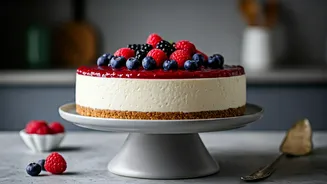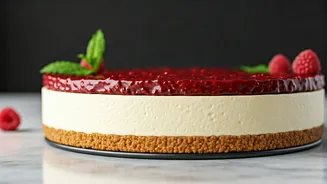


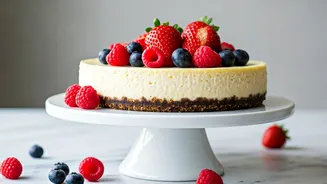
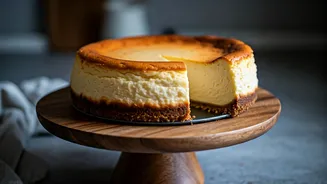


Why This Recipe Works
Countless cheesecake recipes exist, but many are intimidating, with warnings of cracks, curdled textures, and watery results. This recipe is different. It’s a classic, New York-style cheesecake that prioritises two things: incredible flavour and a foolproof
method. The magic lies not in a secret ingredient, but in technique. By controlling temperature, mixing gently, and allowing the cake to cool slowly, we eliminate the common pitfalls. The result is a dessert that is unapologetically dense yet silky, with a profound cream cheese tang balanced by a buttery graham cracker crust. This is the recipe that builds confidence and guarantees applause.
The Foundation: A Perfect Crust
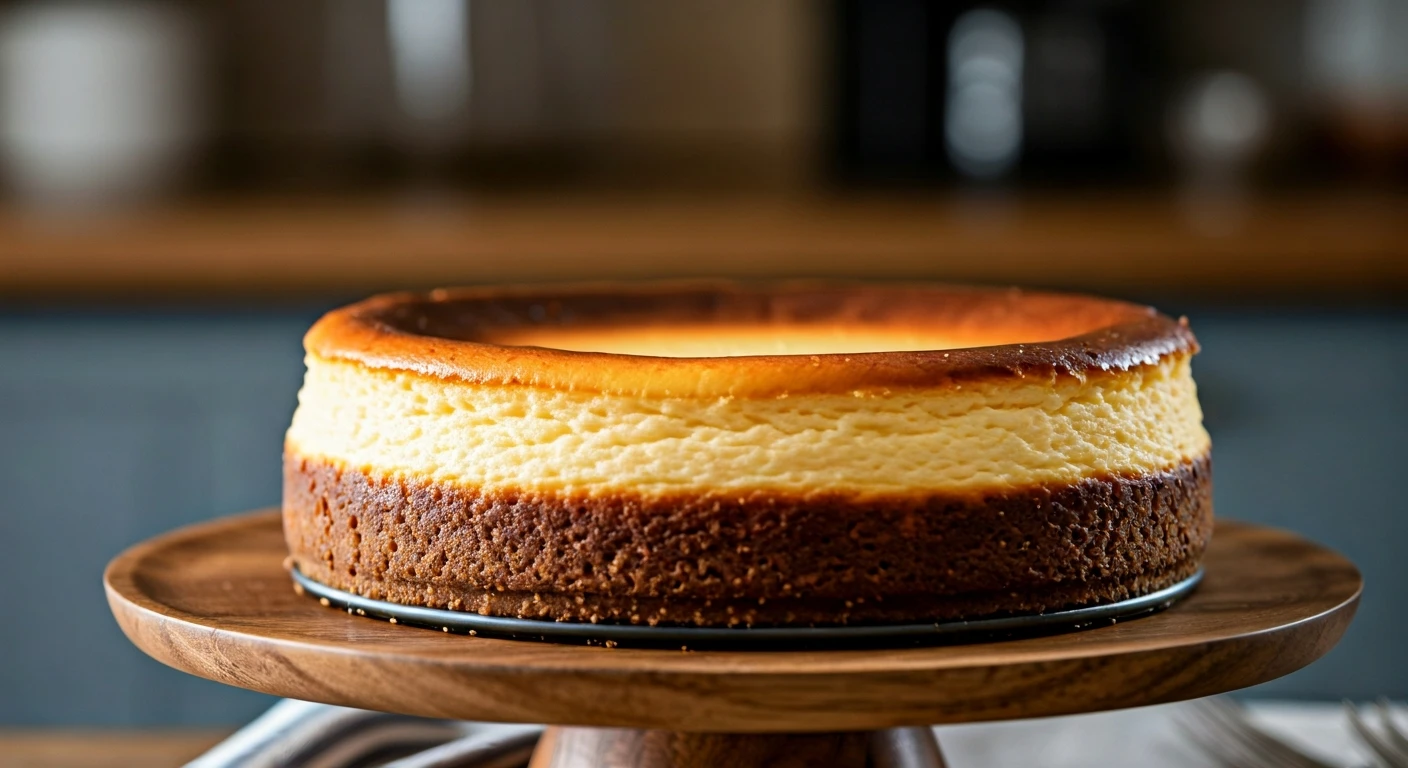
The crust is not just a base; it’s the first note in the symphony. A great cheesecake crust should be crisp, buttery, and sturdy enough to hold its precious filling. We use a simple combination of graham cracker crumbs, melted butter, and a touch of sugar. The key is to pack it firmly and evenly into the bottom and slightly up the sides of your springform pan. Pre-baking the crust for about 10 minutes is a non-negotiable step. This short bake sets the crust, ensuring it doesn’t become a soggy mess underneath the creamy filling. It creates a definitive, crunchy layer that provides a wonderful textural contrast.
The Secret to Silky Filling
The heart of the cheesecake is its filling, and the enemy of a silky filling is air. Over-mixing incorporates too much air, which causes the cheesecake to puff up dramatically in the oven and then sink and crack as it cools. To avoid this, ensure all your dairy ingredients—cream cheese, sour cream, and heavy cream—are at true room temperature. This allows them to blend smoothly without aggressive mixing. Use a paddle attachment on a stand mixer (or a hand mixer on low speed) and mix the softened cream cheese until it’s completely smooth *before* adding anything else. Add sugar, then eggs one at a time, mixing on low just until the yolk disappears. Scrape down the bowl often. The final mixture should be smooth, thick, and uniform, not frothy or light.
The Master Recipe: Ingredients
For the Crust: - 200g graham cracker crumbs (about 1.5 cups) - 115g unsalted butter, melted (1/2 cup) - 50g granulated sugar (1/4 cup) For the Filling: - 900g full-fat block cream cheese, at room temperature - 200g granulated sugar (1 cup) - 3 large eggs, plus 1 egg yolk, at room temperature - 240ml full-fat sour cream, at room temperature (1 cup) - 120ml heavy cream, at room temperature (1/2 cup) - 1 tablespoon vanilla extract - 1 tablespoon lemon juice - Pinch of salt
The Method: Step-by-Step
1. Preheat your oven to 175°C. To make the crust, mix graham cracker crumbs, melted butter, and sugar until the mixture resembles wet sand. Press firmly into the bottom and 1 inch up the sides of a 9-inch springform pan. Bake for 10 minutes. Let cool while you prepare the filling. 2. Reduce oven temperature to 160°C. 3. In a large bowl with a stand mixer or hand mixer, beat the room-temperature cream cheese on low speed until completely smooth and free of lumps. 4. Add the sugar and salt, and mix on low until combined. Scrape down the sides of the bowl. 5. Add the eggs and yolk one at a time, mixing on low speed just until each is incorporated. Do not over-mix. 6. Gently stir in the sour cream, heavy cream, vanilla extract, and lemon juice until just combined. 7. Pour the filling over the cooled crust.
The No-Crack Water Bath
The water bath (or bain-marie) is the single most important technique for a crack-free cheesecake. It creates a steamy, humid environment in the oven, which allows the cake to bake gently and evenly, preventing the edges from baking faster than the centre. To prepare, wrap your springform pan with two or three layers of heavy-duty aluminium foil, ensuring it’s watertight. Place the wrapped pan inside a larger roasting pan. Pour the filling into your crust, then place the roasting pan on the oven rack. Carefully pour boiling water into the larger pan until it comes about halfway up the sides of your springform pan. Now, it's ready to bake for 60-70 minutes. The cheesecake is done when the edges are set, but the centre still has a slight wobble.
The Art of the Slow Cool-Down
Once baked, don’t rush the cooling process. A sudden change in temperature is another primary cause of cracking. When the baking time is up, turn the oven off completely, crack the oven door open with a wooden spoon, and let the cheesecake cool in the oven for one hour. This gradual cool-down allows the filling to set firm without shocking it. After an hour, remove the cheesecake from the water bath and the oven, and let it cool completely on a wire rack at room temperature. Once cool, run a thin knife around the edge before covering it loosely with plastic wrap and chilling it in the refrigerator for at least 8 hours, but preferably overnight. This final chill is crucial for the texture and flavour to fully develop.