








The Road Connectivity Conundrum
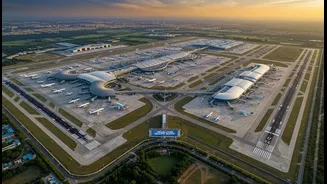
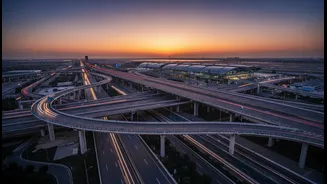
Getting to the new airport, located about 72 km from Delhi's IGI Airport, is a primary concern for travellers. The main artery is the Yamuna Expressway, but relying on a single expressway raises fears of bottlenecks, especially as passenger traffic grows.
To address this, authorities are fast-tracking a new 130-metre-wide, toll-free road to link Greater Noida directly with the airport. This road, extending from Sirsa village on the Eastern Peripheral Expressway, is designed to serve as a vital alternative to the Yamuna Expressway and ease pressure on the existing route. It aims to provide smoother access for passengers coming from Delhi, Ghaziabad, and Western UP. Additionally, an elevated corridor connecting Faridabad with Jewar is also part of the broader plan to improve access from different parts of the NCR. However, these projects are still in development, meaning for now, travellers must plan for potential traffic on the expressway.
Public Transport: The Multi-Modal Dream
For an airport to be truly accessible, robust public transport is non-negotiable. While commercial flights began in mid-June 2026, comprehensive public transit links are still a work in progress. On the bus front, new electric bus services have been launched to connect the airport with Noida and Greater Noida. The Delhi Transport Corporation (DTC) is also planning a direct air-conditioned bus service from the capital. The bigger-picture solution lies in rail. Plans are advancing for a Namo Bharat (RRTS) corridor to connect Ghaziabad directly to Jewar Airport, which could slash travel time to just 40-50 minutes. The Detailed Project Report (DPR) for this 72-km corridor is in progress. This line will feature key interchanges, including with the Noida Metro's Aqua Line at Pari Chowk and the Delhi Metro's Red Line via the Ghaziabad station, creating a network effect. A stop for the proposed Delhi-Varanasi high-speed bullet train at Jewar is also part of the long-term vision. While these projects promise a seamless future, for now, passengers must rely on road transport and should budget extra time.
Parking: Capacity and Convenience
For those driving their own vehicles, parking is a key part of the travel equation. The airport has awarded the management of its parking ecosystem to Sydney-based Secure Parking Solutions, a company with experience at 20 international airports. In its first phase, Noida International Airport will offer over 1,200 surface car parking spaces. These facilities are integrated into a 20-acre ground transportation centre, which is designed as a multi-modal hub connecting the terminal to future metro and high-speed rail services. The parking area will include designated bays for cabs and taxis, as well as charging points for electric vehicles, all within walking distance of the passenger terminal. The initial capacity is designed to serve the airport's Phase 1 passenger volume of 12 million annually, with plans to scale up significantly as the airport expands towards its ultimate capacity of 70 million passengers.
Flights: Ramping Up Frequency and Destinations
An airport is only as useful as the number of flights it offers. Noida International Airport commenced commercial operations on June 15, 2026, with IndiGo operating the first flight. In its initial launch phase, the airport started with around 12 daily flight movements from IndiGo and Akasa Air, connecting to cities like Bengaluru, Jammu, and Hyderabad. However, a major expansion was reported to be planned from July 2026, which would significantly increase the daily flight movements to between 40 and 45. This expansion aims to connect the airport to 16 or 17 destinations, including Mumbai, Srinagar, Jaipur, and Dehradun. Phase 1 of the airport is built to handle 12 million passengers per year. While initial operations are focused on domestic routes, the airport has plans for international services, with airport leadership stating that international flights could begin by the end of the year.