




A Sweet Discovery Near the Galactic Center
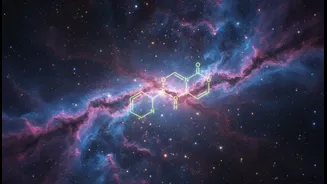
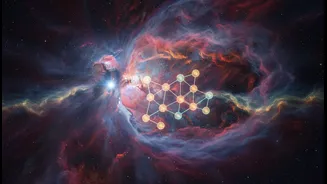
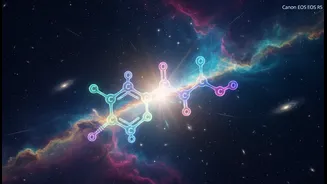
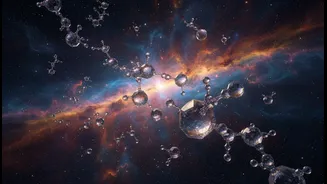
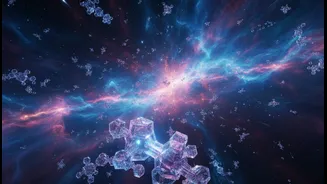
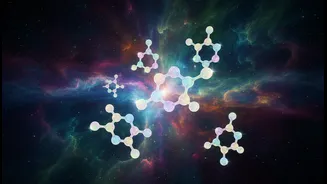
In mid-2026, an international team of astronomers announced a landmark discovery: they had detected a sugar molecule called erythrulose floating in a giant molecular cloud named G+0.693-0.027. This cloud of gas and dust is located about 26,745 light-years
from Earth, near the bustling center of our Milky Way galaxy. Using powerful radio telescopes in Spain, researchers identified the unique chemical signature of erythrulose, a four-carbon sugar also found naturally in raspberries. While other simple organic molecules have been found in space before, and even complex sugars like ribose have been identified in meteorites that have landed on Earth, this was the first direct detection of a true sugar in the interstellar medium—the thin material that exists between star systems.
Why Prebiotic Molecules Matter
Erythrulose is considered a 'prebiotic' molecule. This doesn't mean it's alive, but rather that it's a chemical building block that could, under the right conditions, contribute to the formation of life. Sugars are vital for life as we know it. They serve as energy sources and, most importantly, form the structural backbone of RNA and DNA, the molecules that carry genetic instructions in all living cells. For decades, scientists have puzzled over how the first of these crucial molecules formed on early Earth, as laboratory simulations of our planet's primitive environment haven't produced them in sufficient quantities. The discovery of sugars in space supports an alternative theory: that these essential ingredients for life were delivered to Earth from space, perhaps by comets or asteroids during a period of intense bombardment billions of years ago.
The Danger of Jumping to Conclusions
It’s tempting to hear “sugar in space” and think of aliens, but this is exactly the kind of overstatement the science requires us to avoid. Finding a single type of brick does not mean you have found a city. Similarly, finding a simple prebiotic molecule is an enormous leap from finding life itself. Life is a process of staggering complexity. The journey from a simple sugar to a self-replicating cell involves countless steps, each one a massive chemical and physical hurdle. Scientists who study the responsible communication of astrobiology stress the need to be clear about uncertainty and avoid sensationalism. The discovery of erythrulose is a monumental piece of chemistry, not biology. It tells us that some of the raw materials for life can form in the harsh, cold environment of space, but it offers no evidence that the process of life has begun anywhere else.
From a Simple Sugar to a Living Cell
To appreciate the context, consider the steps. After formation, a molecule like erythrulose would need to survive a journey through space and a fiery entry into a planet's atmosphere. It would then need to land in a suitable environment, likely a body of water, with a high concentration of many other specific molecules, such as amino acids and phosphates. From there, these molecules would need to self-assemble into more complex structures, like RNA. Even then, you only have a fragile molecule. That molecule would then need to develop the ability to replicate itself, and then somehow become enclosed within a protective membrane to form the first primitive cell. Each of these stages is a profound scientific mystery. The discovery of interstellar sugar is an exciting clue for the very first step, but the rest of the ladder remains unclimbed.
How to Appreciate the Science Responsibly
The correct way to view the erythrulose story is with a sense of wonder at the chemistry of our universe, tempered with patience. The discovery is significant not because it means life is common, but because it challenges our understanding of how complex molecules form. Scientists were surprised to find a four-carbon sugar like erythrulose was more abundant than simpler three-carbon sugars, suggesting that these molecules might form by combining two-carbon fragments rather than by adding one carbon at a time. This opens up new avenues for research into astrochemistry. The takeaway is to celebrate the incremental nature of science. This finding is a huge achievement and a vital clue in the grand mystery of our origins. Appreciating that truth is far more rewarding than any exaggerated headline.