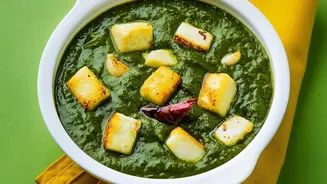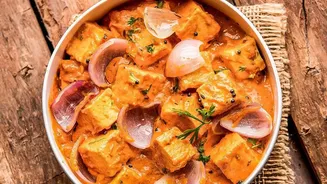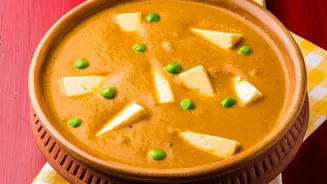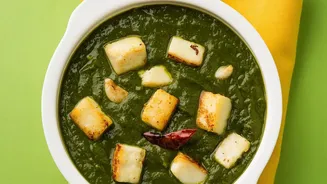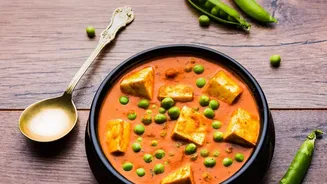


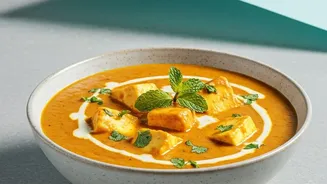
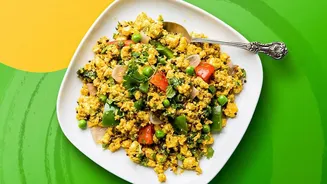
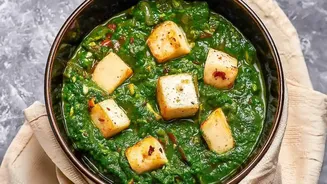
Ever wonder why your homemade paneer curry, despite a dozen spices, doesn't taste like the one from your favourite restaurant? The secret isn't more ingredients; it's mastering the essentials and knowing how to use them with technique.
The 'Less is More' Philosophy
Walk into an experienced
Indian home kitchen, and you won't find a hundred different spice jars for daily cooking. Instead, you'll see a well-used 'masala dabba' (spice box) holding a few key players. The goal of a great gravy is balance, not complexity. Too many competing spices can create a muddled, 'dusty' taste. Master home cooks know that a handful of fresh, high-quality spices, used correctly, will always outperform a large quantity of mediocre or stale ones. A restaurant-quality gravy coaxes deep flavour from a few sources rather than throwing everything at the pan and hoping for the best.
Focus on the Core Four
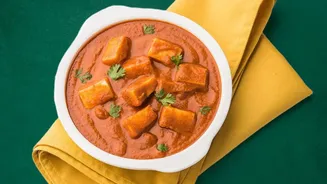
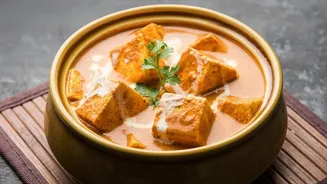
Most North Indian paneer gravies are built on a foundation of four essential ground spices: turmeric (haldi), red chilli powder (lal mirch), coriander powder (dhania), and cumin powder (jeera). Turmeric provides an earthy base and vibrant colour. Red chilli powder adds heat and richness. Coriander powder acts as a thickener and lends a warm, citrusy note, while cumin powder brings a smoky, nutty depth. Learning the right ratios of these four is the first step. A classic paneer makhani or shahi paneer might be mild on chilli, while a spicier kadai paneer will use it more generously.
The Power of 'Tadka' and Whole Spices
Before the ground spices go in, many gravies start with a 'tadka' or tempering of whole spices in hot oil or ghee. This technique, also called blooming, involves frying spices like cumin seeds, cloves, cinnamon sticks, and cardamom pods until they crackle and release their essential oils. This crucial step infuses the entire dish with a complex aroma that you can't get from powders alone. The hot fat extracts the fat-soluble flavour compounds from the whole spices, creating a deeply aromatic base before any other ingredients are even added.
Technique Trumps All: The Art of 'Bhunao'
The single most important technique that separates a flat, homemade curry from a rich, restaurant-style one is 'bhunao'. This is the slow, patient act of frying the aromatics (onion, ginger, garlic) and ground spices in fat. The goal is to cook the mixture until the raw smell disappears, the colour deepens, and the oil begins to separate from the masala, a visual cue known as 'tel chhodna'. This process can take time and requires constant stirring, but it is not to be rushed. It removes the raw taste of the spices, caramelises the onions for sweetness, and ensures the flavours are deeply integrated into the oil, creating a glossy, flavour-packed foundation for the gravy.
The Aromatic Finishers
While the core spices build the body of the gravy, two key ingredients added towards the end provide the signature restaurantstyle aroma: garam masala and kasuri methi (dried fenugreek leaves). Garam masala is a finishing spice blend, not a primary one, and is added in the last few minutes of cooking to preserve its volatile aromatic oils. Kasuri methi, when crushed between the palms and sprinkled over the gravy, releases a unique, slightly bitter, and deeply savoury aroma that is characteristic of many popular paneer dishes like paneer butter masala. These finishers lift the entire dish, giving it that final, polished touch.