



What Is This 'Mixture' in a Bowl?
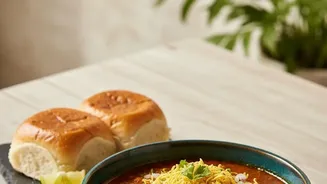
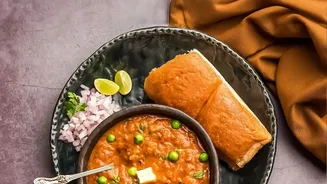
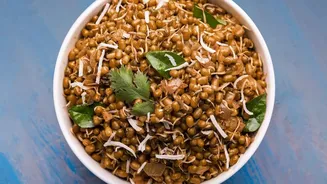
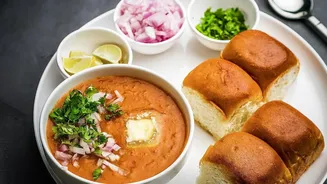
At its heart, Misal Pav is a masterful 'mixture', which is what 'misal' translates to in Marathi. The dish is an architectural marvel of textures and tastes, assembled in layers. The foundation is 'usal', a hearty curry made from sprouted moth beans (matki).
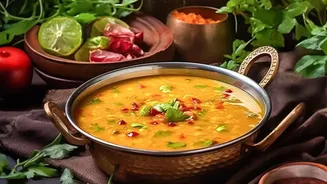
Over this is ladled the 'kat' or 'rassa', a thin, spicy gravy that is the soul of the dish. This vibrant red liquid, shimmering with flavoured oil called 'tarri', is what gives misal its signature heat. The creation is then crowned with a generous handful of 'farsan' (a crunchy, savoury mix of fried snacks like sev), finely chopped raw onions, and fresh coriander. A wedge of lemon is served on the side, ready to be squeezed over the top, adding a sharp, tangy counterpoint to the spice. The entire concoction is scooped up with soft, pillowy bread rolls known as 'pav'.
A Symphony of Flavour and Texture
To eat Misal Pav is to experience a full-sensory event. It is a dish that demands participation. The first bite is a collision of contrasting sensations: the earthy softness of the sprouted beans, the fiery kick of the gravy, the sharp crunch of the farsan and raw onion, and the final, soothing embrace of the spongy pav soaking up the curry. It’s a dynamic interplay that changes as you eat; the farsan begins to soften, absorbing the spicy 'rassa' while still retaining a slight bite. It's this balance of hot, tangy, savoury, and crunchy all in one bowl that has elevated misal from a simple meal to a celebrated culinary experience.
A Tale of Many Cities
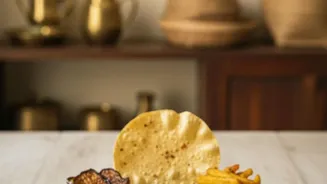
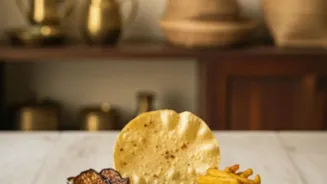
There isn't just one Misal Pav; the dish is a canvas for fierce regional pride and local identity. Each major city in Maharashtra has its own definitive version. The Kolhapuri Misal is legendary for its uncompromising spice level, a fiery red curry built on the local Kanda-Lasun (onion-garlic) masala that is not for the faint of heart. In contrast, Puneri Misal is often milder, sometimes with a hint of sweetness from jaggery, and is uniquely served over a bed of 'pohe' (flattened rice). Head to Nashik, and you'll find a misal with a distinctive 'kala masala' (black spice blend), giving the gravy a darker colour and a unique aromatic profile from roasted coconut and black pepper. This version is often served with fried papad and a side of cooling yoghurt to temper the spice.
More Than Just a Meal
Misal Pav's origins are humble, born out of the need for an affordable, nutritious, and filling meal for mill workers and labourers in the early 20th century. The protein from the sprouts provided sustained energy for a long day's work. From these working-class roots, it has evolved into a cultural icon and a great social leveller, enjoyed by everyone from students to office-goers at bustling roadside stalls and legendary eateries. It is a breakfast food by tradition, designed to wake you up and fuel the day ahead, but its popularity ensures it's enjoyed as a snack or a full meal at any time. Today, this once-humble dish has gained global recognition, celebrated for its bold flavours and plant-based ingredients.