




A Planet on the Clock
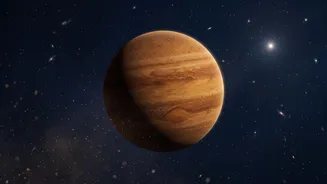
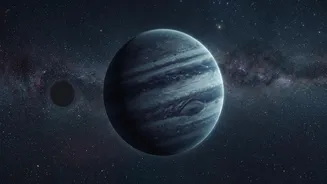
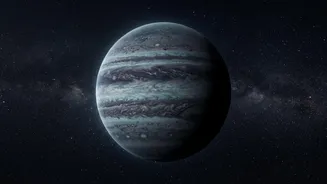
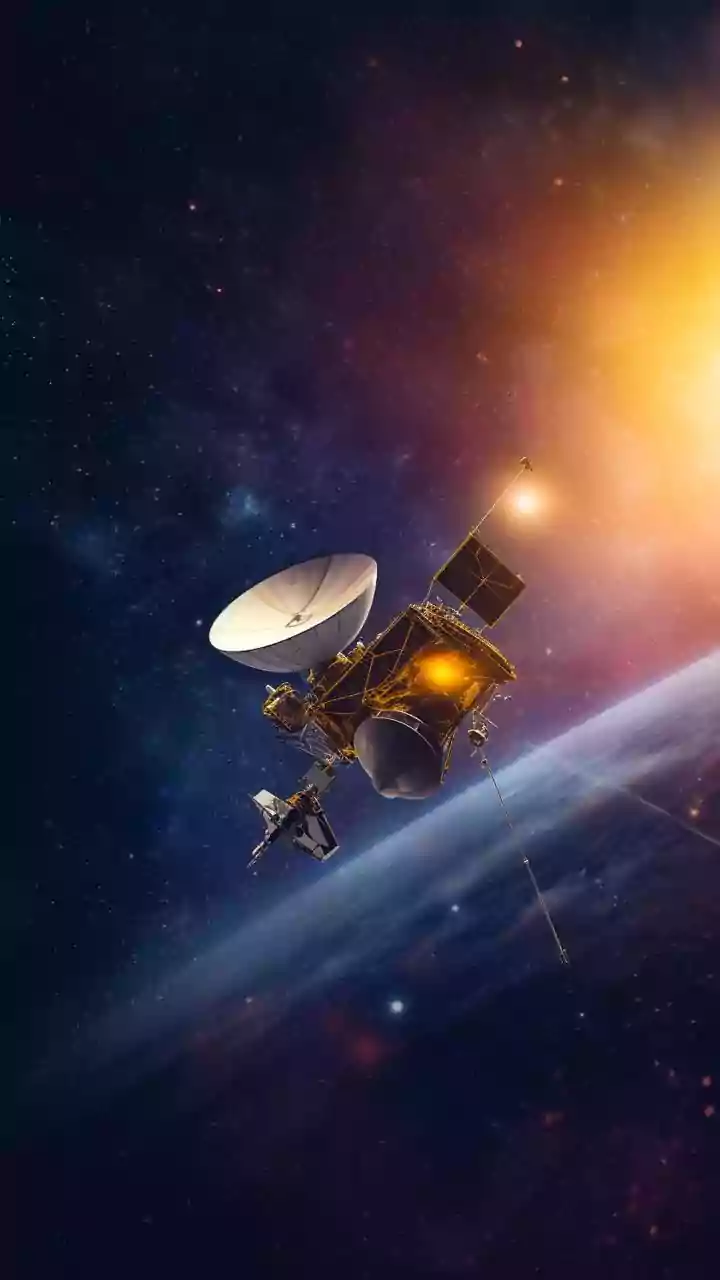
Meet TOI-2535 b, a massive gas giant known as a 'hot Jupiter'. Discovered by NASA's Transiting Exoplanet Survey Satellite (TESS), this planet is a behemoth, similar in size to Jupiter but orbiting its star in a blistering 8.25 days. For years, from 2019
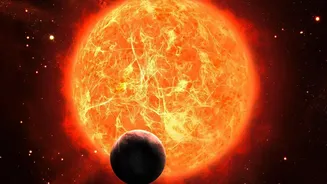
to early 2026, astronomers watched it reliably. They detected it using the transit method, where the planet's presence is inferred from the tiny, regular dip in starlight as it passes in front of its star from our point of view. This method requires a perfect alignment of the star, the planet, and our telescopes. For a long time, TOI-2535 b was a model cosmic citizen, showing up for its scheduled transits like clockwork. Then, things started to get weird.
The Unreliable Transit
The first sign of trouble was the timing. A planet orbiting its star alone should have a perfectly predictable schedule. But TOI-2535 b started to become unreliable. Its transits began occurring up to six hours early or six hours late, a massive deviation for such a tight orbit. Astronomers also noticed the transits were becoming shorter and fainter. Then, in March 2026, the signal disappeared entirely. TESS could no longer detect any dip in starlight. From our perspective, the planet had vanished. This wasn't a case of a planet being destroyed in a cosmic collision; the laws of physics suggested something more subtle was at play. The clues pointed not to destruction, but to a disturbance.
The Hidden Neighbor
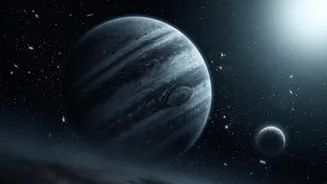
The solution to the mystery lies in a phenomenon known as Transit Timing Variations (TTVs). These variations in the timing of a transit are a tell-tale sign that another object's gravity is pulling on the planet being observed. In the case of TOI-2535 b, the data pointed to a hidden companion: another large, unseen planet in the same system. This neighbouring planet is locked in a gravitational tug-of-war with TOI-2535 b. This constant pulling and pushing is causing the orbits of both planets to wobble like a spinning top that is about to fall over. It's this wobble, not a cataclysm, that made our planet disappear.
A Cosmic Game of Hide-and-Seek
The gravitational interactions tilted TOI-2535 b's orbit so dramatically that it no longer crosses the face of its star from our line of sight. The planet is still there, faithfully orbiting its star, but its path has shifted just enough to make it invisible to the transit detection method. According to Samuel Yee, a researcher at UCLA who led the study, this is the most extreme example of such a rapid orbital tilt ever witnessed. You can think of it like a solar eclipse on Earth; the Moon's orbit is slightly tilted relative to Earth's, which is why we only get eclipses when their paths perfectly align. TOI-2535 b's alignment has simply shifted out of view, and astronomers predict it won't be seen transiting again for another 30 to 50 years.
Why This 'Disappearance' Matters
The case of TOI-2535 b is more than just a cosmic magic trick. It provides invaluable clues about how planetary systems form and evolve. 'Hot Jupiters' like this one are a puzzle; they are too large to have formed so close to their star and are thought to have migrated inward over time. The presence of a nearby companion planet suggests that TOI-2535 b likely migrated slowly, spiraling in rather than being violently thrown into its current position. This observation challenges the idea that planetary systems are always flat and orderly, revealing they can be dynamic, tilted, and interactive. The 'missing' planet isn't a failure of observation but a successful detection of a far more complex and interesting system than previously imagined. It reminds us that the universe is less like a perfect clock and more like a dynamic, ever-changing dance.