




The Ultimate Ejection Seat
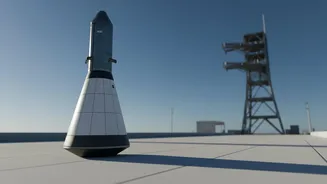
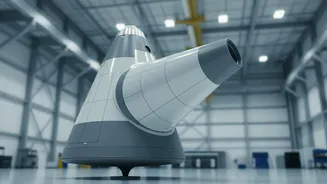
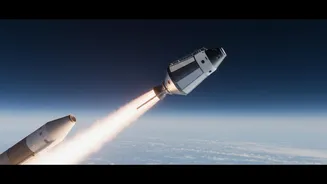
Think of it as the most sophisticated ejection seat ever built. A Crew Escape System (CES) is an emergency measure designed to pull the crew module—the capsule carrying the astronauts—away from the launch vehicle if something goes wrong during ascent.
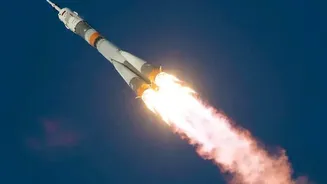
This isn't just a simple separation; it's a powerful, rapid extraction. The system uses its own set of quick-acting solid motors to literally yank the crew to a safe distance from a failing rocket. Given that some rocket motors cannot be shut down once ignited, the escape system must generate immense thrust to outpace the launch vehicle itself. The purpose is to protect the crew during the atmospheric phase of the flight, one of the most dangerous stages where the rocket is under enormous stress and travelling at immense speeds.
Simulating Failure for Success
To ensure this escape plan works flawlessly, the Indian Space Research Organisation (ISRO) conducts a series of rigorous tests that simulate worst-case scenarios. One of the key demonstrations is the Test Vehicle Abort Mission-1 (TV-D1). In this test, a specially designed single-stage liquid rocket lifts an unpressurised version of the Crew Module to a specific altitude. For the TV-D1 mission, the goal was to trigger an abort at an altitude of about 17 km, at a speed corresponding to Mach 1.2 (1.2 times the speed of sound). This simulates a mid-flight emergency, validating that the Crew Escape System can function correctly under dynamic flight conditions. These tests are about more than just separation; they evaluate the entire sequence, from the autonomous abort trigger to the final splashdown.
A Precisely Choreographed Escape
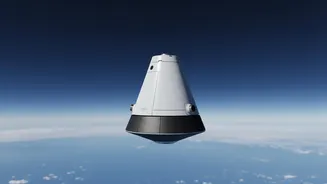
When an abort is initiated, a complex but automated sequence of events unfolds in seconds. First, the powerful motors of the Crew Escape System fire, pulling the Crew Module away from the rocket. After reaching a safe distance and altitude, the escape system itself jettisons from the module. Now, the Crew Module begins its descent. To slow it down from high speeds, a series of parachutes are deployed. This starts with smaller drogue parachutes that stabilize the capsule, followed by the massive main parachutes that slow it down for a gentle splashdown in the sea. In recent Integrated Air Drop Tests (IADT), ISRO used helicopters to drop a mock crew module to test this exact parachute sequence, ensuring every component works as intended for a safe landing.
From Splashdown to Recovery
The mission isn't over until the astronauts are safely back on the ground—or in this case, on a ship. The final phase of the abort manoeuvre involves the recovery of the Crew Module from the ocean. After splashing down, the capsule needs to be located and brought aboard a vessel. ISRO works closely with the Indian Navy, which has dedicated teams and ships for this purpose. Recent tests have also qualified the Crew Module Up-righting System (CMUS), which uses inflatable bags to ensure the capsule remains upright after landing in potentially rough seas, a critical feature for the stability and safety of the astronauts inside while they await recovery. Each successful recovery of a test capsule validates the end-to-end performance of the entire emergency procedure.