
The Foundation: Sprouted Moth Beans
The soul of any authentic Misal Pav is the 'usal,' a curry made from sprouted moth beans, known as 'matki'. While you can sometimes find them ready-made, sprouting your own at home is simple and ensures the best flavour and texture. To sprout moth beans, start
by rinsing them thoroughly and soaking them in warm water overnight. The next day, drain the water completely, wrap the beans in a clean cheesecloth or cotton towel, and leave them in a warm, dark place (like an oven with the light off) for 24 to 48 hours. You’ll know they are ready when they have grown small tails. These sprouts provide a wonderful, slightly nutty flavour and a firm texture that holds up in the curry, not to mention a significant boost of protein and fibre.
Crafting the Fiery 'Kat' or 'Tarri'
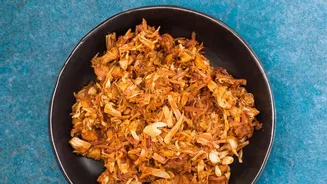
The spicy gravy, known as 'kat' or 'tarri' (also 'rassa'), is what gives misal its signature punch. This isn't just a simple curry; it's a flavourful, often thin liquid that you pour over the thicker sprout base. A traditional tarri is made by creating a 'vatan' or masala paste. This typically involves roasting onions, dry coconut, ginger, and garlic, then grinding them into a smooth paste with spices. This paste is then sautéed in a generous amount of oil until it becomes fragrant and the oil separates, creating that iconic red layer on top. Key spices often include a special 'goda masala' or 'misal masala', alongside red chilli powder for heat and colour. The consistency should be relatively thin, as it's meant to be ladled generously over the final dish.
A Tale of Two Cities: Puneri vs. Kolhapuri
Misal is not a monolithic dish; its flavour profile changes dramatically across Maharashtra. The two most famous variants are Puneri and Kolhapuri. Kolhapuri Misal is legendary for its intense spiciness, using a special onion-garlic masala known as 'kanda-lasun masala' for a fiery kick that is not for the faint of heart. In contrast, Puneri Misal is milder, often with a subtle sweetness and tang from the use of jaggery and tamarind. It's typically topped with potato bhaji and poha (flattened rice), which helps balance the spice. Other regional variations exist too, like the Nashik Misal, which can feature a black gravy from roasted spices, and is often served with fried papad and curd.
The Perfect Pav and Essential Toppings
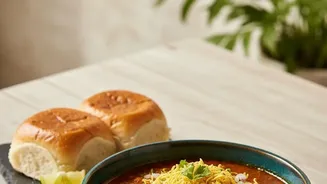
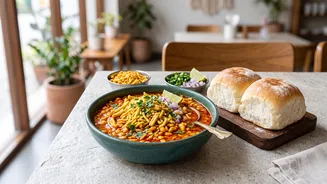
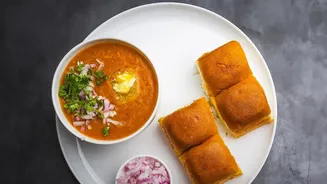
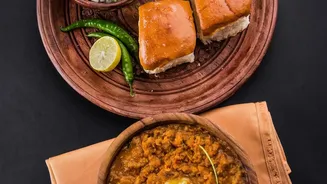
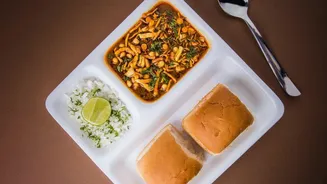
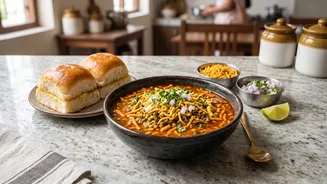
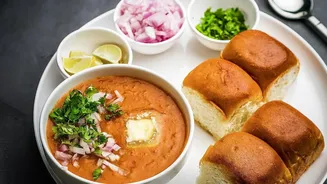
You can't have Misal Pav without the 'pav'. These are soft, slightly sweet Indian bread rolls that are the perfect vehicle for soaking up the spicy gravy. For the best experience, the pav should be fresh and fluffy. You can serve them as is or lightly toast them with a bit of butter for extra richness. The toppings, or 'farsan', are just as crucial and provide the signature crunch that defines the dish. A classic Misal is generously garnished with a crunchy, savoury snack mix (often called farsan, sev, or chivda), finely chopped raw onions, and fresh coriander leaves. A final squeeze of lemon or lime juice cuts through the richness and brightens all the flavours.
How to Assemble and Serve
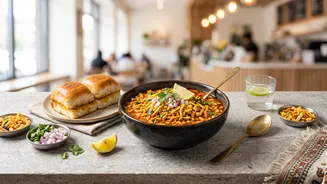
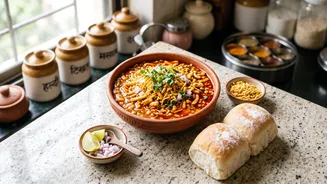
Assembling Misal Pav is an art form designed to create the perfect bite every time. The word 'misal' itself means 'mixture', and the layering is key. Start by placing a generous ladle of the cooked sprout usal (the thick curry) into a bowl. Pour the hot, spicy 'tarri' or gravy over the sprouts. Next, add your toppings: a handful of farsan for crunch, followed by a sprinkle of chopped onions and coriander. Present the bowl with pav on the side, along with extra chopped onions and a lemon wedge. The diner then gets to mix everything together, breaking off pieces of pav to dip and scoop, creating a customized and interactive meal that is bursting with flavour and texture.