

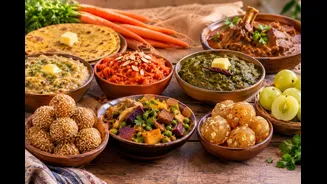
A Time-Honoured Winter Tradition
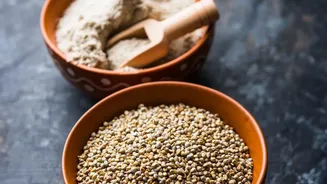
Bajra, or pearl millet, has been a cornerstone of Indian cuisine for centuries, especially in the arid regions of Rajasthan, Gujarat, and Haryana. Its harvest aligns with the end of the monsoon and the beginning of the cold season, making it freshly available
when the body craves dense, nourishing foods. Traditionally, the shift to bajra is a response to the changing seasons. Its 'warming' properties are not just folklore but are recognized in Ayurveda, which classifies bajra as 'ushna virya' or having a heating potency. This makes it ideal for counteracting the chill and dampness of winter, providing internal warmth that sustains the body.
A Nutritional Powerhouse
Beyond tradition, bajra roti earns its place on the winter plate with an impressive nutritional profile. It is a gluten-free grain, making it an excellent choice for those with celiac disease or gluten sensitivity. It is packed with complex carbohydrates, which provide a slow and steady release of energy, helping to combat the lethargy that can set in during colder, shorter days. Pearl millet is also a rich source of essential minerals. It is particularly high in iron, crucial for preventing anaemia and fighting fatigue. Furthermore, it contains a significant amount of magnesium, which supports heart health and muscle function, and phosphorus, which is vital for strong bones.
The Secret to a Perfect Bajra Roti
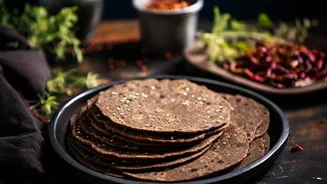
For many home cooks, making bajra roti can seem daunting. Because it is gluten-free, the dough lacks the elasticity of wheat flour and can be prone to cracking. However, a few simple techniques can make all the difference. The key is to use warm or hot water to knead the dough, which makes it more pliable. It's also best to knead only enough dough for one or two rotis at a time, as the dough stiffens as it cools. Instead of rolling with a pin, patting the dough by hand between wet palms or between sheets of parchment paper is the traditional and most effective method. Cook the roti on a hot tawa and then puff it directly on the flame for a soft, smoky result.
Classic Pairings to Savour
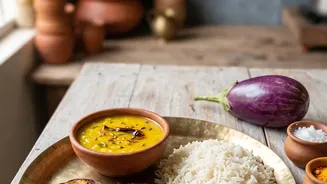
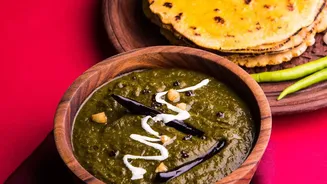
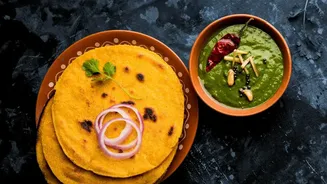
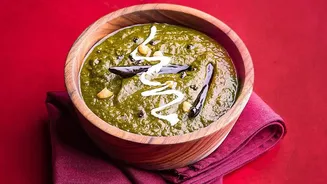
A bajra roti is seldom eaten alone; its rustic, nutty flavour is a perfect canvas for a variety of robust accompaniments. The most classic pairing, especially in Rajasthan and Gujarat, is a dollop of fresh white butter (makkhan) and a piece of jaggery (gur). The flatbread’s earthy notes are also beautifully complemented by fiery garlic chutney (lehsun ki chutney). During winter, it is famously served with seasonal vegetable dishes like Sarson ka Saag (spicy mustard greens) in Punjab and Haryana or Baingan Bharta (smoky roasted eggplant) across North India. These combinations are not just about taste; they create a balanced meal that is both comforting and deeply nutritious.
More Than Just a Roti
While roti is the most common way to enjoy bajra in winter, the grain is incredibly versatile. In Rajasthan, a warm, thin porridge called 'raab' is made with bajra flour, buttermilk, and spices as a comforting drink on cold mornings. Bajra khichdi, cooked with lentils and minimal spices, is another one-pot winter meal that is both wholesome and easy to digest. For those with a sweet tooth, bajra flour can be roasted with ghee and mixed with jaggery and nuts to make nutritious energy-giving ladoos. These preparations highlight the grain’s adaptability and its integral role in India's diverse winter culinary landscape.