






The Science of Stubbornly Damp Clothes
Drying is simply the process of water leaving fabric and turning into vapor in the air, a process called evaporation. For this to happen, the surrounding air needs to have the capacity to absorb that moisture. Think of the air like a sponge. If the sponge is already
soaked—meaning the relative humidity is high—it can't absorb any more water. When you dry clothes indoors, you release a significant amount of water into the air, with a single wash load containing up to two litres of water. This can quickly saturate the air in a closed room, dramatically slowing down evaporation and leaving your clothes feeling damp for days. The air right around each garment becomes a micro-climate of 100% humidity, preventing any more water from escaping the fabric.
Give Your Laundry Some Breathing Room
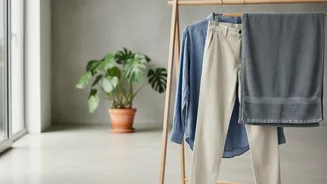
The single most effective strategy to combat trapped humidity is to improve air circulation. When air moves, it whisks away the layer of saturated air surrounding your clothes, replacing it with drier air that can absorb more moisture. The simplest way to do this is to space your garments out on the drying rack. Avoid overlapping items or cramming the rack too full. If possible, hang shirts and tops on individual hangers, as this exposes more surface area to the air. Shaking each item vigorously before hanging can also remove excess water and open up the fibres, speeding up the process. Don't let clean laundry sit in the machine; hang it immediately to prevent musty smells from developing.
Actively Reduce Your Home's Humidity
While airflow helps move humid air away, actively removing moisture from the room is a game-changer. A dehumidifier is the most effective tool for this job. Placing one near or under your drying rack will pull water directly from the air, creating an ideal environment for rapid drying. If you don't have a dehumidifier, choose your drying location wisely. Avoid small, unventilated rooms. A larger room offers a greater volume of air to absorb moisture. If you must use a bathroom, run the exhaust fan to pull humid air out. You can also try running a standing or ceiling fan to keep air moving, which is often more effective than heat alone for indoor drying.
Use Your Washing Machine and a Little Heat
The drying process begins before you even hang your clothes. Use the highest spin cycle your fabrics can tolerate on your washing machine. Removing as much excess water as possible mechanically will significantly cut down on air-drying time. Some people even run a second spin cycle. While piling clothes on a radiator is a fire hazard and can lead to mould, placing your drying rack in the warmest room of the house or near a heat source (at a safe distance) can help. Warm air can hold more moisture than cold air, which helps accelerate evaporation, provided the air is also circulating. Even the residual heat from a car engine can help dry clothes faster if you have a clothesline set up in a garage.
The Hidden Risks of a Damp Home
Slow-drying laundry isn't just an inconvenience; it can impact your home's health. Consistently high indoor humidity creates the perfect breeding ground for mould, mildew, and dust mites. The World Health Organization recommends keeping indoor humidity between 40-60% to minimise health risks. Drying laundry can push levels well above 70%. These conditions can trigger allergies and respiratory issues, and lead to musty smells that permeate your home and fabrics. The foul odour that sometimes develops in clothes that take too long to dry is caused by bacteria multiplying in the damp fabric. Ensuring your clothes dry efficiently is also about maintaining better indoor air quality.