



What Exactly Is Push-Pull-Legs?
The Push-Pull-Legs (PPL) routine is a straightforward training philosophy that splits your workouts into three distinct days, each focusing on a specific movement pattern. Instead of training isolated muscles, you group them by their function. A 'Push'
day targets upper body muscles used in pushing motions. A 'Pull' day works the muscles used to pull weight towards you. And a 'Legs' day, as the name implies, is dedicated to training your entire lower body. This logical grouping prevents an over-complicated schedule and ensures related muscles work together, which can make workouts feel more synergistic and effective.
The 'Push' Day: Chest, Shoulders, and Triceps
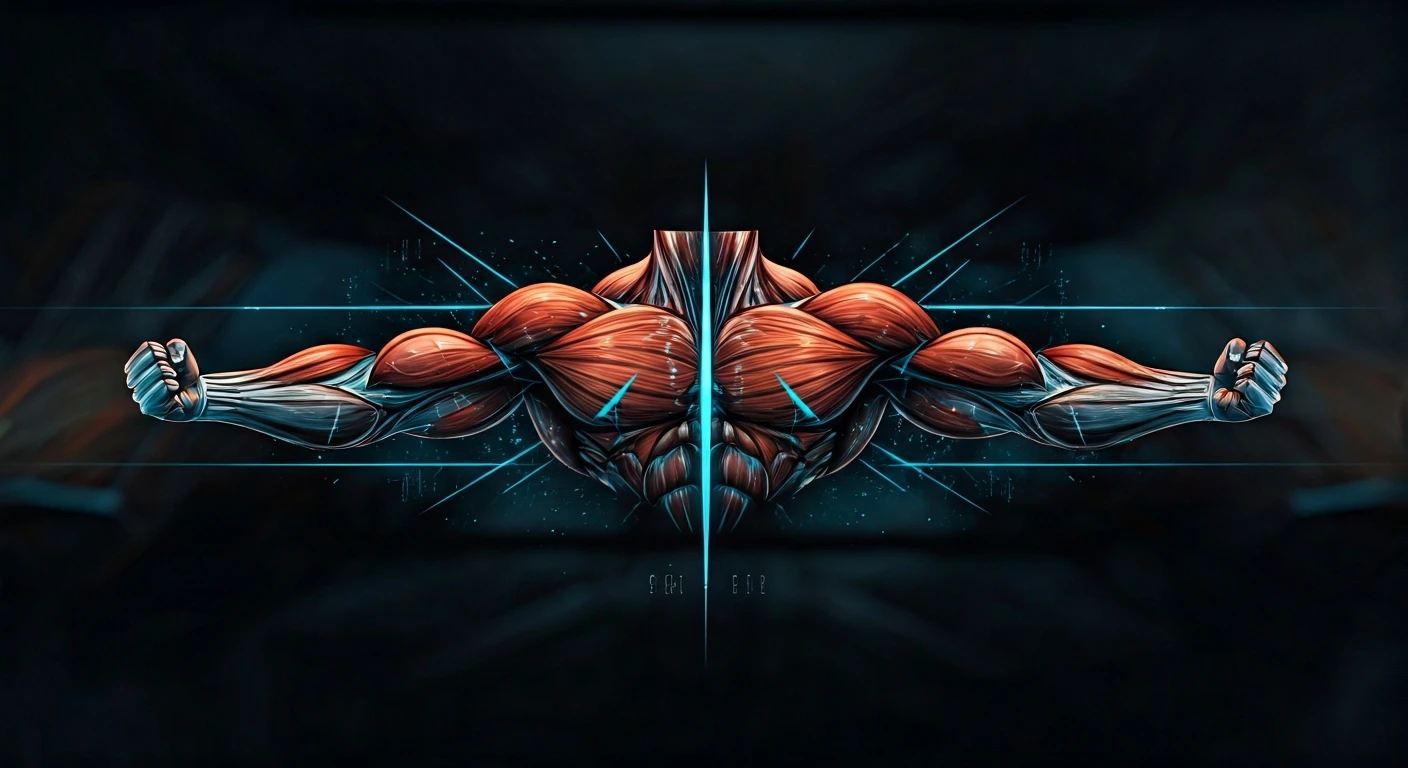
On a push day, you train the primary upper-body muscles that push resistance away from you: the chest, shoulders (deltoids), and triceps. These muscles naturally work together in many compound movements. For instance, when you perform a bench press for your chest, your shoulders and triceps are also heavily involved as secondary movers. This makes it efficient to train them all in one session. **Sample Push Exercises:** * **Bench Press:** A foundational compound exercise for overall chest development. * **Overhead Press (Dumbbell or Barbell):** The primary movement for building strong shoulders. * **Incline Dumbbell Press:** This variation places more emphasis on the upper portion of the chest. * **Triceps Pushdowns or Dips:** An isolation movement to specifically target the triceps.
The 'Pull' Day: Back and Biceps
A pull day focuses on the muscles responsible for pulling resistance toward your body. This primarily includes the various muscles of the back (like the lats and rhomboids) and the biceps. Just like with push day, these muscles are a natural pairing. When you do rows or pull-ups to train your back, your biceps are engaged to help flex the elbow. This makes for a highly efficient workout that targets the entire posterior chain of your upper body. **Sample Pull Exercises:** * **Pull-Ups or Lat Pulldowns:** A key exercise for building back width. * **Barbell or Dumbbell Rows:** Excellent for developing back thickness and strength. * **Face Pulls:** A great accessory movement for targeting the rear deltoids and improving posture. * **Bicep Curls (Barbell or Dumbbell):** The classic exercise to isolate and build the biceps.
The 'Legs' Day: Quads, Hamstrings, and Glutes
Leg day in a PPL split covers all the major muscle groups of the lower body: quadriceps, hamstrings, glutes, and calves. While some argue that exercises like squats involve both pushing and pulling elements, the PPL routine simplifies this by dedicating one entire session to lower body training. This focus allows you to channel all your energy into demanding compound movements that are crucial for building a strong foundation. **Sample Leg Exercises:** * **Squats (Back or Front):** Considered one of the most effective exercises for overall leg development. * **Romanian Deadlifts:** Specifically targets the hamstrings and glutes. * **Lunges or Bulgarian Split Squats:** Fantastic for single-leg strength, balance, and stability. * **Calf Raises:** An isolation exercise to target the calf muscles.
Why It's So Easy to Follow
The primary appeal of the PPL split is its simplicity and flexibility. You don't have to wonder which muscles to train; the category—Push, Pull, or Legs—tells you everything you need to know. This structure also ensures that muscle groups get ample recovery time. While your chest and shoulders are working on push day, your back and biceps are resting, and vice versa. This split can be adapted to your schedule. A common approach is a 3-day routine (e.g., training Monday, Wednesday, Friday with rest days in between). For more advanced individuals, it can be run as a 6-day routine (Push, Pull, Legs, Push, Pull, Legs) followed by a rest day, allowing you to train each muscle group twice a week. This scalability makes it a sustainable choice for many fitness levels.