



The Green Contender: High in Resistant Starch
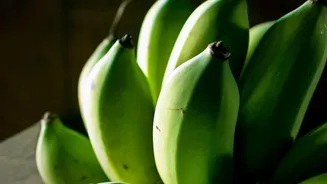
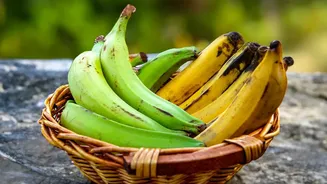
A green, unripe banana is a starchy powerhouse. Up to 80% of its carbohydrate content is resistant starch, a type of complex carb that, as its name suggests, resists digestion in your small intestine. Instead, it travels to the large intestine where it acts
as a prebiotic, feeding the beneficial bacteria in your gut. This process is great for overall gut health. Because it’s not broken down into sugar quickly, it has a minimal impact on blood sugar levels. Green bananas have a low glycemic index (GI), often around 30 to 42, making them a favourable choice for individuals managing blood sugar. This slower digestion also means they keep you feeling fuller for longer, which can aid in weight management. The tradeoff is a firmer, waxier texture and a less sweet, sometimes slightly bitter taste that not everyone enjoys.
The Yellow Champion: Sweeter and Easier to Digest
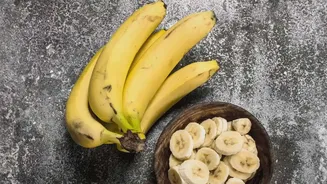
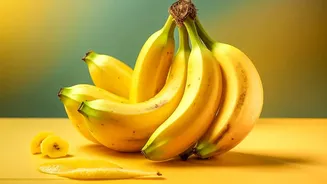
As a banana ripens and its peel turns from green to yellow, a remarkable transformation occurs. Enzymes within the fruit begin to break down the complex resistant starches into simple sugars like fructose, glucose, and sucrose. This is why a perfectly yellow banana is so much sweeter and softer than its green counterpart. By the time a banana is fully ripe, its starch content can plummet to just 1%. This high sugar content makes ripe bananas an excellent source of quick, easily digestible energy, ideal for a pre-workout snack. The glycemic index of a ripe banana is higher, typically ranging from 47 to 62, which is still considered in the low-to-medium range. Furthermore, as bananas ripen, their antioxidant levels increase, offering more cell-protecting benefits.
Starch vs. Sugar: The Main Event
The core difference lies in this starch-to-sugar conversion. Unripe bananas are defined by their resistant starch, which functions similarly to dietary fibre. It doesn’t provide a quick energy spike because your body can't easily access the glucose. This is beneficial for blood sugar control and colon health. In contrast, ripe bananas have their carbohydrates primarily in the form of simple sugars. While this means they provide a faster burst of energy, the natural sugars are still packaged with fibre, vitamins, and minerals like potassium and Vitamin B6, making them a much healthier choice than processed sweets with added sugars.
Impact on Digestion and Blood Sugar
Your choice of banana can have a noticeable effect on your digestive system. The high resistant starch in green bananas can sometimes cause bloating or gas in individuals not accustomed to it. On the other hand, because the starches are already broken down, ripe bananas are generally considered easier to digest. For those with diabetes or who are monitoring their blood sugar, this distinction is crucial. The slow release of energy from an unripe banana prevents a sharp spike in blood glucose. A ripe banana will raise blood sugar more quickly, though its glycemic load is still moderate, meaning a single portion is unlikely to cause extreme fluctuations for most people.
Which Banana is Right for You?
Ultimately, the 'best' banana depends entirely on your personal health goals and taste preferences. Choose green bananas if: - You want to improve your gut health with prebiotics. - You are managing your blood sugar levels and need a low-GI option. - You want a snack that will keep you feeling full for a longer period. Choose yellow, ripe bananas if: - You need a quick source of natural energy before exercise. - You prefer a sweeter taste and softer texture. - You have a sensitive digestive system, as they are easier to break down.