

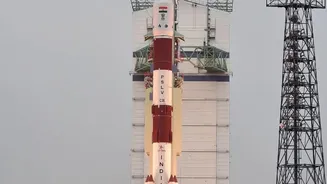
A Universe of New Opportunities
India's space economy is expanding at an unprecedented rate. Currently valued at around $8.4 billion, it is projected to skyrocket to nearly $44 billion by 2033. This growth isn't just a number; it represents a fundamental shift. Policy reforms in 2020
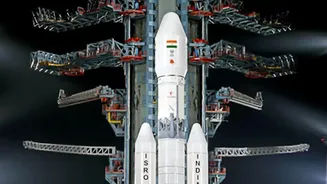
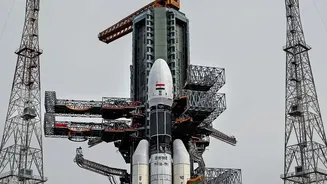
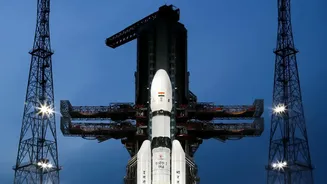
opened the doors for private companies, creating a dynamic ecosystem alongside the venerable Indian Space Research Organisation (ISRO). Today, with over 400 startups in the sector, the landscape is buzzing with innovation. This state-enabled commercialisation, driven by bodies like the Indian National Space Promotion and Authorisation Centre (IN-SPACe), means more jobs, more investment, and more diverse career paths than ever before.
The In-Demand Skillsets of Tomorrow
While a foundation in aerospace or mechanical engineering remains valuable, the new space economy demands a much broader range of skills. The massive amounts of data generated by satellites have made data science and artificial intelligence the new rocket fuel. Professionals who can analyse satellite imagery for applications in agriculture, climate monitoring, and urban planning are in high demand. Furthermore, fields like robotics, autonomous systems, and materials science are critical. As India plans for in-orbit servicing and deep-space missions, expertise in these areas will be crucial. Even non-technical roles are expanding, with a growing need for specialists in space law, policy, finance, and international relations.
Charting Your Educational Trajectory
The first step for any aspiring space professional is a strong academic foundation. A bachelor's degree in a STEM field is essential, with a focus on Physics, Chemistry, and Mathematics (PCM) at the 12th-grade level. For core technical roles, a B.Tech in Aerospace, Mechanical, Electronics, or Computer Science is the standard entry point. Premier institutions like the IITs and the Indian Institute of Space Science and Technology (IIST) are highly sought after. IIST even offers a direct path into ISRO for its top graduates. However, the field is widening. A BSc in Physics or Astronomy followed by a specialised Master's degree can also open doors to research roles. Importantly, continuous learning through certifications in areas like GIS, embedded systems, or data analytics can give you a significant competitive edge.
Beyond ISRO: The Rise of Private Players
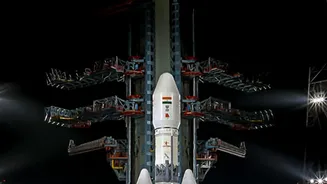
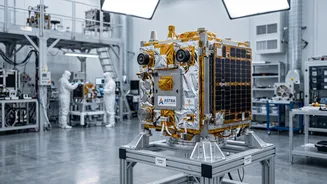
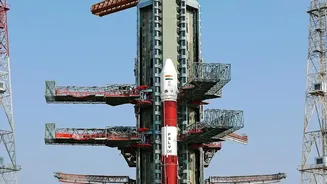
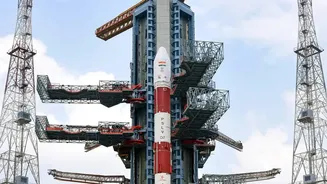
For decades, a career in space in India largely meant a career at ISRO. That has changed dramatically. The private sector is now a hotbed of activity, with startups like Skyroot Aerospace, Agnikul Cosmos, Pixxel, and Dhruva Space leading the charge. Skyroot made history as the first Indian private company to launch a rocket into orbit, signalling a new era. These companies are involved in everything from building cost-effective launch vehicles and 3D-printing engines to developing constellations of hyperspectral imaging satellites. This vibrant ecosystem offers faster-paced environments and potentially high rewards, with competitive salaries and the chance to be part of building something from the ground up.
How to Get Your Foot in the Door
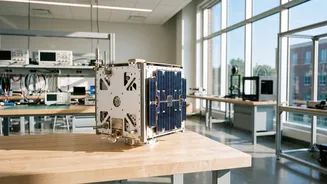
Practical experience is key to standing out. Aspiring professionals should actively seek internships at ISRO, DRDO, or private space companies. Participating in student competitions like building CubeSats or model rockets provides invaluable hands-on learning that recruiters value highly. Building a portfolio of projects, contributing to open-source software used in aerospace, and networking at industry events are also crucial steps. Following the work of IN-SPACe and the Indian Space Association (ISpA) can provide insights into emerging trends and opportunities. Don't underestimate the power of a well-crafted resume that highlights not just your academic credentials but also your practical skills and passion for the industry.