


A 'Pushpak' Towards the Future
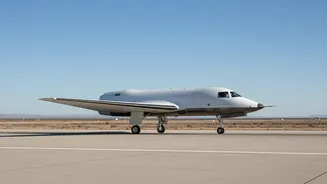
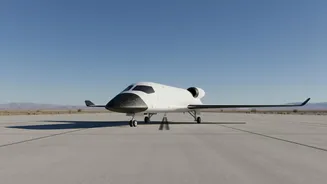
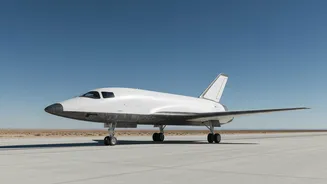
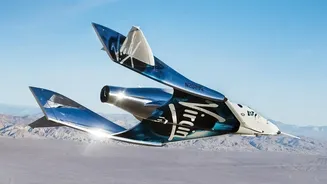
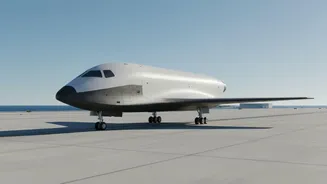
ISRO has successfully completed a series of critical landing experiments with its Reusable Launch Vehicle-Technology Demonstrator (RLV-TD), nicknamed 'Pushpak'. In recent tests conducted at Aeronautical Test Range in Karnataka, the winged vehicle demonstrated
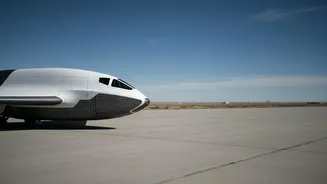
its ability to land on a runway autonomously with pinpoint precision. During these experiments, Pushpak was lifted to an altitude of 4.5 km by an Indian Air Force Chinook helicopter and released. From there, its onboard computers took over completely, navigating the vehicle through complex manoeuvres to a perfect horizontal landing, much like an aircraft. These tests successfully simulated the high-speed, unmanned landing conditions of a vehicle returning from space, proving the maturity of India's indigenous navigation, control, and deceleration systems. Each successive test has pushed the vehicle under more challenging conditions, including severe crosswinds and off-nominal release points, all of which it has handled flawlessly.
The Science of Saving Crores
The primary driver behind the RLV program is economics. Traditionally, rockets are expendable; their very expensive components are discarded after a single use. This is like building a brand-new airplane for every single flight. By developing a vehicle that can be reused, ISRO aims to slash the cost of launching satellites. Estimates suggest that reusable technology could reduce launch costs by up to 80%, a game-changing figure that could bring the cost per kilogram to low Earth orbit down dramatically. About 80% of a rocket's cost is tied up in its structure and engines, not its fuel. By recovering and refurbishing the most valuable parts, the overall expense for each subsequent mission plummets. This cost efficiency is crucial for India to not only launch its own heavy satellites more economically but also to compete aggressively in the multi-billion dollar global commercial launch market.
Why Autonomous Landing is Key
The word 'autonomous' is the most critical part of these landing experiments. For a launch vehicle to be truly reusable and commercially viable, it must be able to return from space and land itself without human intervention. This requires an incredibly sophisticated 'brain'—a fusion of advanced software, navigation systems like NavIC, and a suite of sensors that can perform complex calculations in real-time. Pushpak autonomously executes corrections for its flight path, manages its speed, which can exceed 320 km/h on landing, and brings itself to a safe stop using a combination of brake parachutes and landing gear brakes. This level of automation ensures reliability, reduces the need for extensive ground support, and enables a quick turnaround for the next mission—all vital factors for a successful reusable launch system.
India's Place in the Global Space Race
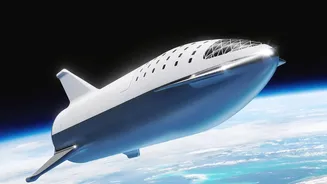
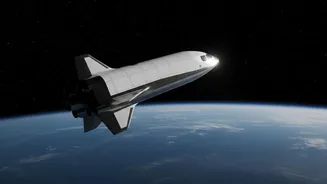
While ISRO has long been celebrated for its cost-effective missions, the RLV program positions India to enter the elite club of nations with reusable space-flight capability, a domain currently dominated by players like SpaceX. However, India is taking a different technological path. While SpaceX's Falcon 9 boosters perform vertical, propulsive landings, ISRO's Pushpak is designed for a winged, horizontal landing on a runway. This 'spaceplane' concept validates a different set of technologies. The ultimate goal is to develop a Two-Stage-To-Orbit (TSTO) vehicle, where the winged first stage flies back to Earth after separating, while the second stage proceeds to deploy the satellite. Success in this endeavor will not only ensure India's self-reliance in launching heavy satellites but also make it a formidable competitor for international satellite launch contracts.
The Road Ahead: From Landing to Orbit
With the successful completion of the Landing Experiments (LEX), ISRO has mastered a crucial phase of the RLV's development. The technology and the vehicle itself have proven robust, with the same winged body being reused in the final tests. The next logical and much more challenging phase is the Orbital Re-entry Experiment (ORE). This will involve launching a vehicle into orbit around the Earth, have it perform its mission, survive the intense heat of re-entry into the atmosphere, and then perform an autonomous landing. This will be the ultimate test of the technologies proven in the LEX missions and will bridge the gap between the current demonstrator and a fully operational reusable launch system, paving the way for a new era of Indian space exploration.