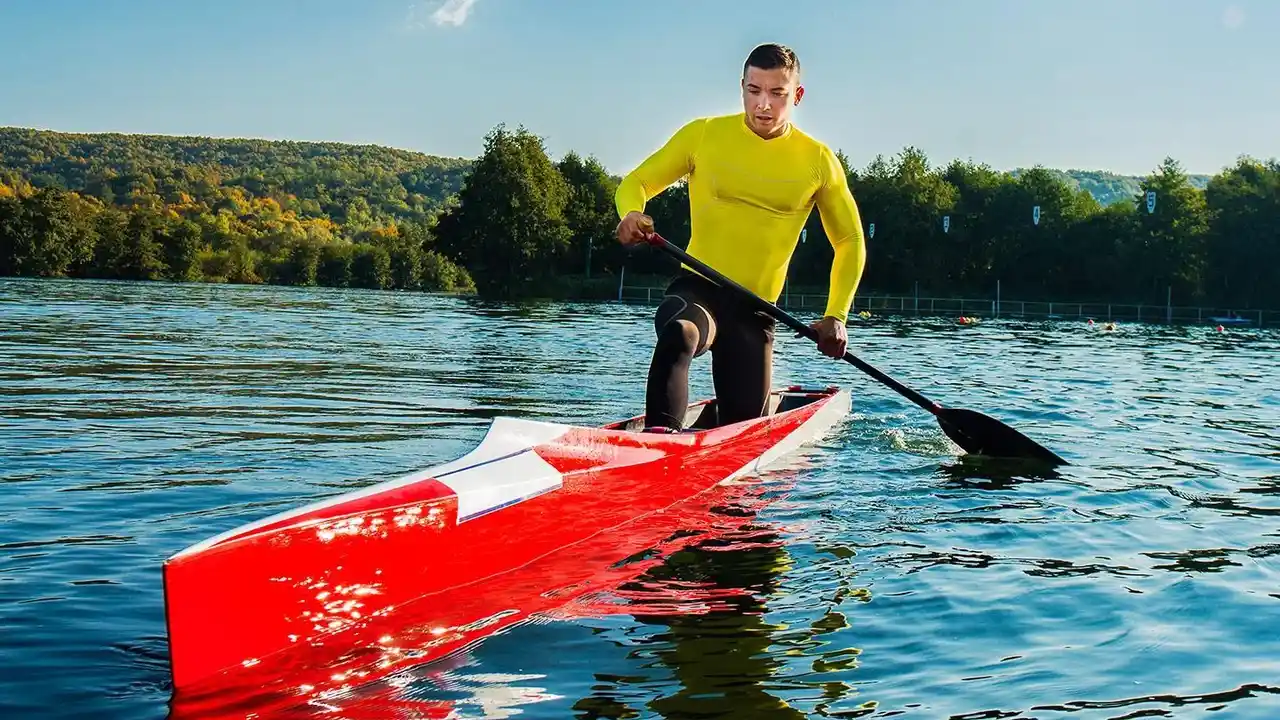







The Core of the Matter
While the headline focuses on the upper body, any good paddler knows the power starts at the core. This is the first major point of difference. Stand-up paddleboarding (SUP) is a constant balancing act. Simply standing on the board requires continuous
engagement from your deep core muscles, abs, lower back, and even your legs and feet to maintain stability. In contrast, kayaking, with its stable, seated position, engages the core in a more rotational and power-driven way. A powerful kayak stroke comes from twisting the torso, heavily recruiting the obliques and abdominals to drive the paddle through the water, rather than constantly fighting for balance.
Targeting the Upper Body
This is where the two sports truly diverge. Kayaking is an undisputed powerhouse for developing the pulling muscles of the upper body. The double-bladed paddle and seated leverage mean that every stroke is a significant workout for the latissimus dorsi (lats), shoulders (deltoids), and biceps. It’s a rhythmic, strength-building exercise that develops serious endurance in the back and arms. Paddleboarding also works the shoulders, arms, and back, but the motion is different. Using a single, long paddle from a standing position involves a combination of pulling and pushing, with an emphasis on stabilization. While it provides a solid upper-body workout, it’s generally considered less intense for these specific muscle groups compared to the focused, repetitive resistance of kayaking.
Types of Endurance
Both activities are fantastic for cardiovascular health, but they build endurance differently. Kayaking is often geared toward steady-state endurance. The stable platform allows for long, rhythmic sessions of continuous paddling, making it excellent for building aerobic capacity over several hours. You can settle into a pace and maintain it, similar to a long-distance run or cycle. Paddleboarding, on the other hand, often builds a more variable form of muscular endurance. The constant need to balance, adjust to wind and chop, and the stop-and-start nature of some sessions (like SUP yoga or surfing) create a workout that’s more akin to interval training. It tests your muscles' ability to sustain effort through periods of instability and changing intensity.
Calorie Burn and Overall Intensity
If burning calories is a primary goal, paddleboarding often has a slight edge, precisely because it engages more of the body. Keeping your entire body stable and engaged from head to toe simply requires more energy. A person of average weight might burn 400-550 calories an hour during moderate paddleboarding, while the same effort in a kayak might burn 300-400 calories. However, intensity is the key variable. A high-intensity kayaking session in rough water will undoubtedly burn more calories than a leisurely paddle on a calm lake, and vice versa. Ultimately, paddleboarding is often described as a more comprehensive full-body workout, while kayaking offers a more concentrated upper-body and cardio challenge.
Beginner Friendliness and Accessibility
For those new to water sports, kayaking generally has a lower barrier to entry. The seated position provides a low center of gravity and inherent stability, meaning most beginners can get in and start paddling confidently within minutes. Stand-up paddleboarding requires a bit more patience. Learning to balance on the board can be challenging at first, and beginners should expect a few tumbles. However, once you find your sea legs, many find the freedom of movement on a paddleboard—the ability to stand, kneel, or sit—to be a major advantage.