


What Are These Mysterious Red Dots?
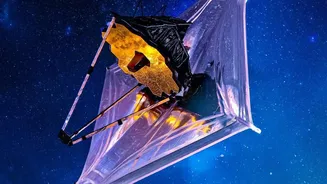
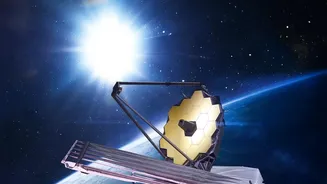
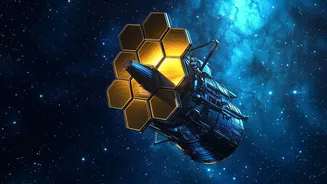
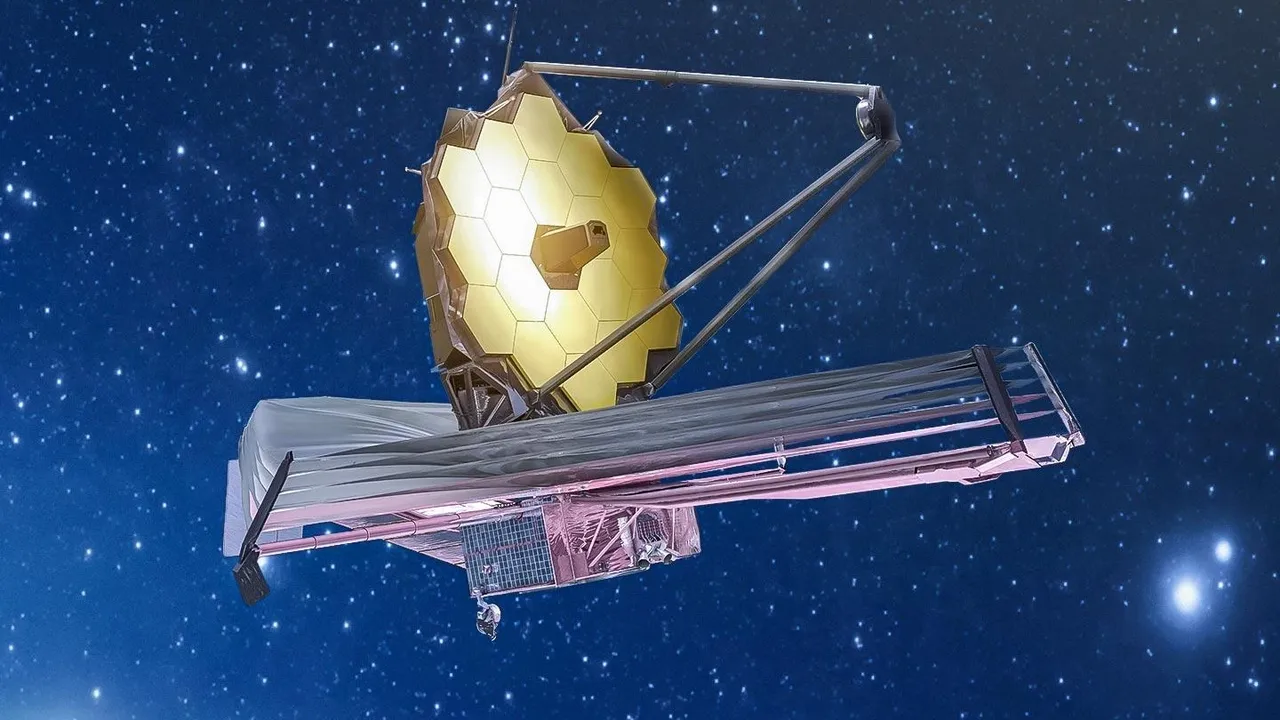
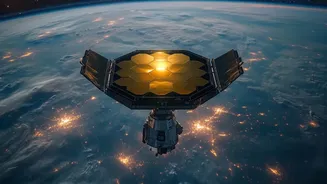
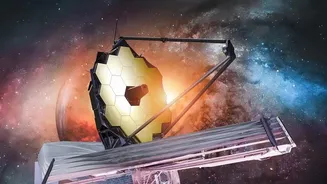
Ever since the James Webb Space Telescope (JWST) began sending back its stunning images of the early universe in 2022, astronomers have been puzzled by a new class of objects: tiny, reddish specks of light. Nicknamed 'little red dots' (LRDs), these objects appeared
to be numerous in the universe's infancy, around 600 million to 1.6 billion years after the Big Bang, but seemed to vanish as the cosmos aged. Their nature was a complete mystery. Were they a strange type of star, an unknown kind of galaxy, or something else entirely? The leading theory quickly became that they were related to active galactic nuclei (AGN)—supermassive black holes at the centre of galaxies that are furiously consuming matter. However, these LRDs didn't behave quite like the AGNs we see in the universe today, leaving scientists with more questions than answers.
A Breakthrough in Understanding
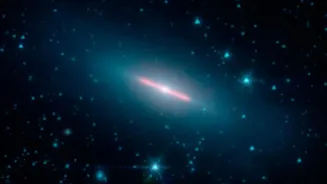
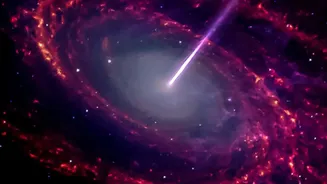
Recent studies have provided the strongest evidence yet that these little red dots are indeed powered by supermassive black holes. One study focused on an LRD nicknamed the 'Saguaro' and proposed that LRDs might be a temporary, highly active phase in the life of a black hole. The latest research, published in late July 2026, builds on this, suggesting that what we see as a 'dot' is actually just the intensely bright, compact centre of a much larger galaxy. When scientists simulated what a nearby spiral galaxy would look like at the extreme distances where LRDs are found, its sprawling arms and outer structure faded away, leaving only its bright red core visible—just like an LRD. This suggests that LRDs aren't a separate class of object, but rather the visible hearts of ancient galaxies whose fainter surrounding stars are simply beyond the current detection limits of even the powerful Webb telescope.
Why This Changes Our Cosmic Timeline
Confirming that many LRDs are active supermassive black holes presents a major challenge to our understanding of cosmic evolution. Supermassive black holes were thought to take billions of years to grow to their immense sizes. Finding so many of them active so early in the universe's history—some just a few hundred million years after the Big Bang—upends that timeline. It implies that the 'seeds' of these black holes must have been much larger than previously thought, or that they grew far more rapidly. Some theories propose the existence of 'direct collapse black holes', where massive clouds of primordial gas collapsed directly into a black hole without first forming a star, providing a head start for their rapid growth. This new evidence from Webb forces scientists to rethink the very first chapters of galaxy and black hole formation.
Solving One Mystery Creates Another
While we now have a clearer idea of what LRDs are, the discovery has opened up a new, more profound puzzle: if they are so common in the early universe, where did they all go? The answer, researchers now believe, is that they didn't go anywhere. They simply evolved. The 'little red dot' phase is likely a short-lived, intense growth spurt for a supermassive black hole. During this phase, the black hole is shrouded in a dense cocoon of gas and dust, which gives it its characteristic red colour and compact appearance. As the black hole continues to feed, it eventually blows away this surrounding gas, revealing itself and its host galaxy. It then transforms into the kind of active galaxy we are more familiar with in the modern universe. So, the reason we see fewer LRDs over time is not because they vanished, but because they grew up.
The Search for the Missing Links
The next step for astronomers is to find the 'missing links'—galaxies in a transitional state between the LRD phase and a mature galaxy. The Saguaro galaxy, which is closer to us, is seen as a potential descendant or 'progeny' of these early LRDs. By studying objects like it, scientists hope to piece together the complete life cycle of these cosmic giants. Some studies have already begun to find faint, extended emissions around LRD candidates, hinting at the hidden host galaxies surrounding them. Each new observation brings us closer to a full picture, demonstrating how powerful instruments like the JWST don't just provide answers, but redefine the questions we need to ask about the origins of our universe.