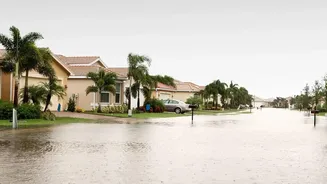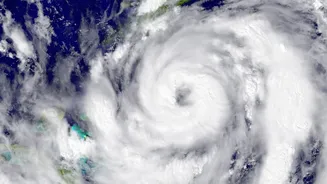






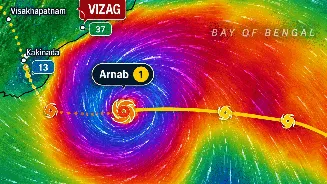

A heavy rain warning has been issued across several coastal states as Cyclone Arnab, now classified as a very severe cyclonic storm, approaches. Authorities are urging residents in low-lying areas to take immediate flood control precautions.
Understanding the Threat of Cyclone Arnab
According
to the India Meteorological Department (IMD), Cyclone Arnab is expected to make landfall on Wednesday, October 28. The storm is projected to cross the coast between Bapatla and Visakhapatnam, close to Yanam, with maximum sustained wind speeds of 125-135 kmph and gusts reaching up to 150 kmph. The primary threats are extremely heavy rainfall, which can lead to widespread flooding, and powerful winds capable of causing significant damage to infrastructure. A storm surge of up to 1.5 metres above the normal tide is also expected, which could inundate low-lying coastal regions.
Which Areas Are on High Alert?
Red and orange alerts have been issued for numerous districts across Andhra Pradesh and Odisha. In Andhra Pradesh, districts including Srikakulam, Vizianagaram, Visakhapatnam, Kakinada, and Konaseema are on high alert for extremely heavy rainfall. In Odisha, a red warning has been issued for places in Gajapati, Ganjam, Rayagada, and Koraput. The influence of the cyclone is also being felt in other states, with Jharkhand issuing a heavy rainfall warning for nine districts, including Ranchi. As a precaution, schools and educational institutions in many of these at-risk districts have been ordered to remain closed.
How Authorities Are Preparing
Both national and state disaster response forces are on high alert. The National Disaster Response Force (NDRF) has deployed 31 teams across Andhra Pradesh, Odisha, Telangana, Chhattisgarh, and Yanam to assist with evacuation and relief operations. State Disaster Response Force (SDRF) teams are also in position. Authorities have identified nearly 2,000 cyclone shelters in Andhra Pradesh to house vulnerable people and have begun evacuating residents from low-lying areas, prioritising the elderly, children, and pregnant women. Emergency Operation Centres are active, and medical teams with emergency supplies have been mobilised.
Essential Precautions for Residents
If you are in an affected area, it is crucial to stay informed through official channels like the IMD website and local news. Secure your home by tying down or moving loose objects from outside, such as furniture or rubbish bins, that could become projectiles in high winds. Board up or tape windows to protect them. Prepare for potential power outages by charging your mobile phones and power banks. It is also wise to turn off non-essential electrical appliances. If you have a vehicle, park it under solid shelter away from trees and power lines.
Prepare an Emergency Go-Kit
Every household should have an emergency 'go-kit' ready. This kit should contain essential items to last for at least 72 hours. Key items include nonperishable food, a can opener, clean drinking water, a torch with spare batteries, a firstaid kit, and any essential medications. Also include important personal documents, valuables, and some cash in a waterproof bag. Having this kit prepared will allow for a swift evacuation if it becomes necessary.
What to Do If Evacuation Is Ordered
If authorities issue an evacuation order for your area, you must comply immediately. Follow the designated evacuation routes to your nearest safe high ground or public shelter. Before leaving, turn off your home's water, gas, and electricity mains if instructed to do so. Wear sturdy shoes and protective clothing. Do not walk or drive through flowing water, as currents can be deceptive and dangerous. Inform a friend or relative outside the storm area of your plans and where you are going.