





The Science of Sound: A Quick Refresher
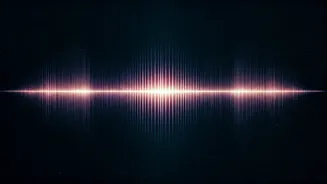
Before we get to hyperspace, let's talk about how sound works right here on Earth. Sound is a mechanical wave, which means it needs a medium—something to travel through. [2] When you clap your hands or a guitar string vibrates, it creates pressure waves
by pushing molecules together (compression) and then spreading them apart (rarefaction). [1, 5] These vibrations travel through a medium like air, water, or even solid objects, eventually reaching our eardrums, which our brain interprets as sound. [9] Think of it like a Slinky: if you push one end, a wave of energy travels down the coil. The coils themselves don't fly across the room, but the energy does. That's sound in a nutshell.
The Silence of the Final Frontier
Here’s the problem for our favorite sci-fi films: space is a near-perfect vacuum. [6, 8] Unlike Earth's atmosphere, which is packed with gas molecules for sound to vibrate, the vast expanse between planets and stars is almost entirely empty. [4] There are some particles floating around, but they are so spread out—sometimes only a few atoms per cubic centimetre—that they can't effectively carry a sound wave. [3, 6] So, if an X-wing were to explode right outside your cockpit, you wouldn't hear the satisfying boom. You would see a brilliant flash of light, but the event would be completely, eerily silent. [4] The famous tagline from the 1979 film *Alien* said it best: "In space, no one can hear you scream." [6]
Why Filmmakers 'Break the Rules'
If space is silent, why is *Star Wars* so loud? The answer lies in the power of storytelling. George Lucas and his legendary sound designer, Ben Burtt, understood that sound is a crucial emotional tool. [16] A silent space battle would feel sterile and distant. The whine of a laser blast, the rumble of a Star Destroyer's engines, and the visceral crash of an asteroid collision make the universe feel tangible and exciting. [25] Burtt pioneered the use of "found sounds"—blending real-world noises to create the film's iconic effects. [18] The hum of a lightsaber, for instance, was created by mixing the sound of an old film projector with the buzz from a broken television. [18] These sounds gave the futuristic world a sense of credibility and weight that visuals alone could not achieve. [16, 19]
An 'In-Universe' Explanation?
For fans who want their science and their space opera to coexist, the *Star Wars* universe does offer some potential explanations. Over the years, supplementary materials and fan theories have suggested that the sounds we hear are actually simulations created by the ships' onboard computers. [12, 14] According to this logic, an "aural sensor" translates the energy signatures and movements of nearby ships into corresponding sounds inside the cockpit. [12] This would give pilots crucial situational awareness in a chaotic, three-dimensional dogfight, allowing them to react to a TIE Fighter on their tail without needing to see it on a scanner. [13, 15] So, what we, the audience, are hearing is the same simulated soundscape that Luke Skywalker or Han Solo would hear. [14]
A Masterclass in Sound Design
Interestingly, *Star Wars* itself has cleverly played with the concept of sound in a vacuum. In *Attack of the Clones*, when Jango Fett deploys his seismic charges, there is a split-second of absolute silence before the deep, resonating boom. [18] This brief absence of sound makes the following explosion feel even more powerful and concussive. It's a brilliant piece of sound design that acknowledges the silence of space while still delivering an impactful auditory experience. It demonstrates that the filmmakers are not ignorant of physics; they are simply choosing to bend the rules for dramatic effect, creating a more engaging and immersive world for the audience. [23]