


A Historic First
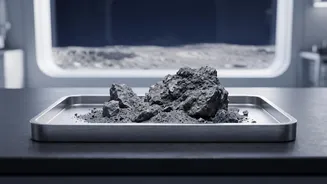
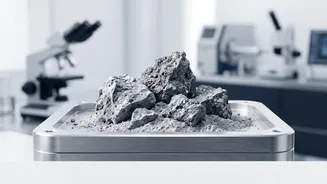
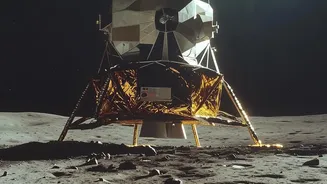
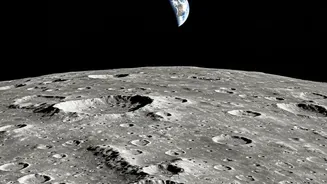
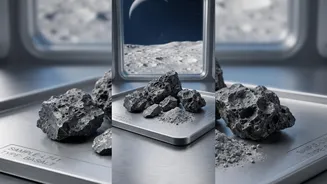
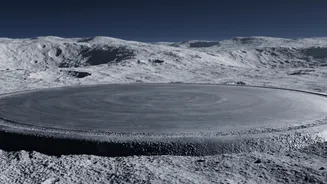
In a landmark achievement for space exploration, China’s Chang'e-6 mission successfully landed in the vast South Pole-Aitken basin on the Moon's far side, collected precious soil and rock, and returned them to Earth in 2024. It marked the first time humanity
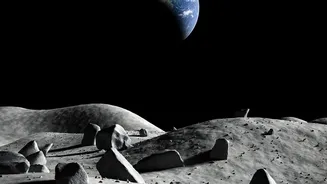
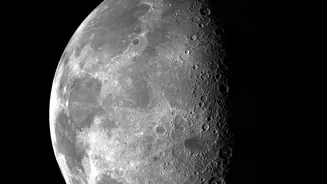
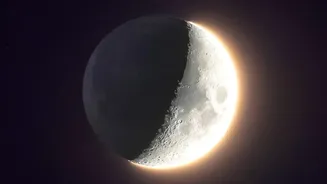
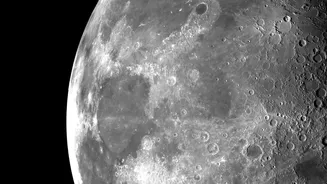
has ever brought back samples from the lunar hemisphere we can never see from our planet. For scientists, this wasn't just about collecting more moon rocks; it was about accessing a completely different geological world to solve one of the solar system's most enduring puzzles. The far side's crust is thicker and has far fewer of the volcanic 'seas' that dominate the near side, and no one could definitively say why. These samples promised the first real ground truth.
The Old Story of Two Moons
The long-standing mystery of the Moon's two-faced nature has several competing explanations. One popular idea suggested that after the Moon formed from a colossal impact with Earth, it became tidally locked, always showing us the same face. In this early stage, a still-hot Earth radiated heat, keeping the near side molten for longer. This allowed heat-producing radioactive elements like potassium, rare earth elements, and phosphorus (collectively known as KREEP) to concentrate on the near side. This concentration of 'KREEP' material effectively acted as a geologic furnace, fuelling the widespread volcanism that created the dark maria we see today. The far side, meanwhile, cooled faster, forming a thicker, more stable crust that largely resisted volcanic activity. This theory elegantly explained the visual and chemical differences observed by orbiters.
A Surprise in the Samples
When scientists began analysing the Chang'e-6 samples, they expected them to confirm this story. Instead, they found a few surprises. The analysis published in late 2026 in the National Science Review found that while the far side's crustal rocks were indeed different—richer in magnesium as expected—the mantle material from which they originated was chemically very similar to the mantle beneath the near side. This threw a wrench in the works. If the underlying mantle was the same, why did the surfaces turn out so differently? The existing KREEP theory didn't fully account for this underlying similarity. The far side rocks were also found to be low in KREEP material, which fit the old model, but the similar mantle source required a new mechanism to explain the split personality of the crust.
A New Theory: A Great Magma Ocean
Based on this new evidence, researchers have proposed a revised theory, focusing on the Moon's ancient magma ocean. According to this new model, soon after the Moon became tidally locked, gravitational forces from a much-closer Earth created uneven tidal heating. This generated more heat on the near side, creating a temperature imbalance in the global ocean of molten rock. This imbalance may have driven vast, powerful currents beneath the surface. These massive flows could have physically pushed early-forming, magnesium-rich crustal materials toward the far side, effectively piling them up to create the thicker crust we observe today. At the same time, this circulation would have concentrated the remaining, KREEP-enriched molten rock on the near side, providing the fuel for its later volcanic activity. In this scenario, the two faces of the Moon weren't just a result of one side cooling faster, but of a dynamic, global system that physically sorted the crust.
What Happens Next?
This explanation is a compelling 'proposed theory'—not yet a settled answer. The samples from Chang'e-6 came from one specific location within a massive basin, and scientists are careful to note they may not represent the entire far side. The next steps involve further analysis of the precious returned materials and testing the new model against all available data, including findings from other missions. Other recent analyses of the Chang'e-6 samples are also challenging old ideas, suggesting the asteroid bombardment in the early solar system was a long, gradual decline rather than a brief, violent storm. Each new finding adds another piece to the puzzle. The beauty of a mission like Chang'e-6 isn't just in the answers it provides, but in the new, more sophisticated questions it allows us to ask.