
The Foundation: Starch, Fiber, and Water
Before diving into the specifics of each vegetable, it is helpful to understand the three components that largely determine texture: starch, fiber, and water. Starch granules are tiny packets of energy that, when heated, absorb water, swell, and burst
in a process called gelatinization. This creates a soft, often creamy consistency. Fiber, made of things like cellulose and pectin, provides structure to the vegetable's cell walls. High fiber can result in a firmer or sometimes stringy texture. Finally, water content plays a crucial role. A vegetable with more water will cook faster but can also become mushy or soupy if not prepared correctly, while one with less water and more dense starches will have a fluffier, drier texture.
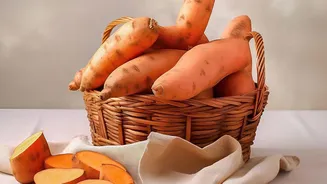
Sweet Potato: The Starchy, Creamy Root
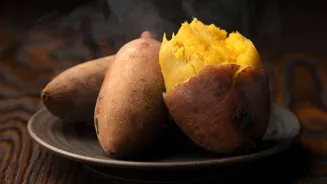
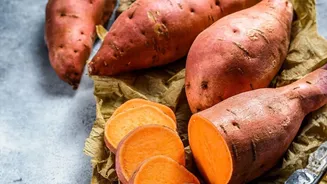
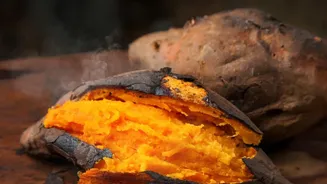
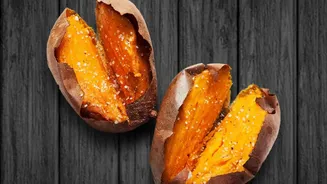
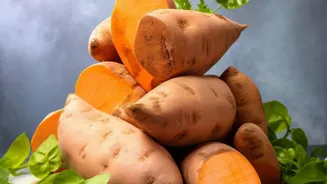
A sweet potato is a storage root, dense with nutrients and packed with starch. When you cook a sweet potato, its starches gelatinize, but something else magical happens. An enzyme called amylase becomes active with heat and begins breaking down the long starch chains into smaller sugar molecules, primarily maltose. This is why sweet potatoes taste significantly sweeter after being cooked. This process, combined with its high starch content, results in a final texture that is characteristically creamy, smooth, and fluffy. Because it is less watery than squash, it holds its shape better when roasted into fries or wedges and creates a thick, velvety mash.
Butternut Squash: The Fibrous, Moister Fruit
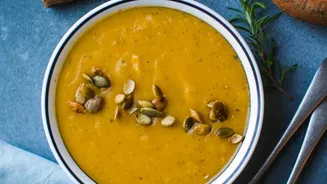
Botanically, butternut squash is a fruit that grows on a vine. Compared to a sweet potato, it has a higher water content and is lower in calories, carbs, and starch. Its texture is governed more by its fibrous structure. While butternut squash also softens when cooked, its flesh contains more prominent fibrous strands, especially if the squash is older or was harvested before reaching full maturity. This can sometimes lead to a stringy consistency in purées if you scrape too close to the skin. The higher moisture means it collapses faster when cooked, making it excellent for creating silky, smooth soups, as long as it is blended thoroughly.
How Cooking Methods Change Everything
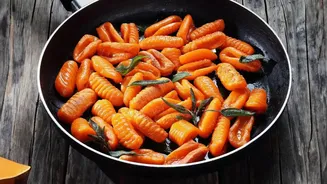
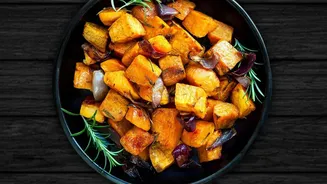
The cooking method you choose can either highlight or hinder the natural tendencies of each vegetable. Roasting is a universal winner, as the dry heat drives off some moisture and caramelizes the natural sugars in both, concentrating their flavour. Boiling, however, tells a different story. Sweet potatoes can be boiled for a mash, though some argue it makes them watery. Butternut squash, with its already high water content, can become very soft and diluted in flavour when boiled, making it a less ideal method unless you plan to use the cooking liquid in a soup. Steaming can be a good middle ground, softening both vegetables without making them waterlogged.
The Right Choice for Your Dish
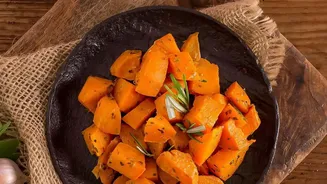
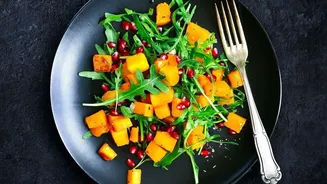
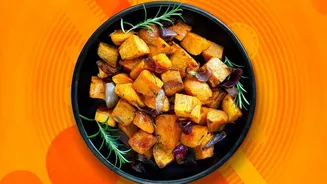
So, when should you reach for which? For dishes where a smooth, dense, and creamy texture is paramount, the sweet potato is your champion. Think rich, thick mashes, baked fries that hold their shape, or layered in a gratin. Its inherent starchiness provides body and a satisfying mouthfeel. Butternut squash shines where its higher moisture and delicate, nutty flavour are assets. It is the go-to for velvety, elegant soups. Its cubes hold up nicely when roasted for salads or stews, providing a softer bite than a roasted sweet potato. While they can be swapped in some purées and casseroles, expect the sweet potato version to be thicker and sweeter, and the squash version to be lighter and more savoury.