




Why the Original Care Label Is No Longer Reliable
A garment’s care label is a set of instructions for the item as it was sold. It accounts for the fabric, the dyes used, and any original trims. When you or a tailor alters that garment, you introduce new materials and variables that the original manufacturer
never planned for. A simple alteration like hemming might involve a different type of thread that can't handle high heat. Adding embellishments like sequins, beads, or patches means you've attached materials with entirely different care needs. Ignoring these additions and blindly following the old label can lead to shrunken patches, melted beads, or weakened seams, potentially ruining your newly perfected piece.
Simple Alterations: Think About the Seams
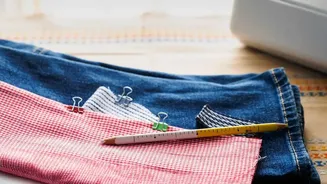
Even a basic alteration, like taking in a waist or hemming a pair of trousers, changes the garment's structure. The new seams may carry different tension than the original ones. While the fabric itself can still be washed according to its instructions, the new thread might react differently. Aggressive machine washing or high heat from a dryer can weaken or distort these new seams. To be safe, always opt for a gentler cycle and colder water after a garment has been tailored. Turning the item inside out before washing provides an extra layer of protection for the new stitching. For significant tailoring on delicate fabrics like silk or wool suits, it's often best to stick with professional dry cleaning to maintain the garment's altered shape and structure.
Beads, Sequins, and Glued-On Gems
Embellishments are where care routines diverge most dramatically. Many shiny details, like sequins and some beads, are attached with adhesives that can soften or dissolve in hot water or the high heat of a dryer. This can cause them to fall off. The embellishments themselves can also be damaged; sequins can melt, and the finish on beads can be dulled by harsh detergents or friction. The safest method for cleaning these items is almost always hand-washing in cool water with a mild detergent. Never wring or twist the garment. Instead, gently squeeze out excess water and lay it flat on a towel to air-dry, away from direct sunlight or heat. If an item is heavily beaded or the label advises it, professional dry cleaning is the best choice.
Embroidery and Patches: A Tale of Two Materials
When a patch or embroidery is added, you must care for the most delicate material involved. An embroidered design on a sturdy cotton jacket means the embroidery thread—not the cotton—dictates the rules. Embroidery threads can be susceptible to snagging, fraying, or colour bleeding. To protect the stitching, turn the garment inside out and place it in a mesh laundry bag before machine washing on a gentle cycle with cold water. Avoid using bleach or harsh detergents that could fade or weaken the threads. Similarly, if you've added a leather patch to a denim jacket, you can no longer toss the jacket in a hot wash. The entire garment must now be cared for like leather, which often means professional cleaning. Always air-dry embroidered items, as high dryer heat can cause the fabric to shrink around the stitching, leading to puckering.
When You've Dyed the Fabric
Custom-dyeing a garment completely changes its care profile. The new dye may not be as chemically stable as the original colour, making it more prone to bleeding. For the first few washes after dyeing, it's crucial to wash the item separately in cold water to remove any excess dye. Some experts suggest a pre-soak in a vinegar and water solution to help set the new colour. Over time, continue to wash with similar colours in cold water using a mild, colour-safe detergent to minimize fading. Naturally dyed fabrics can be particularly sensitive to pH changes and sun exposure, meaning their colours can shift over time, which is part of their unique character.
Your New Rule of Thumb for Care
When a care label becomes unreliable, a simple principle should guide you: always defer to the most delicate part of the garment. If you've sewn a delicate lace trim onto a sturdy cotton dress, you must now wash the entire dress as if it were made of lace. This generally means choosing a gentle, cold water cycle or hand-washing. Spot-cleaning stains as they happen can reduce the need for full washes, further extending the life of the garment and its embellishments. When in doubt, hand-washing in cool water and air-drying is the safest universal approach for most customized items. For irreplaceable or heavily embellished pieces, the investment in professional dry cleaning is often worth the peace of mind.