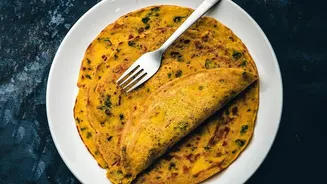


Craving a dosa that is crispy, delicious, and surprisingly healthy? This Rajgira Paneer Dosa uses amaranth flour for a gluten-free twist that’s perfect for fasting or any day of the week, offering a nutritious and satisfying meal.
The Power of Rajgira
Rajgira, or amaranth,
is not a true grain but a pseudo-cereal, and it is a nutritional powerhouse with a history stretching back thousands of years. Revered by ancient civilizations like the Aztecs, it has earned its name 'the king of grains' in India. Unlike wheat and rice, rajgira is naturally gluten-free, making it an excellent choice for those with celiac disease or gluten sensitivity. It is packed with high-quality protein, containing all nine essential amino acids, including lysine, which is often lacking in other grains. Furthermore, amaranth is a fantastic source of essential minerals like calcium, magnesium, iron, and phosphorus, which are vital for promoting bone health and preventing conditions like osteoporosis. Its high fibre content aids digestion and can help with weight management by keeping you feeling full for longer.
A Fasting Favourite
In India, rajgira is a staple during religious fasting periods like Navratri, when traditional grains such as wheat and rice are avoided. Foods consumed during these fasts, known as 'vrat' or 'upvas', are typically light and easy to digest, following sattvic principles. Rajgira, along with other alternatives like buckwheat (kuttu) and water chestnut flour (singhara), fits these requirements perfectly. It provides sustained energy, vitamins, and minerals, helping to maintain strength and vitality during days of dietary discipline. This dosa recipe uses sendha namak (rock salt) instead of regular table salt, which is also a common practice during Navratri fasting.
Ingredients for the Dosa
For the Dosa Batter:
1.5 cups Rajgira (Amaranth) Flour
1 tsp Cumin Powder (Jeera)
1 tsp Sendha Namak (Rock Salt), or to taste
1 tsp Green Chilli, finely chopped
2 tbsp Fresh Coriander, chopped
2 cups Water, or as needed for a smooth, pouring consistency
For the Paneer Filling:
1 cup Paneer, crumbled
1 Green Chilli, finely chopped
Fresh Coriander, chopped
Sendha Namak (Rock Salt), to taste
* Ghee or oil for cooking
Step-by-Step Instructions
First, prepare the batter. In a large bowl, combine the rajgira flour, cumin powder, sendha namak, chopped green chilli, and fresh coriander. Gradually add water while whisking continuously to create a smooth, lump-free batter. The consistency should be thin enough to spread easily on a pan, similar to a traditional chilla or dosa batter. Let this batter rest for about 10–15 minutes. While the batter rests, prepare the simple paneer filling. In a separate bowl, mix the crumbled paneer, chopped green chilli, fresh coriander, and a pinch of sendha namak. Combine everything gently and set aside. To cook the dosa, heat a nonstick tawa or a well–seasoned cast–iron pan over medium heat. Once hot, pour a ladleful of the batter onto the centre and spread it outwards in a circular motion to form a thin dosa. Drizzle a little ghee or oil around the edges and cook until the base turns golden brown and the edges start to lift. Place a portion of the paneer filling on one half of the dosa and fold the other half over. Press gently and serve hot.
Tips for a Perfectly Crispy Dosa
Achieving that signature crispiness with gluten -free flour can be tricky , but a few tips can help . Ensure your pan is sufficiently hot before pouring the batter ; this helps it set quickly and prevents it from becoming soggy . Spreading the batter as thinly as possible is key to a crispy texture . Don 't be tempted to flip it too early ; wait until the underside is visibly golden and crisp . Using a well -seasoned cast -iron tawa is often recommended for the best results , as it distributes heat evenly . Finally , some recipes suggest adding a tablespoon of another fasting -friendly flour like singhara atta ( water chestnut flour ) or sama flour ( barnyard millet flour ) to the batter to enhance crispiness .